

Sveti Manuel Dobri, mučenik
Basic information
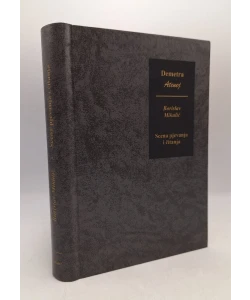
- Author: Unamuno Miguel
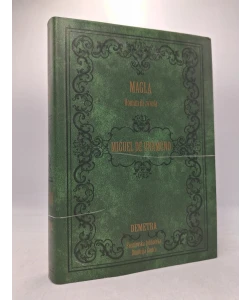
- Publisher: Demetra
- Availability: Available
- Condition: Excellent
- Code: 54344
Shipping options
Payment methods
Explore more
Sveti Manuel Dobri, mučenik
Unamuno Miguel
Summary
Miguel de Unamuno: Saint Manuel the Good, Martyr
Unamuno [~mu'no], Miguel de, Spanish writer and philosopher (Bilbao, IX. 29, 1864 – Salamanca, XII. 31, 1936). From 1892 he was a professor of Greek at the University of Salamanca, where he was also rector (1901-14 and from 1931). For the dictatorship of Miguel Prima de Rivera (1924–30) in exile in France, he died under house arrest after publicly expressing his disagreement with Falange policies in 1936. With his public, open and dramatized presentation of his own thoughts, feelings and experiences of religious life, he inspired generations of Spanish writers: E.R. Curtius called him the exciter Hispaniae because of this position of a public figure par excellence.
His best novel is St. Emmanuel the Good, Martyr (San Manuel Bueno, Mártir, 1931), in which he thematizes faith in the individual.
One of the first things that jumps out upon reading the work of this author, there is a unanimous recognition of its great value. Another thing that all critics and interpreters agree on is its mysteriousness. Viktor Garcija de la Konća says: "When we say about this spiritual writer, ascetic and mystic, that he is not interested in literature and art, we are entering a dangerous situation. Of course, his main goal is not to create literature for the sake of literature. But it is also important for him to convey his message in the best possible way. He is, in a certain way, what we usually call an 'existential or engaged writer'.
Additional information
- Author: Unamuno Miguel
- Publisher: Demetra
- Year of publication:2017
- Place of publication:Zagreb
- Pages:279
- Dimensions:15x21 cm
- Script:Latin script
- Condition:Excellent
- Binding:Hardcover
Reviews
0 reviewsWrite a review
Share your experience and help other readers choose.
This item has no reviews yet. Be the first to share your experience.
More books by Unamuno Miguel

More books from Demetra

You may also like








Recently viewed