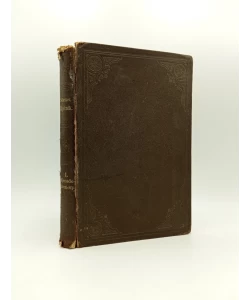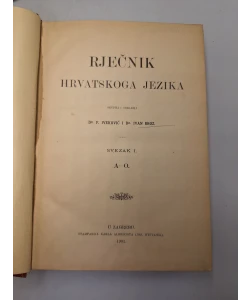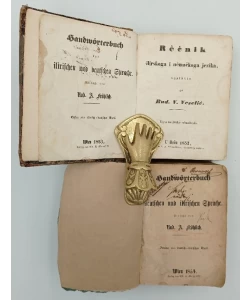


Rječnik znanstvenoga nazivlja I - II
Basic information
- Author: Šulek Bogoslav
- Publisher: Kraljevina hrvatske zemaljske vlade
- Availability: Available
- Condition: Very good
- Code: 11658
Shipping options
Payment methods
Explore more
Rječnik znanstvenoga nazivlja I - II
Šulek Bogoslav
Summary
Bogoslav Šulek, the father of Croatian terminology, is the greatest lexicographer of the 19th century. This work is the cornerstone of post-revival lexicography and a living encyclopedic treasure of words and expressions numbering 70,000 lexical items. Šulek's Dictionary does not only include scientific terminology in three languages: in addition to Croatian, Italian and German terms, there are numerous French, English, Latin and Greek substitutes, so it is actually a seven-language dictionary.
The books are from the library of Isidor Kršnjavog, who bought them in 1877 from Matija Mrazović, a well-known lawyer and police officer.
Bogoslav Šulek is a Slovak by birth and a Slovak at heart. Croat. He completed his studies in philosophy and legal sciences in Bratislava. He was also interested in natural sciences, especially plants. He was a polymath, publicist, educator and lexicographer.
In 1838 he came to Zagreb attracted by the Illyrian revivalists and Ljudevit Gaj. He learned the Croatian language while working in Zagreb in 1838 at Župan's printing house. He joined the Illyrians in 1841. He anonymously edited Danica (from 1843 to 1846), and then wrote himself (What the Illyrians are up to). He also edited the illegal political weekly Branislav (1844-1845). In 1849, he broke up with Gaj. Then he edited Slavenski jug, Gospodarski list, collaborated in Pozor. He was one of the first members of JAZ (from 1866), and from 1874 until his death he was its secretary.
Šulek is best known for his lexicographical work, which continues the rich Croatian lexicographical tradition, enriching it with new words, new meanings, phrases and scientific names for new civilizational and scientific needs. How well he mastered the Croatian language can be seen from the fact that he coined new words in that language for the scientific and civilizational achievements of the time, which he knew well.
Additional information
- Author: Šulek Bogoslav
- Publisher: Kraljevina hrvatske zemaljske...
- Year of publication:1874
- Place of publication:Zagreb
- Pages:1372
- Dimensions:15x22 cm
- Script:Latin script
- Condition:Very good
- Binding:Hardcover
Reviews
0 reviewsWrite a review
Share your experience and help other readers choose.
This item has no reviews yet. Be the first to share your experience.
More books by Šulek Bogoslav


More books from Kraljevina hrvatske zemaljske vlade
You may also like