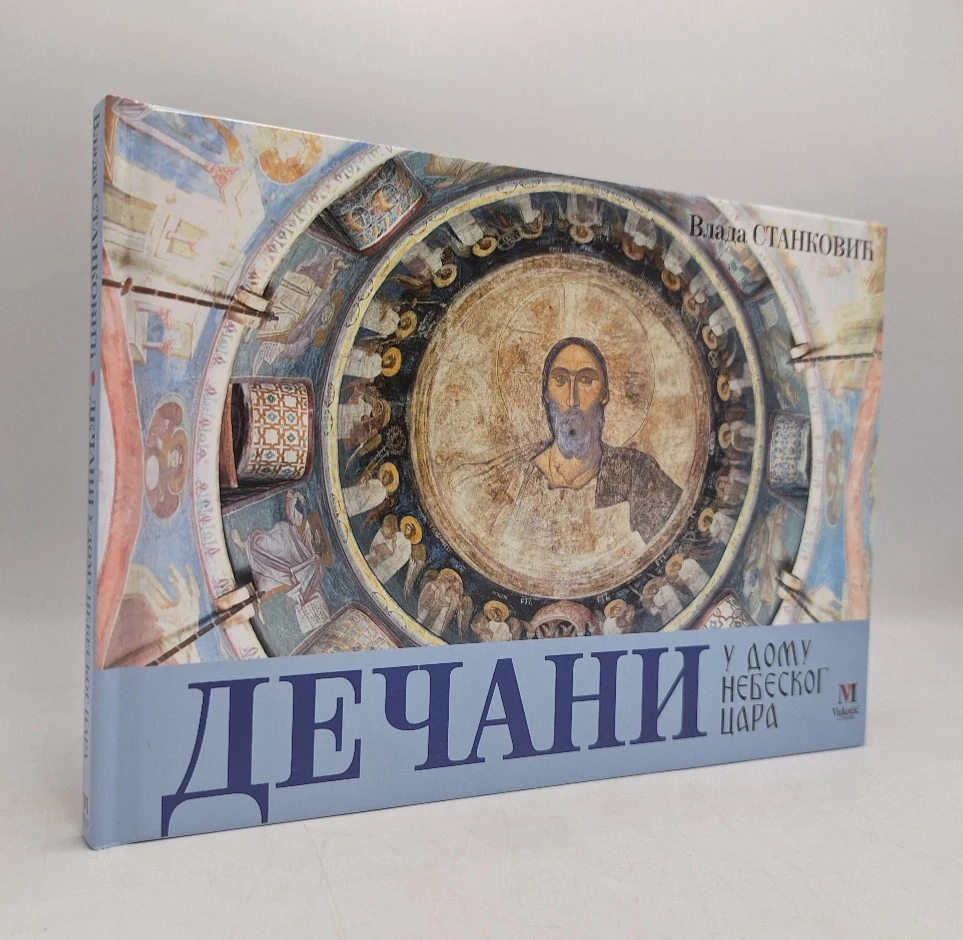
Dečani - u domu nebeskog cara
Basic information
- Author: Stanković Vlada
- Publisher: Vukotić media
- Availability: Available
- Condition: New book
- Code: 83906
Shipping options
Payment methods
Explore more
Dečani - u domu nebeskog cara
Stanković Vlada
Summary
Vlada Stanković: Dečani - in the house of the heavenly emperor
Vlada Stanković's book "Dečani - in the house of the heavenly emperor" is not just a book - it is a pilgrimage through ideas, faith and time. Stanković does not only write about the people of Deč as an architectural and artistic pearl, but reads them as an icon of history, as a living organism in which Byzantine spirituality and Serbian state-building self-awareness intersect. His journey "from Constantinople to Dečan" is not a geographical line, but a symbolic axis of cultural heritage - an axis that measures the depth of a nation within the Christian world. By researching sources, charters, inscriptions and frescoes, the author succeeds in reconstructing not only the historical background of the creation of the monastery, but also the intellectual and spiritual context that made the Dečans more than an endowment - he turned them into an icon of the ruling ideology and a liturgical metaphor of the state. With a language that combines academic precision and poetic clarity, Stanković illuminates the "way of Christ the Almighty" from the Byzantine capitals to the Serbian hills, showing how the empire on earth got its heavenly reflection in the people of Decani. This is perhaps the greatest value of this monograph: it serves not only the history of art, but also the revival of awareness of the spiritual unity of East and West within the Serbian tradition. Stanković wrote a work that, without a doubt, will become a landmark for anyone who wants to understand not only how Visoki Dečani came to be, but also why they became a symbol of the permanence of a nation.
Additional information
- Author: Stanković Vlada
- Publisher: Vukotić media
- Year of publication:2025
- Place of publication:Beograd
- Pages:112
- Dimensions:24x17 cm
- Script:Cyrillic script
- Condition:New book
- Binding:Hardcover
Reviews
0 reviewsWrite a review
Share your experience and help other readers choose.
This item has no reviews yet. Be the first to share your experience.
More books from Vukotić media











You may also like






Recently viewed