
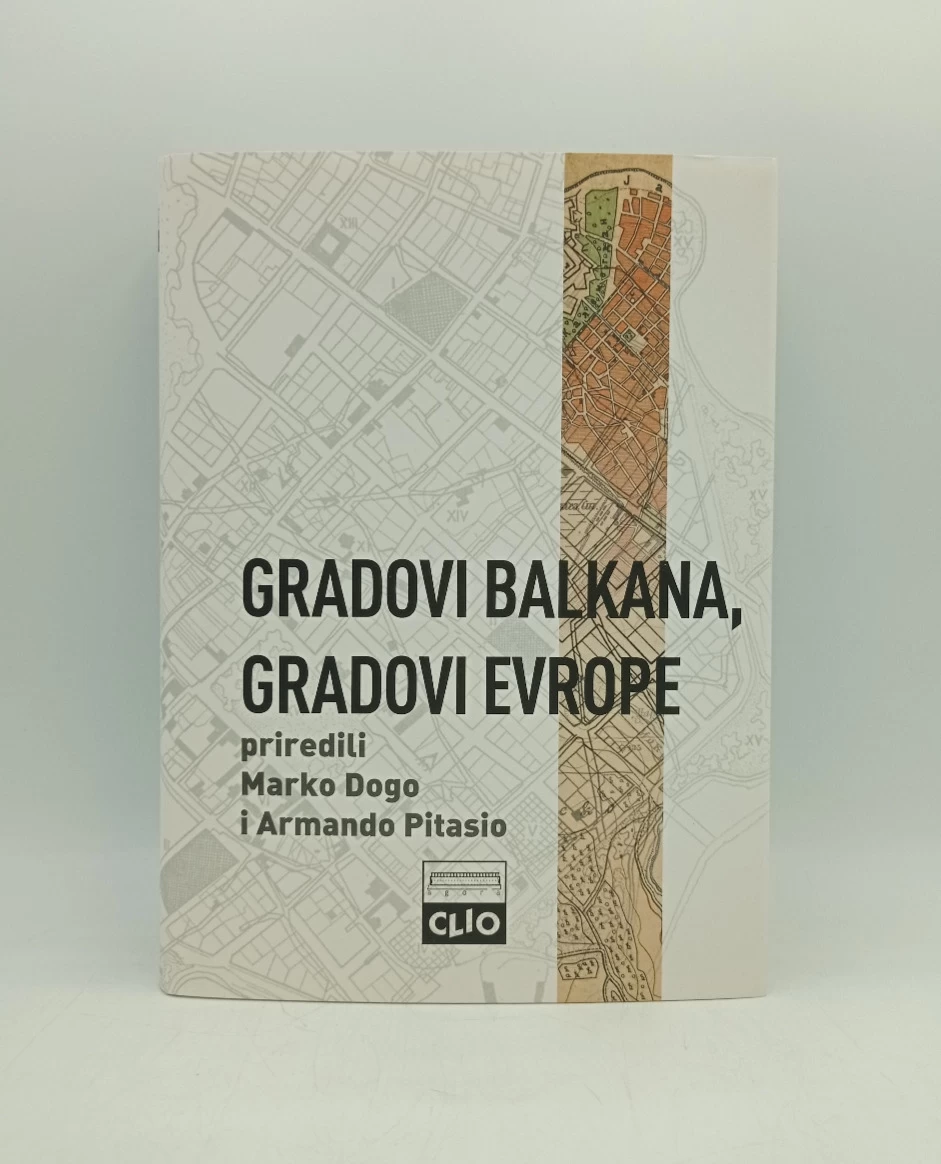
Gradovi Balkana, gradovi Evrope
Basic information
- Author: Dogo Marco | Pitassio Armando
- Publisher: Clio
- Availability: Available
- Condition: New book
- Code: 47073
Shipping options
Payment methods
Explore more
Gradovi Balkana, gradovi Evrope
Dogo Marco | Pitassio Armando
Summary
Marco Dogo, Armando Pitassio: Cities of the Balkans, cities of Europe
Whether it is about the demolition of medieval walls or the removal of old quarters from the Ottoman period, it is clear that the cities of the Balkans and Europe, each from its own historical, political and cultural starting point, went through similar processes of radical rethinking. These transformations of cities, which were planned and carried out in the 19th century, were key events in urban history. The very idea of the city is structurally and visually defined by them, which is still an important part of the collective identity and contemporary urban culture.
Collecting the works of authors of different profiles - historians, art historians and architectural historians/theoreticians - this collection examines the similarities and differences in the processes of planning, construction, arrangement, organization and beautification of the cities of Europe and the Balkans. Investigating nineteenth-century concepts of the term "modernization", as well as its different understanding in individual countries and regions, the book sheds light on individual cases of planned urbanization and restructuring of cities in Western and Central Europe, as well as those in the Balkans: Athens, Sofia, Ruse, Bucharest and Belgrade.
Additional information
- Author: Dogo Marco | Pitassio Armando
- Publisher: Clio
- Year of publication:2018
- Place of publication:Beograd
- Pages:308
- Dimensions:17x22 cm
- Script:Latin script
- Condition:New book
- Binding:Hardcover with dust jacket
Reviews
0 reviewsWrite a review
Share your experience and help other readers choose.
This item has no reviews yet. Be the first to share your experience.
More books from Clio











You may also like