

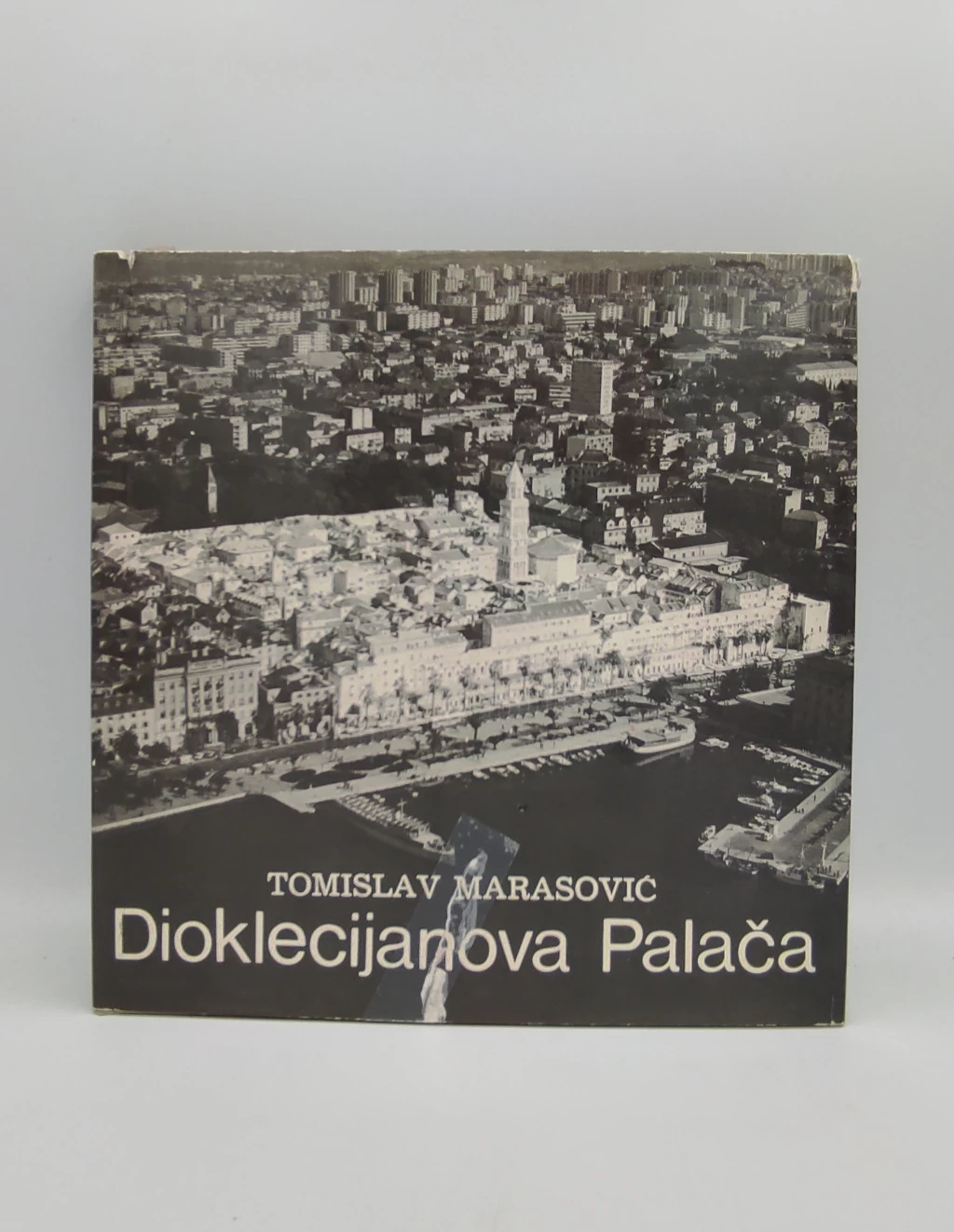
Dioklecijanova palača
Basic information
- Author: Marasović Tomislav
- Publisher: Sloboda
- Availability: Available
- Condition: Excellent
- Code: 30581
Shipping options
Payment methods
Explore more
Dioklecijanova palača
Marasović Tomislav
Summary
Tomislav Marasović: Diocletian's Palace
photos by Nenad Gattin
The unrestrained use and increasing abuse of nature, along with the simultaneous forgetting of the importance and endangerment of its elements, are essential features of progress and well-being in modern civilization. Progress and well-being, which also become questionable because of this.
In archaic cultures, human existence directly depends on goods from the forest, from the fields, from game, herds and the sea. Here man appropriates the surrounding world directly and painfully, but also moderately, in proportion to the weakness of his means of work and knowledge, and always aware of his dependence on earthly goods. Feeling every moment the limits of his strength, he knows that he is not the master of the world around him, and that he must admit to the things and beings around him, no matter how much he exploits them and is mostly cruel to them, that they have fateful powers and mysterious meanings decisive for his life. That is why the ancient Greeks discovered prophecies in the rustling of leaves; The Celts worshiped oaks and yews - which may survive today in the habit of touching the lucky tree; the northerners decorated their homes with evergreen branches and conifers with shiny objects as an invitation to the spring sun - which is followed by our decorating the Christmas tree; The Indians knew and celebrated the unity of the world, because "earth, sky, all living things, bipeds and quadrupeds, wings, trees, meadows, they are all our relatives, one family". Many ancient beliefs carried, with all that they were imbued with illusions and prejudices, valuable collective experiences about the natural foundations of life, about the importance of the sun, waters, seasons, plants and animals, about herbal therapies that modern medicine will first dismiss with disdain and then increasingly confirm, about the forest, the sea and the mountain as sources of physical and spiritual rebirth.
In Split, in 2005, the the decade of commemorating the 1700th anniversary of the construction of the historic core of the city (295-305 AD). Two historical foundations point to the conclusion that it was during this period that the ancient Palace was built, which in the early Middle Ages grew into the city of Split.
The approximate start of construction is determined by information about the great administrative reforms that Diocletian (Caius Aurelis Valerius Diocletianus), one of the most famous rulers of the ancient world, announced at the end of 293 on the occasion of marking the first decade of his reign. Even then, namely, the emperor had drawn up his political program on the division of the empire into two parts, which would result in a system of rule by four (tetrarchy) and lead to the voluntary abandonment of the throne of the first two rulers (Augustus) in 305, that is, their replacement by two former assistants (Caesars). It was logical to assume that shortly after the proclaimed reforms, Diocletian would also take care of his residence after leaving the throne, i.e. that he would start the construction of his last residence...
Additional information
- Author: Marasović Tomislav
- Publisher: Sloboda
- Year of publication:1982
- Place of publication:Čakovec
- Pages:145
- Dimensions:22x22 cm
- Script:Latin script
- Condition:Excellent
Reviews
0 reviewsWrite a review
Share your experience and help other readers choose.
This item has no reviews yet. Be the first to share your experience.
More books from Sloboda

You may also like