
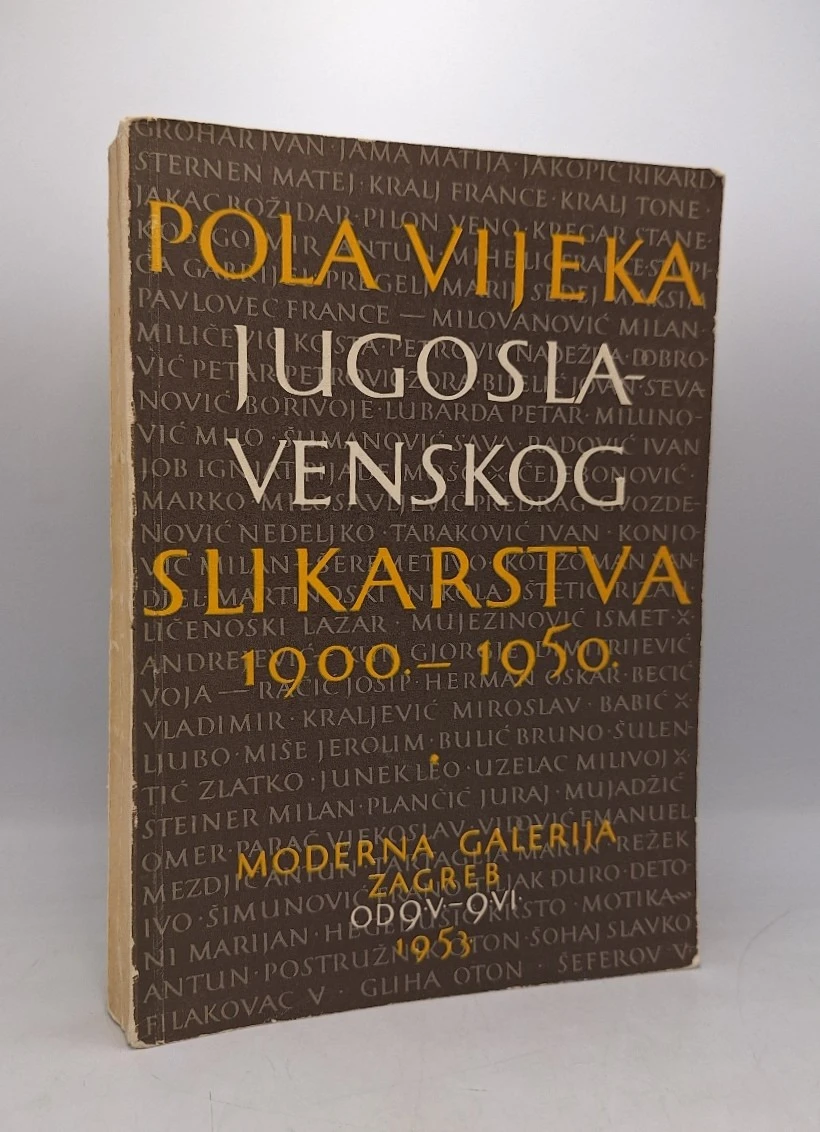
Pola vijeka jugoslavenskog slikarstva 1900.-1950.
Basic information
- Author: Babić Ljubo
- Publisher: GZH
- Availability: Available
- Condition: Very good
- Code: 48635
Shipping options
Payment methods
Explore more
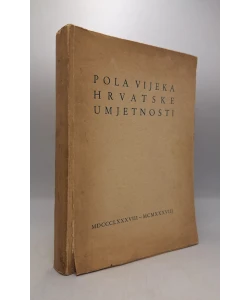
Pola vijeka jugoslavenskog slikarstva 1900.-1950.
Babić Ljubo
Summary
Ljubo Babić: Half a century of Yugoslav painting 1900-1950
"Half a century of Yugoslav painting 1900-1950." is the name of one of the most important historical art exhibitions and accompanying catalog, which was held from May 9 to June 9, 1953 in Modern Gallery in Zagreb, and then transferred to Ljubljana and Belgrade (National Museum).
This iconic project represented the first complete and critical synthesis of modern fine art in the former Yugoslavia in the first half of the 20th century.
Chief editor and editor: Famous Croatian painter, set designer and art historian Ljubo Babić.
Author of the introductory theoretical text: Prominent Slovenian art historian France Stele.
Catalog publisher: Moderna galerija Zagreb and Grafički zavod Hrvatske (1953).
Catalogue content: The comprehensive publication contains introductory studies, detailed biographies of the artists, reproductions of key paintings and valuable reprints of the painters' original signatures.
The exhibition mapped the turbulent development of painting through five decades, following the transitions between the key artistic styles:
Zarište moderne (1900 – 1914): Representation of the influence of the Munich circle (Josip Račić, Miroslav Kraljević, Vladimir Becić) and the penetration of impressionism and secession.
Interwar pluralism (1918 – 1941): The period of expressionism, magical realism, cubism and socially engaged art (like the group Earth).
War and post-war turn (1941 – 1950): Art in war, followed by a phase of socialist realism and a gradual release towards abstraction in the early 1950s.
Additional information
- Author: Babić Ljubo
- Publisher: GZH
- Year of publication:1953
- Place of publication:Zagreb
- Pages:84 200
- Dimensions:17x24 cm
- Script:Latin script
- Condition:Very good
- Binding:Softcover
Reviews
0 reviewsWrite a review
Share your experience and help other readers choose.
This item has no reviews yet. Be the first to share your experience.
More books by Babić Ljubo



More books from GZH
You may also like