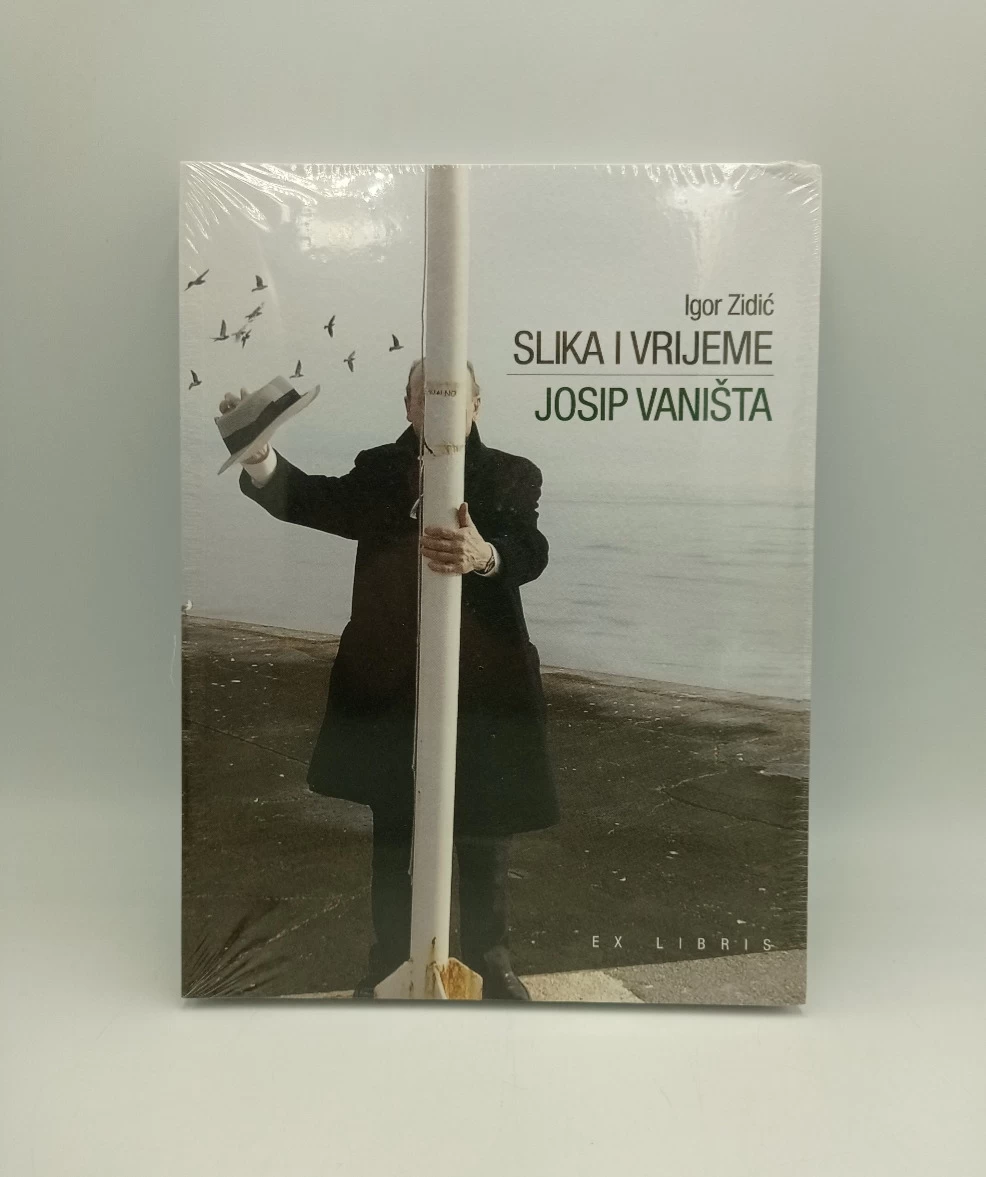

Zidić Igor: Slika i vrijeme - Josip Vaništa
€ 15,00
Free delivery in Croatia for orders over EUR 70
Basic information
- Author: Zidić Igor
- Publisher: Ex Libris
- Availability: Available
- Condition: Nova knjiga
- Code: 66970
Shipping options
GLS Croatia
5€
Delivery
0€
Personal collection at the antique store
0€
GLS parcel machine
3€
Payment methods
Pay on pickup
CorvusPay
By general payment / Virman / Internet banking
Cash on delivery
Slika i vrijeme - Josip Vaništa
Zidić Igor
Summary
Igor Zidić: Image and time - Josip Vaništa
After the publication of the book about Trebotić and the Mediterranean, Murtić and his cosmopolitanism, the third volume of the newly launched Ex libris edition Image and time about the exceptional and completely atypical art work of Josip Vaništa was published. This edition, as well as the previous two, clearly testify that the author of the series, Igor Zidić, with his scientifically based interpretation, along with phenomenological insights into Vaniština's interwoven and unusual iconographic painting-literary network in the European context, with his handwriting as a poet and art historian, has created a unique handbook on the synergy of artistic and literary language, close to the painter himself. The publishing house Ex libris, which has distinguished itself among other publishers with its series of valorization of Croatian heritage (cultural history, literature, linguistics, philosophy, monumental and fine art, and publishing and bookmaking), will most certainly fill the multi-year gap in necessary visual, professional and artistic literature with these editions. Such editions almost no longer exist in our country, and the precious manuals are primarily aimed at younger readers in order to master the art of reading pictures and expand their knowledge (about culture, art and literature). And the instructions on how to read a painting from the poetic manuscript of the proven connoisseur Igor Zidić are useful in many ways: both for the painters whom the author places in a European context with his broad comparative analysis, as well as for the reader, who in the most reliable way gains experience in understanding visual symbols by bringing them into direct connection with linguistic ones. Therefore, it is not a question of classical art monographs, that is, monographic editions about an individual painter, but his oeuvre is an incentive for Zidić to read the artistic content. In addition, through the comparative analysis of isolated symbols, Zidić only confirms his basic thesis that it is possible to learn (and it is necessary to know) how to read a picture. In the end, this series provides a broader analytical context in which there is no room for repeating established stereotypes, but with a new critical reading, we have before us useful, educational reading. Superior professional knowledge, along with many years of experience in reading and critically reflecting on artistic and literary language, make this author an unquestionable authority, and his manuscripts are above all useful and stimulating for many future researchers or art critics. That is why we should not be at all surprised that Zidić's manuscripts are always different from the critical reflections of others on the same subject that we know, so they often rightfully become useful, educational reading for many people outside the narrow profession.
Additional information
- Author: Zidić Igor
- Publisher: Ex Libris
- Year of publication:2013
- Place of publication:Zagreb
- Pages:266
- Dimensions:16.5x21.5 cm
- Script:Latinica
- Condition:Nova knjiga
- Binding:Meki
You may also like








Biblos Newsletter
For book lovers who enjoy finding the rare
New titles, special copies and quiet recommendations from the antiquarian bookshop.