
Vanguard in Croatian art: Exat 51, New Tendencies, Gorgona

Exat 51, New Tendencies and Gorgona are avant-garde artistic phenomena created in Zagreb in the second half of the 20th century.
Like all significant cultural events that diverge from traditional and dominant forms of artistic communication, these three artistic phenomena cause strong reactions on our cultural scene.
Members of all three groups problematized and reexamined terms such as contemporary art and contemporary artist, and what is the relationship between contemporary art and existing social and political opportunity.
They maintained contacts with the most important international artists of that time who exhibited in Zagreb, primarily as part of New Tendencies, but also in Gorgona.
Also, local artists had exhibitions in leading world galleries and at important international shows. repeated.
The most important phenomena of our fine art in the 20th century
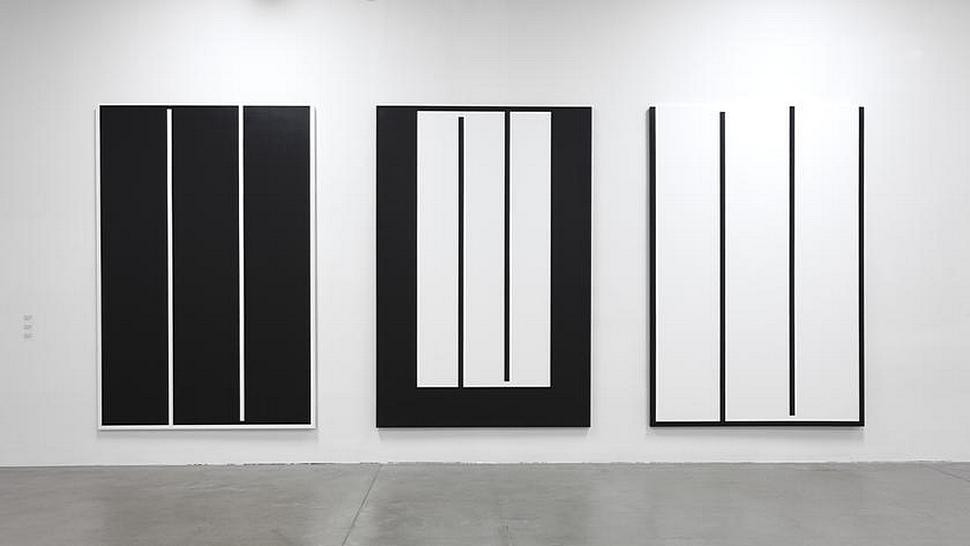
Photo: Internet
We can say that Exat 51, New Tendencies and Gorgona were the most important phenomena of domestic fine art in the 20th century.
In fact, we are talking about artistic expressions that contained an authentic creative charge. Because of them, Zagreb, as well as our entire cultural environment, was in a short period equal with European and world cultural centers.
EXAT 51
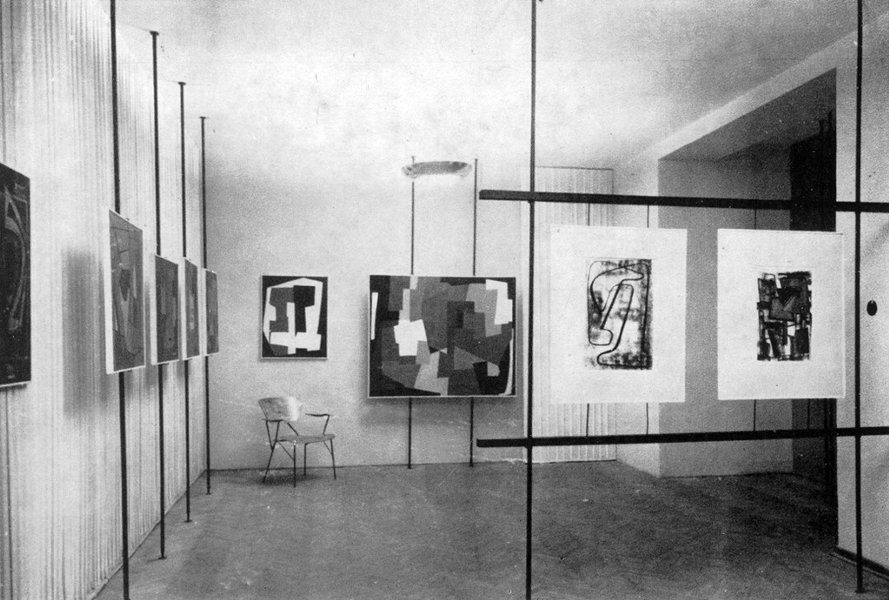
Photo: Internet
The group EXAT 51 (Experimental atelier 51) is an artistic group from Zagreb. They stood for abstract art and contemporary visual communication, and together with painters, they also included architects and designers.
In the period after the Second World War, when socialist realism was almost the official art, these were exceptionally brave positions.
They published their manifesto on December 7, 1951. and it was signed by:
- Bernardo Bernardi
- Zdravko Bregovac
- Božidar Rašica
- Vladimir Zarahović
- Zvonimir Radić
- Vjenceslav Richter
- Aleksandar Srnec
- Ivan Picelj
Later on they joined Vlado Kristl.
The group defined its programmatic basis as:
"the fight against surviving understandings and productions in the field of fine arts"
and took the position that:
"the working methods and principles of the so-called abstract art are not an expression of decadent aspirations, but on the contrary, the possibility to develop and enrich the field of visual communications through the study of these methods and principles."
The main task of the exatians was the "synthesis of fine arts" and giving "an experimental character to the work."
During their stays abroad, the members of the Exat 51 group got to know artists of similar ideas in Western Europe.
Given that they represented a very progressive ideas and that they came from a socialist country where this was not the usual way of understanding art, their paintings were immediately accepted abroad. Salon des realites nouvelles in Paris.
On the international art scene, in Cold War circumstances, all aspirations towards the so-called The "synthesis of art" advocated by the members of the Exat 51 group turned out to be a utopia.
Also in our environment, at that time, there were no conditions for the development of Exat ideas. Therefore, the group split up.
However, the expansion of interdisciplinarity became a feature of most of the group members in their later individual careers.
They contributed to the development of industrial and graphic design, theater scenography, cartoons, and the practice and theory of urban planning.
New tendencies
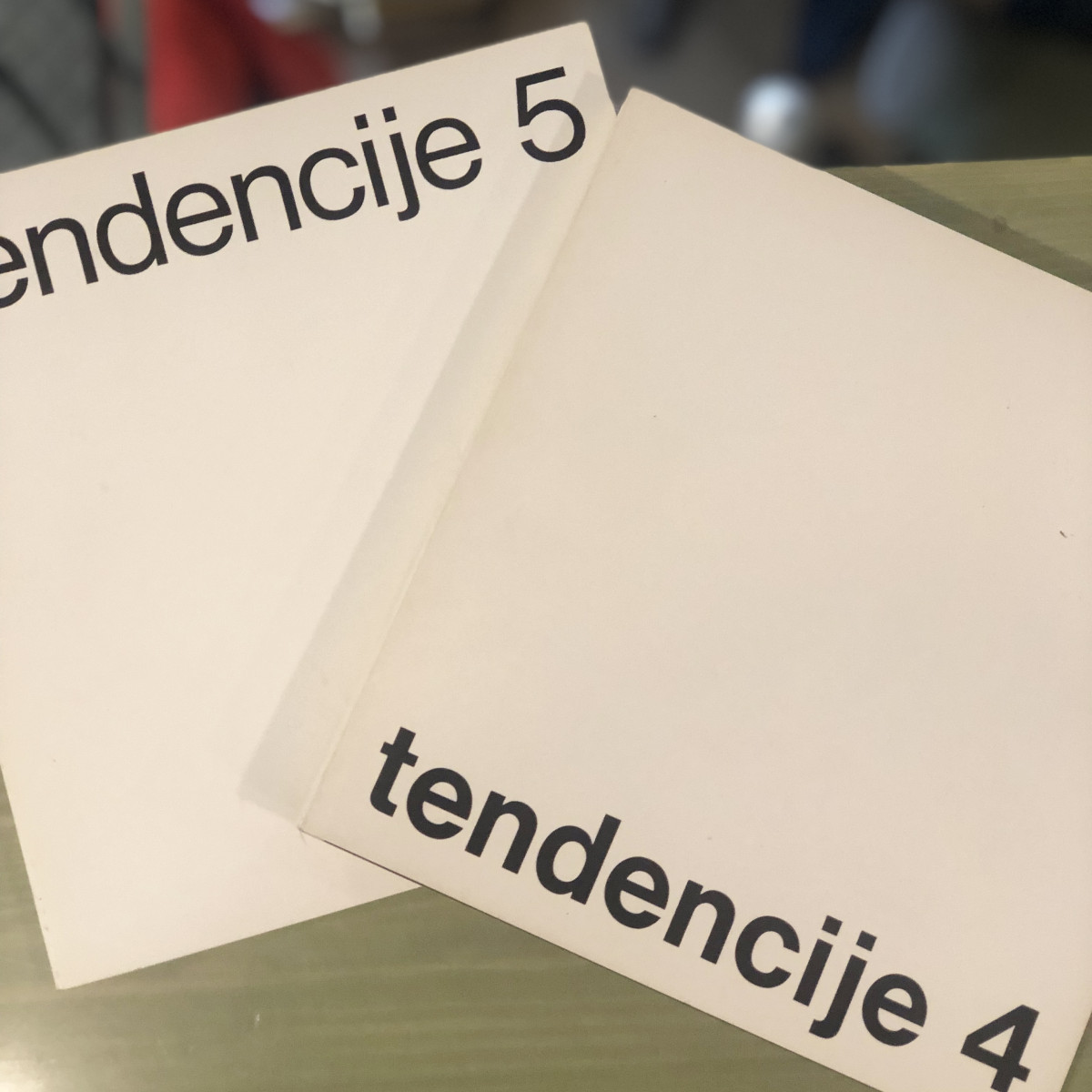
Photo: Biblos
New Tendencies is the name of the event that took place in Zagreb in the period from 1961 to 1973 and which gained international reputation.
Exat 51 he was undoubtedly the forerunner and inspiration for the emergence of New Tendencies whose goal was to discover new possibilities in art based on the following ideas:
- constructivism
- technical achievements
- information theory
A total of 5 exhibitions were organized within the then Gallery of Contemporary Art in collaboration with the Gallery of the City of Zagreb.
- New Tendencies 1, 1961
- New Tendencies 2, 1963
- New Tendencies 3, 1965
- Tendencies 4, 1969
- Tendencies 5, 1973
- T-6 (international symposium only), 1978
Key role in the foundation of that artistic movement was the French artist Almir Mavignier, who best explained their meaning and purpose: "The biggest surprise of the first exhibition of the New Tendencies was the astonishing similarity of the experiments of artists from the most diverse countries, even though these artists knew little about each other or did not know each other at all. This phenomenon in Zagreb brought to our attention for the first time the existence of an international movement in which art reveals a new concept that experiments with the optical exploration of the surface, structure and object. "
Today there is no longer any doubt that the New Tendencies were an international movement that, in a period of fifteen years, brought the most significant names of constructivism, computer art and conceptual artists to Zagreb.
Gorgona
Gorgona is an artistic group that existed in Zagreb between 1959 and 1965. It was not a painting group in the usual sense of the word, it did not act according to any program, but gathered artists with common spiritual affinities.
The group consisted of:
painters Julije Knifer, Josip Vaništa, Đuro Seder and Marijan Jevšovar; sculptorIvan Kožarić; architect Miljenko Horvat and art historians and critics Dimitrije Bašičević, Matko Meštrović and Radoslav Putar.
The work of members Gorgona is characterized by:
- new forms presentations
- new understandings
- new behavior
Each of the Gorgona artists retained their creative autonomy, and in their works they predicted events on the international art scene.
It can be said that the members of Gorgona were united by a common affiliation to the spirit of modernism whose characteristics are:
- recognition of the absurd
- tendency to nihilism
- metaphysical irony
As is the case with the previous two artistic phenomena, the views of Gorgona members were in opposition to the cultural elite of the time.
Publishing Gorgona magazine
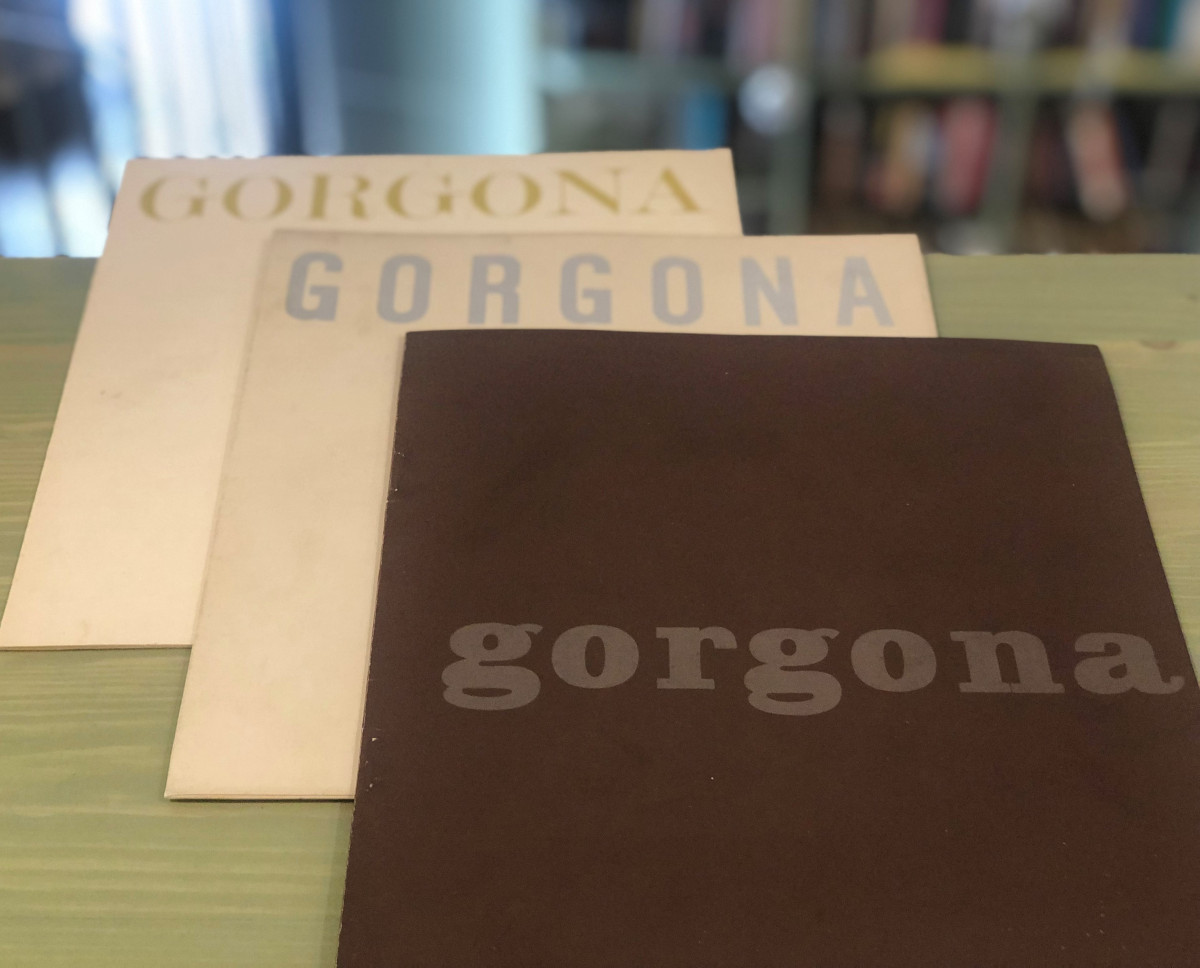
Photo: Biblos
Issuing the Gorgona publication is one of the most significant "non-exhibition" activities of the group.
It is a kind of "anti-magazine", and in the period from 1961 to In 1966, 11 issues were published. Two more issues were prepared which were never printed.
Gorgona was not conceived as an art magazine, but each issue was a completely separate creative solution.
Gorgona gatherings were often held in the form of walks around Zagrebduring which various ideas were born.
Knifer's examples of these walks inspired him to organize an banality exhibition, while Seder's idea for the exhibition was that: everyone should bring an object that they think best materializes the topic of the conversation of the previous meeting.
Vaniština "Exhibition without exhibition" (1964) is one of the most radical Gorgon works. Instead of an exhibit, only a precise description of each painting was made: dimensions, chemical composition of the paint and the distance of the horizontal line from the edge of the canvas.
All three mentioned artistic, but also social phenomena; Exat 51, New Tendencies and Gorgona are part of the most significant chapter of Croatian art of the second half of the 20th century.
Many art historians believe that without the existence of these artistic groups, Croatian art of the 20th century would have been significantly impoverished.
This is perhaps even most related to the New Tendencies, due to which Zagreb was at that time the center of an important post-war international movement on a European scale.
During the Cold War, the Gallery of Contemporary Art (today's MSU) succeeded in bringing together artists, gallerists and theorists from Eastern and Western Europe, the USA, the USSR, South America, Asia and Africa.
Regardless of disagreements and disagreements in views of the artists gathered around the New Tendencies, it is unquestionable that most of them achieved international reputation.
Prepared by: Marijana Matijević
Biblos Newsletter
For book lovers who enjoy finding the rare
New titles, special copies and quiet recommendations from the antiquarian bookshop.