
Fyodor Mihajlovic Dostoevsky, the greatest psychologist in literature

Fyodor Mikhailovich Dostoevsky was born in 1821 in Moscow. His father was a strict and rigid man, and his mother, on the contrary, was kind and lenient.
He had six brothers and sisters, and he was closest to his older brother Mihailo and sister Varvara.
They lived in an apartment next to the hospital where Fyodor's father worked as a doctor. Dostoevsky was a sensitive and attentive child, and although his parents did not allow him to associate with patients, he deeply felt human suffering.
"His soul was ready to help everyone." Dostoevsky
Writer Vladimir Kachenovski met the Dostoevsky brothers for the first time in childhood, and a few years later he enrolled in the same school as Fyodor. As he said, he did not do well there and often experienced peer violence. During one of these unpleasant situations: "Fyodor, seeing me, immediately approached, chased away the abusers and began to comfort me."
Kachenovski described his friend as "a serious and pensive boy with blond hair and a pale face. He was not too engrossed in the game. During breaks at school, he did not leave his books, and spent the rest of his time in conversations with his elders staff.
The Dostoevsky family was very religious. This interest in religion and philosophy was passed on to Fyodor, who enjoyed reading from an early age.
Unfortunately, as a very young man he encountered great adversities in life. Namely, his mother died of drought, and his father, presumably, was killed by his own serfs, whom he did not treat well. Dostoevsky's father's death affected him so much that he experienced an epileptic attack for the first time.
Years of rebellion
One of the perhaps turning points in Dostoevsky's life was when he decided to join the circle of "Petraševci", a group of intellectuals who rebelled against the Tsar.
The rebellious writer and his friends, who advocated the ideas of utopian socialism, were soon declared traitor revolutionaries and put in prison.
After nine months, many of them, including Dostoyevsky, were found guilty and were sentenced to death by firing squad.
A few seconds before the bullets were to be fired, the emperor's messenger arrived and pardoned convicts. In fact, the emperor never even intended to liquidate them, but used this cruel trick "to teach them to be smart".
The writer spent a few minutes in the complete belief that he was going to die, which in a way marked him for the rest of his life. For example, in his novels, the characters often imagine the state of mind of a man approaching execution.
Instead of death, Dostoevsky was sentenced to four years in a Siberian labor camp, which was followed by an unspecified military sentence. When he returned to Russia, ten years later, he wrote a novel "Zapisi iz mrtvog dom", which was based on experiences from captivity.
Literary style
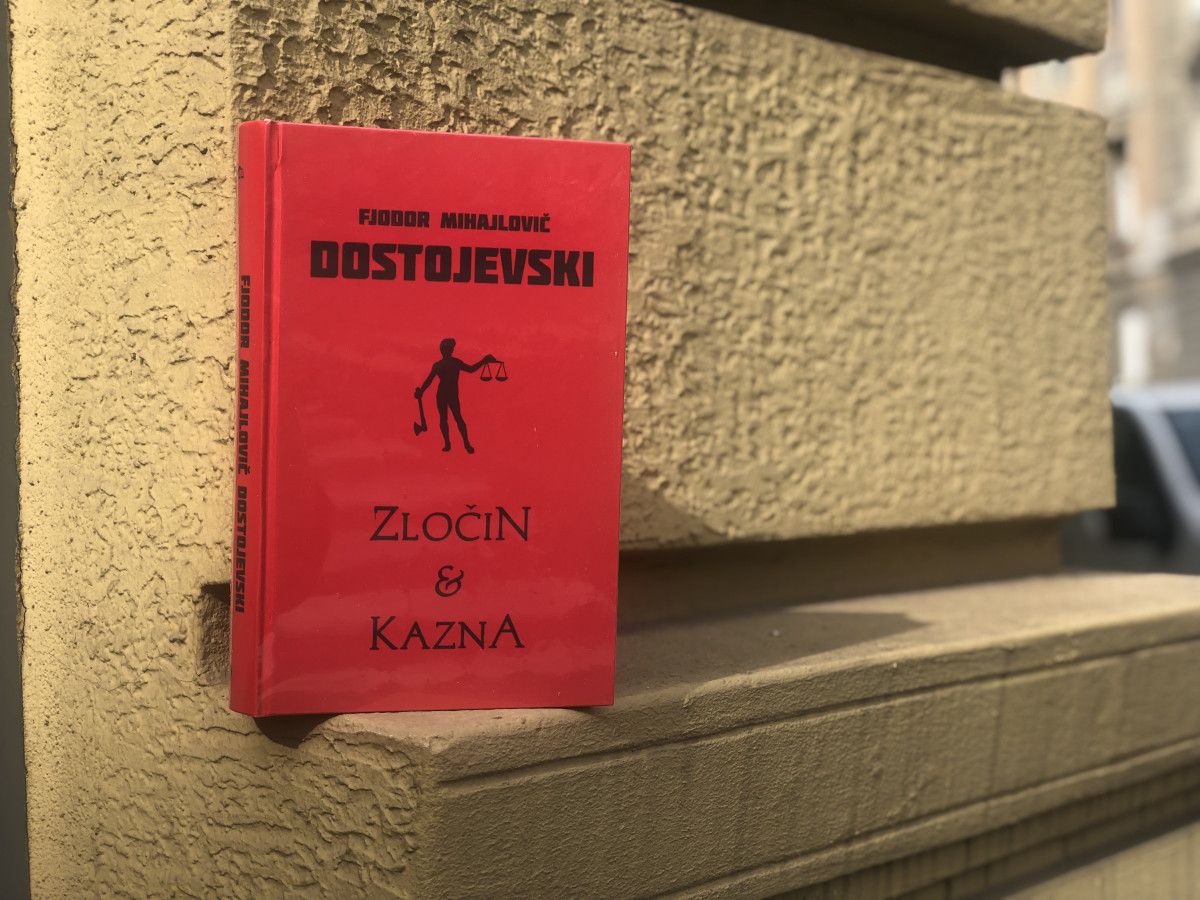
Photo: Marijana Matijević
Fyodor Mihajlovič Dostoevsky, according to many critics, is one of the best writers of all time. He wrote 16 short stories, 4 novellas, 12 novels and many other literary works. texts.
His works have been translated into almost 170 languages, and his work influenced numerous other great writers, such as Čehova, Sartrea and Nietzsche.
He is considered one of the greatest psychologists in literature. He penetrated deep into the minds of his characters, peering into the darkest parts of the human psyche.
Basic characteristics of the works of the Russian genius are;
- searching for the causes of human tragedy
- the relationship between man and God
The protagonists of his novels are rebels, Christians, prisoners and prostitutes, and in order to portray the consciousness of the individual and his mental state he mostly uses the inner monologue.
Dostoevsky's novels were staged and adapted for film.
Works of Fyodor Mihajlovic Dostoevsky
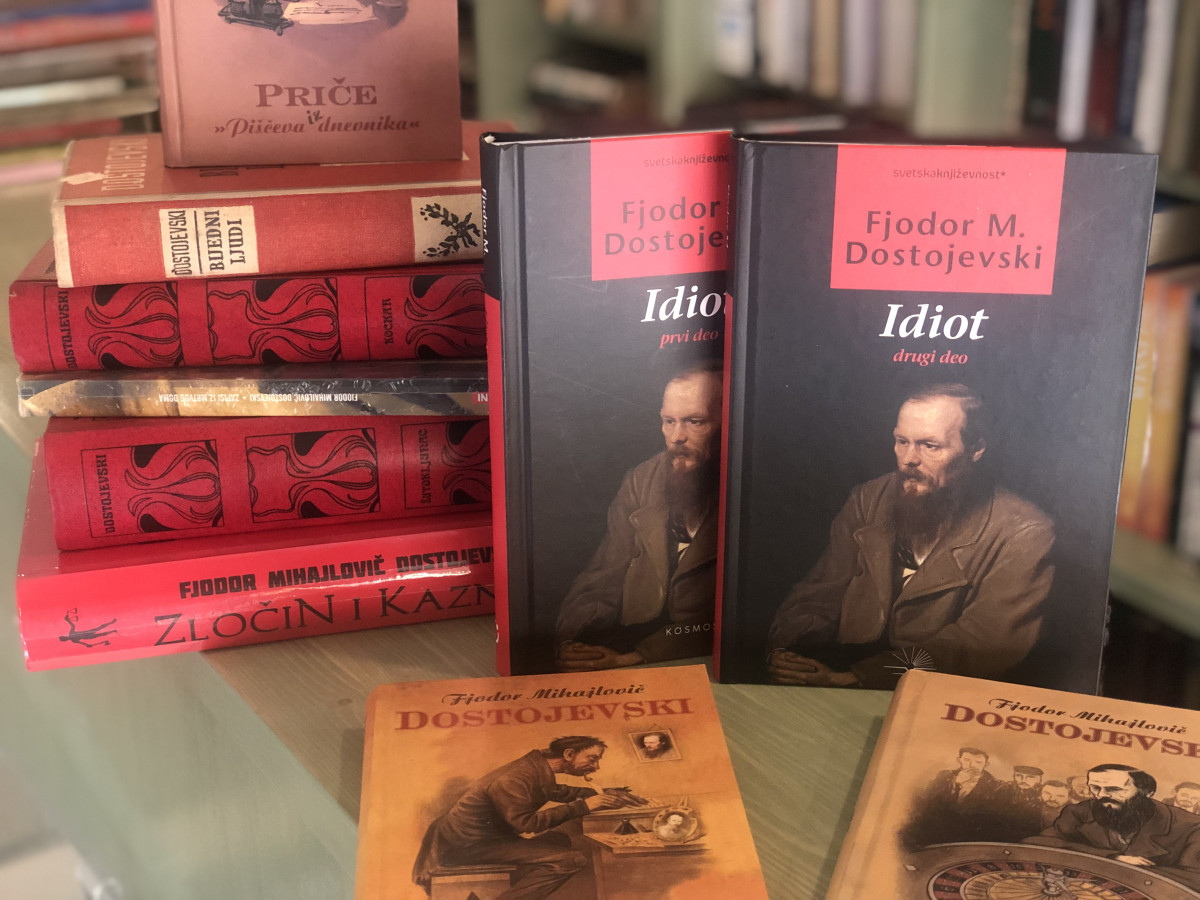
Photo: Marijana Matijević
Crime and punishment
It is about one of the best works of Russian literature. The main character, a poor law student, commits murder.
The moneylender Alyona Ivanovna was killed by him. Raskolnikov considers himself a great man who works for a higher purpose. Namely, he planned to kill the old woman in order to share her money earned by fraud
However, his own conscience begins to haunt him.
The novel is always relevant because it deals with fundamental questions of good and evil, guilt and forgiveness, faith and atheism.
Karamazov
The plot follows the lives of the depraved father and three brothers: the impulsive Mitja, the rational Ivan and the spiritual Alyosha.
After the father is found dead, the life of his sons changes irrevocably. wounds.
It is a philosophical dramatic novel that strongly reflects on faith, the meaning of life, love and morality.
Dostoyevsky wrote this masterpiece for almost two years, and it is also his last book.
The Gambler is a short novel by Fyodor Mihajlovich Dostoevsky about a young teacher employed by a former rich Russian general.
During his stays abroad, the writer often gambled and almost masochistically lost everything he had with him. Therefore, the central theme of this work is the gambling passion and addiction that even the main character could not resist.
it's not just a book about vices, but also about life and life's challenges that every person sooner or later encounters.
Zipisi iz podzemlja
The book was published in 1864 and is considered the first masterpiece It deals with the theme of despair and alienation that will become central in his later works. The main character is a poor and misunderstood intellectual. He shows spite and tries to prove that he is better than others.
iornost and inferiority. The man from the underground is socially rejected and poor, but, as I believe, he is superior to others in the spiritual and intellectual sense.
The Idiot
The young prince Mishkin returns to Russia after a long stay in Switzerland where he was treated in a sanatorium for epilepsy. In the novel "The Idiot", Dostoevsky created the character of a naive and well-intentioned young man who encounters love intrigues, betrayal and social intrigue.
Mishkin's innate goodness clashes with the moral decay of those around him, which leads to tragic consequences.
Prepared by: Marijana Matijević
Biblos Newsletter
For book lovers who enjoy finding the rare
New titles, special copies and quiet recommendations from the antiquarian bookshop.