
Friedrich Nietzsche - a great philosopher whose ideas were often misused
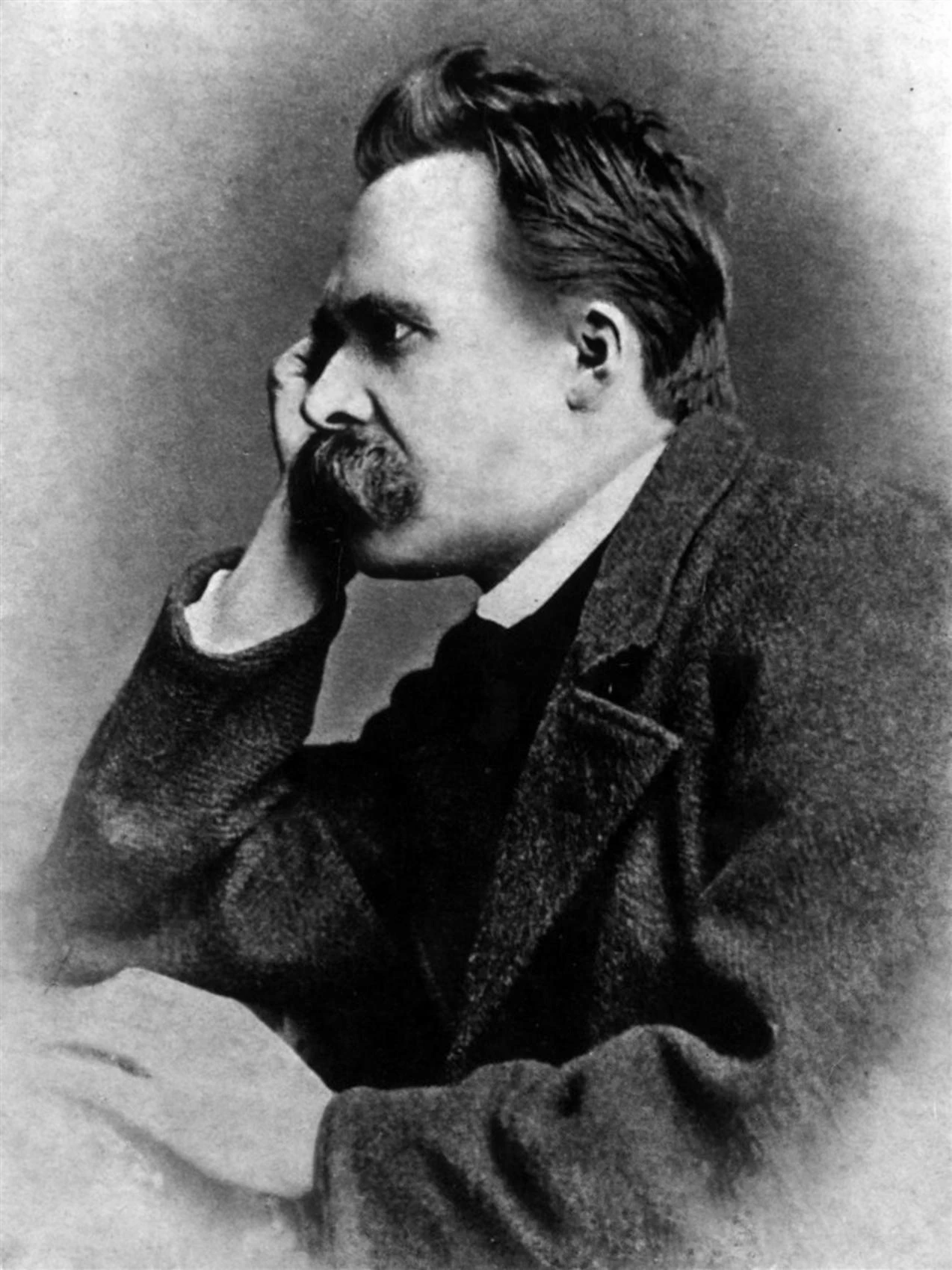
Friedrich Nietzsche was born in October 1844 in the eastern part of Germany. His father was a Lutheran priest, so he was a philosopher raised in a religious spirit.
He was very close to his father Carl Ludwig, who fell ill and died when he was only four years old. Friedrich thus grew up surrounded by women; mother, grandmother, two aunts and younger sister Elisabeth. After Carl's death, he began to doubt Christianity because he did not understand why his father was punished, and he was a servant of God.
From a young age, he showed exceptional intellectual abilities, which is why, among other things, at the age of only 24, he became the youngest professor of history at the University of Basel.
Most of his works at that time were in the field of philology, but he already showed great interest in philosophy, especially in the works of Arthur Schopenhauer and Friedrich Albert Lange. Also, in that period, he began a friendship with the composer Richard Wagner, whose music he loved immensely.
In January 1889, on the streets of Turin he saw a horse being whipped, which caused him to suffer a mental breakdown and he spent the rest of his life in an institution.
Nietzsche's ideas were misused during Nazi Germany, and unfortunately his sister Elisabeth, who falsified the letters of one of the greatest thinkers of the 19th century, greatly contributed to this.
Regarding in his love life he was passionately in love with Lou Andreas -Salomé, the daughter of a Russian general, who did not reciprocate his feelings and refused his marriage proposal.
Nietzsche's attitude towards religion and morality
"God is dead" is one of the most frequently quoted statements of the great German philosopher. The quote is often misunderstood or taken out of context.
According to Martin Heidegger this is not about banal atheism, but rather a reflection of the spiritual state of modern man.
Furthermore, given that Nietzsche was an atheist during his adult life, some believe that the philosopher did not think that there was a God who died, but that our idea of Him died. After the Enlightenment, the dominant view was that the universe was governed by physical laws rather than divine providence.
Therefore Europe no longer needed God who is the source of morality, order and values, because that role has now been taken over by philosophy and science.
However, it is possible that Nietzsche did not think that the "disappearance of God" was necessarily a good thing.
"God is dead. God remains dead. And we killed him. How can we console ourselves, murderers of all murderers? What was the holiest and most powerful of all that the world still possessed has bled to death under our knives: who will wipe that blood from us? With what water can we wash ourselves?" What kind of atonement festivals will we have to invent? Isn't the magnitude of this work too great for us to do, just to make ourselves worthy of it?"
; Friedrich Nietzsche
Nietzsche on truth
When we talk about truth, one of the fundamental philosophical concepts, according to Nietzsche the concept of truth was at one point necessary for human beings, but this is no longer the case. The German philosopher claims that truth is "an illusion that has been forgotten; a metaphor that is worn and weak".
Nietzsche also says that it bothers people more if they are in some way damaged by lies than the lie itself. That is, truth suits them only if it suits them. Because of this, truth and lies become relative.
In short, truth cannot be determined, it is a reflection of an individual's perspective and interpretation, guided by personal interests or the "will to power". Nietzsche
Nietzsche's contribution to the development of psychology
Like most philosophers of the 19th century, Nietzsche studied language, ethics, metaphysics and politics. Many historians of philosophy believe that the great thinker was actually one of the first psychologists.
In fact, he developed several concepts that are very important for psychology. For example:
- will to power
- superman (Übermensch)
He described the will to power as a primary motivating force that forces a person to overcome weakness, overcome fear and accept difficulties in life.
The concept of superman was in direct opposition to saints or the human soul in Christianity.
For Nietzsche, the superman is a free thinker, capable of developing his own values with the welfare of humanity in mind, rather than conforming to conventional, predetermined morality associated with religion.
He had a negative attitude towards Christianity and criticized Christian beliefs in most of his works.
The theory of eternal repetition

Photo: Marijana Matijević
Nietzsche based the theory of eternal return on the laws of physics. More precisely, on the first law of thermodynamics according to which "the energy of a closed system cannot disappear or be created from anything, energy can only change from one form to another, and it is constant."
According to the philosopher, from the present moment, time stretches infinitely forward and backward. All potential events have already happened and will repeat themselves eternally.
Contrary to some spiritual teachings about the inadequacy of our existence in this world and the promise of redemption and salvation of souls in an idyllic afterlife, Nietzsche believed that eternal repetition gives the affirmation of this life as a final existence.
"What if this life, as you live it now, and you lived it, you have to live it without number of times; every pain and every joy and every thought and every sigh, and everything unspeakably small and big in your life, must come to you again, and everything in the same order and sequence?"
Nietzsche
Photo: Marijana Matijević
Thus spoke Zarathustra
It is a fundamental book of Western philosophy and is considered one of Friedrich Nietzsche's greatest works. In this controversial and radical work, the philosopher deals with ideas about the superman, the death of God, the will to power and eternal repetition.
The author, in his autobiography, explained how he determined the title for the book. Namely, he believed that the real Zarathustra (Zoroaster) was the first to establish a moral system that would later be taken over by Christians and Jews, and it seems that it somehow suited him that the fictitious Zarathustra should be the one to overthrow the ethical system developed by the real ancient Iranian prophet.
Nietzsche declared that it was his favorite book.

Photo: Marijana Matijević
The Will to Power
"The Will to Power" is a philosophical discussion in which Nietzsche criticizes traditional morality and offers power to the individual who must give meaning and value to his life.
Power is the only and ultimate goal of life, he claimed, and the will to power is what drives human beings. According to Nietzsche, man's will to power is the only source of true freedom, so the individual must remain strong and strive for power in order to survive.
The ideas and thoughts from this work, thanks primarily to the author's sister, but also to some other interpreters, were misused during the Third Reich. These are distorted interpretations that are actually opposed to the fundamental principles and assumptions from the book.
Twilight of the Idol
The book deals with the disappearance of religion and philosophy. Nietzsche believes that in life we must be free from all beliefs, traditions and conventions, because this is the only way we can achieve our own freedom and self-discovery.
In fact, according to the famous thinker, this can only be achieved by living as if there is no God or gods.
The main idea of this work is that people are not born with innate ideas or knowledge, but must learn them from others who learned it before them.
sometimes contradictory. Namely, on the one hand, they are driven by noble, and on the other by ignoble, instinctive motives. Nietzsche challenges traditional moral values, arguing that they are not inalienable truths, but only human constructions.
During evolution, we developed various survival strategies that manifested as our moral and social norms.
For example, the way we understand good and evil, the importance we attach to guilt and punishment, and even our beliefs in divinity, according to the great philosopher, are based on practical human needs and desires, not on objective truths.
Photos: Canva, Pixabay
Prepared by: Marijana Matijević
Biblos Newsletter
For book lovers who enjoy finding the rare
New titles, special copies and quiet recommendations from the antiquarian bookshop.