
Helena Blavatsky, mystic of the 19th century
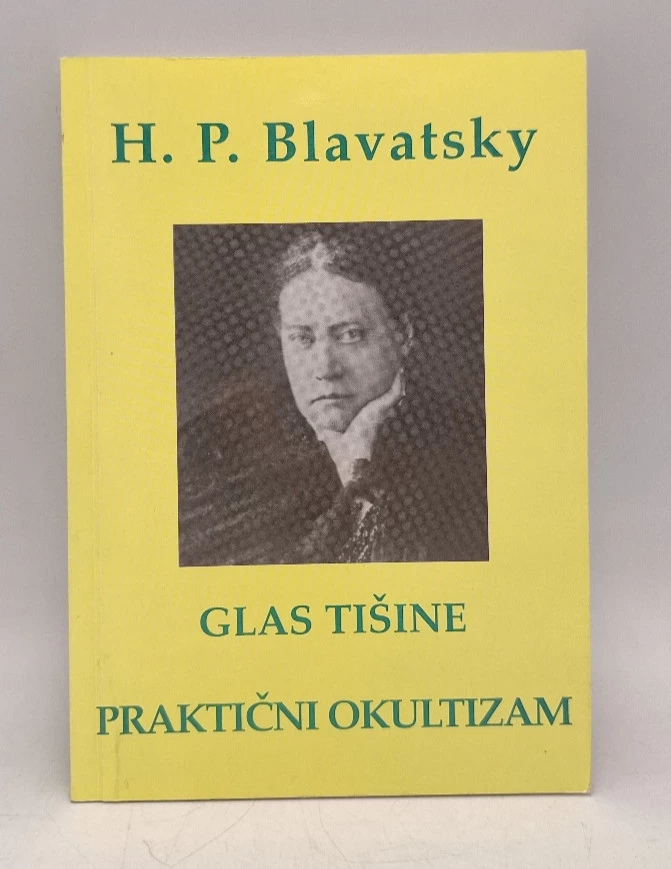
Helena Petrovna Blavatsky was born in Ukraine in 1831 in a German noble family. According to some theories, she was a descendant of Prince Rurik, the first official ruler of Russia. Her mother was a famous writer, and her grandmother was an artist and scientist.
When she was only 11 years old, she lost her mother, and considering that her father was a military officer, Helena Petrovna's childhood was marked by frequent moves.
She was very well-read, and she showed a special interest in occult literature. Also, from her earliest childhood, she had numerous talents.
So, for example, she was exceptionally gifted in music and from an early age she played the piano almost like a virtuoso. She performed at concerts all over Europe and many predicted a great musical career for her.
Her sister once stated:
"It seemed to Helena that all of nature had a mysterious life of its own. She heard the voice of every object and form."
At the age of seventeen, Blavatsky married the much older State Counselor and Vice-Governor Nicephorus Vasilievich Blavatsky. The marriage lasted only a few months.
It is not entirely clear why this unusual young woman decided to marry a man with whom, apparently, she did not have much in common.
After the separation, Helena began to travel around Turkey, Egypt, Greece, France and other countries.
Her opponents will say that she spent her early twentiesleading an immoral life in the capitals of Europe (according to some, she had affairs with a German baron, a Polish prince and a Hungarian opera singer).
However, the official version says that around 1851 in London she met Mahatma Morya, whom she considers her spiritual teacher. After that turning point in her life, Madame Blavatsky continued her travels around the world, and in the next few years she traveled to India, Tibet and South and North America where she was initiated into various secret societies and spiritual communities.
Perhaps the most significant trip of Helena Petrovna Blavatsky was the one to Tibet, where, as she claimed, she received keys to secret knowledge from Tibetan lamas.

Photo: Lhasa Tibet, Internet source
Her critics believe that at that time no westerner could live in Tibet, while others say that due to her specific physiognomy she could still easily and imperceptibly fit into the people there world.
Founding of the Theosophical Society
Various sources agree that Blavatsky moved to New York in 1873. In that city, she met the American colonel Henry Steele Olcott, with whom she founded the Theosophical Society in 1875. It is an esoteric science that connects Indian philosophy and religion with Western mysticism. The basic motto of the society was: "There is no religion above the truth." The three main goals of the Theosophical Society were are:
- To form the core of the universal brotherhood of mankind; without distinction by race, religion, sex, caste or skin color
- Study of ancient and modern religions, philosophies and sciences
- Exploration of inexplicable natural laws and hidden psychic powers within man
Some authors describe Helena Blavatsky as follows:
“She did not seem too spiritual. She smoked tobacco every day. She was simultaneously an aristocrat and a rebel who, for example, could not cook. That's right once tried to boil an egg by placing it on bare coals. She was a complex, moody woman prone to frequent mood swings."
In New Yo rk Madam Blavatsky wrote her first book Isis Revealed.In the book she criticized the science and religion of her time and emphasized how mystical experience is a means of achieving true spiritual insight.

Photo: Isis Unveiled, Biblos
Although Isis Unveiled attracted public attention, the membership of the Theosophical Society dwindled.
Blavatsky and Olcott went to India in 1879. There, three years later, they established the headquarters of the Theosophical Society at Adyar, near Madras. The company soon gained a large following in India. For example, Mahatma Gandhi and Jawaharlal Nehru declared that the Society helped them return to Hinduism.
Controversies and accusations
Blavatsky claimed to possess unusual psychic powers that manifested themselves in her childhood and youth.
During a trip to Paris and London, at the end of 1884, the Indian press accused her of inventing fictitious spiritualist phenomena. Namely, Emma Coulomb, a housewife in Madras, claimed that together with her husband she helped Blavatskoy to stage these phenomena and falsely portray herself as a person with special powers.
At first, Coulomb tried to blackmail her with this information. leaders of the Society, and then she went public.
The "Hodgson Report", the results of an investigation by the London Society for Psychical Research in 1885, declared Blavatsky a fraud. A century later, however, the society published a critical study of Hodgson's report and announced in a press release that Blavatsky was unjustly convicted.
Helena Blavatsky's books
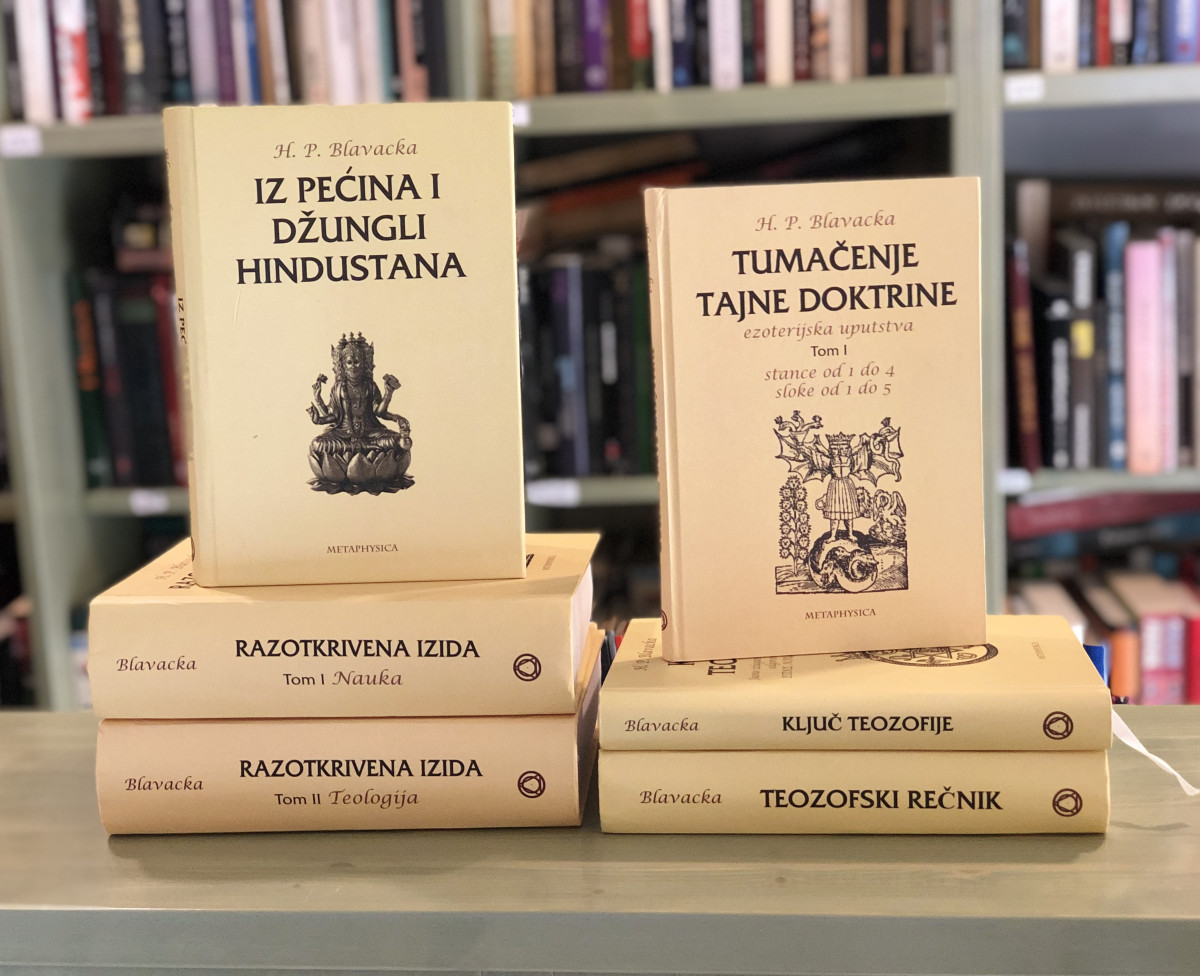
Photo: Biblos
Book Revealed Isis is divided into two parts. In the first part, Helena Blavatsky writes about the occult, as well as unknown natural forces, while in the second part she talks about the similarities of Christianity with Eastern religions such as Buddhism, Hinduism and Zoroastrianism.
She believed that all great world religions originate from the same source.
In both volumes of the book there are keys to secret knowledge, and Blavatsky invites readers to discover them. The meaning of life, according to the author, is in spiritual knowledge, and there are many paths/keys. He who seeks, he will find!
From the caves and jungles of Hindustan
In this book, Helena Blavatsky writes about the mysterious Indian sect of Raja Yogis, holy sages, dedicated to complex spiritual exercises for which able to perform various miracles.
Through the people she met during her stay in those regions, the author wanted to discover India "from the inside". Therefore, the book reflects many aspects of Indian spirituality, the specifics of traditional Indian society, as well as a critical review of the English colonial rule.
It is an esoteric book that was published in 1888 in two parts. The first volume is called cosmogenesis, and the second anthropogenesis.
In the first In the second part, the author discusses the origin and disappearance of worlds, cosmic evolution and spiritual laws that govern the world. In the second part, he writes about the spiritual evolution of individuals and races.
Some criticized the book because they thought it encouraged pseudoscience, and on the other hand, Albert Einstein allegedly highly valued this work and considered it the Holy Grail of modern science.
The book is written in the form of questions and answers, it clearly expresses the main theosophical principles. It talks about reincarnation, the nature of human beings and life after death. The book also responds to the remarks of the average interlocutor from the West.
Indian politician Mahatma Gandhi in his autobiography pointed out:
"This book stimulated in me the desire to read books about Hinduism and freed me from the opinions of missionaries who think that Hinduism is full of superstitions."
Theosophical Dictionary is a posthumous work published in 1892. The aim of the book is to introduce the reader to terms from Sanskrit, Pali, Persia, Scandinavia, as well as terms from kabbalistic, gnostic and occult traditions.
Prepared by: Marijana Matijević
Biblos Newsletter
For book lovers who enjoy finding the rare
New titles, special copies and quiet recommendations from the antiquarian bookshop.