

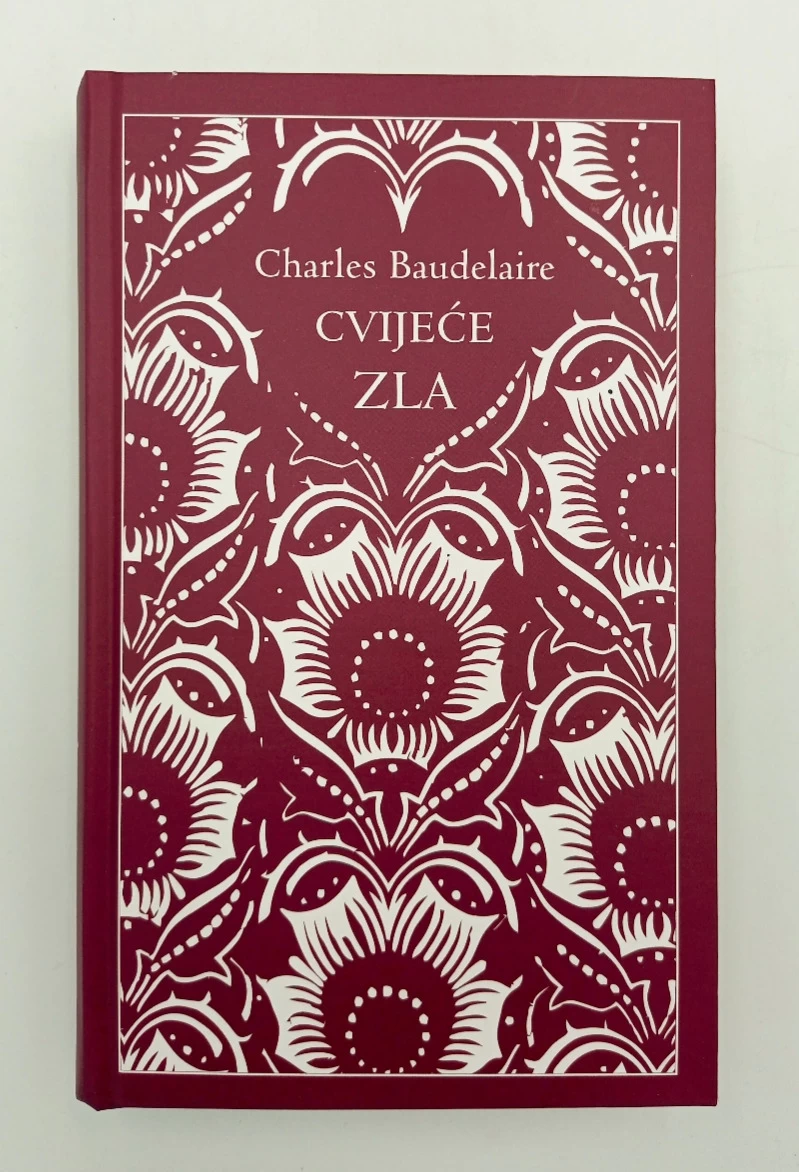
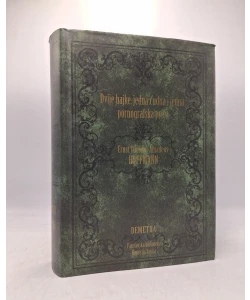
Cvijeće zla
Basic information
- Author: Baudelaire Charles
- Publisher: Šareni dućan
- Availability: Available
- Condition: New book
- Code: 62840
Shipping options
Payment methods
Explore more
Cvijeće zla
Baudelaire Charles
Summary
Charles Baudelaire: The Flowers of Evil
It is almost impossible to emphasize enough the importance of Baudelaire's The Flowers of Evil in the context of the history of world literature and its, literally, immeasurable influence. Baudelaire introduced previously unimaginable topics into literature that were approached only by a few of his predecessors (for example, his great role model E. A. Poe), but mostly in a broad arc. If we look at the collection at that level as an example of a kind of aesthetics of the ugly, we remain amazed at the way in which Baudelaire clothed shocking images from the edge of life in the garb of poetic perfection, how he combined sensuality and spirituality, innocence and violence, beauty (flowers) and evil with the marvelous beauty of words. .. Writing in 1903 about Baudelaire, A. G. Matoš did not hide his enthusiasm for The Flowers of Evil: Baudelaire conjured up a miracle unknown to the most famous theories: that he turns the most bitter pain, the greatest negation into harmony, into poetry... I think that The Flowers of Evil is one of the greatest works of the last century...
Additional information
- Author: Baudelaire Charles
- Publisher: Šareni dućan
- Year of publication:2016
- Place of publication:Koprivnica
- Pages:288
- Dimensions:14x22 cm
- Script:Latin script
- Condition:New book
- Binding:Hardcover
Reviews
0 reviewsWrite a review
Share your experience and help other readers choose.
This item has no reviews yet. Be the first to share your experience.
More books by Baudelaire Charles




More books from Šareni dućan









You may also like








Recently viewed
