

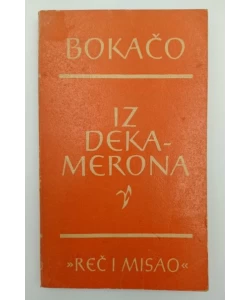
Dekameron
Basic information
- Author: Boccaccio Giovanni
- Publisher: Šareni dućan
- Availability: Sold out
- Condition: New book
- Code: 56217
Shipping options
Payment methods
Explore more
Dekameron
Boccaccio Giovanni
Summary
Giovanni Boccaccio: The Decameron
Written almost seven centuries ago, the Decameron was and remains a unique work in the history of world literature. It is a collection of a hundred novellas (stories) narrated by ten girls and boys over ten days. Writing openly and simply, not shying away from erotic and even lascivious stories, but sometimes cruel scenes, Boccaccio, like no one before in the Christian world, will put the so-called ordinary man at the center of all events. These are life stories, mostly love, fun and instructive, with a lot of spirit but also critical, stories about people from the common people and nobility, not about gods, but about people "of flesh and blood", similar and close to the readers. In a masterfully divorced, we could say "baroque" style, lively and naturalistically convincing, in the middle of the 14th century, Boccaccio tells a hundred comic and tragic stories about witty lovers, devious tricksters, sly swindlers, voluptuous churchmen, deceived spouses, perverted girls, potent young men, about eating and drinking, about...
It is also of exceptional significance that Boccaccio wrote in the vernacular (and thus became one of the creators of the Italian literary language), thereby continuing the break with medieval Latinity, and also represents a great novelty in relation to Dante, because he brings themes and motifs, mostly of a secular nature. Boccaccio stands at the beginning of a great spiritual tradition which is rightly called, like his period, humanistic; is one of the pioneers of modern literature, literature devoted to and preoccupied with human, not astral or abstract problems.
The Decameron is a canonical masterpiece that has continuously attracted readers and experts for centuries and inspired other writers, among whom were some of the greatest, such as Shakespeare, Chaucer, Montaigne, Goethe... all in all, more than enough reasons for a new publication and reading!
Additional information
- Author: Boccaccio Giovanni
- Publisher: Šareni dućan
- Year of publication:2018
- Place of publication:Koprivnica
- Pages:549
- Dimensions:17x24 cm
- Script:Latin script
- Condition:New book
- Binding:Hardcover
Reviews
0 reviewsWrite a review
Share your experience and help other readers choose.
This item has no reviews yet. Be the first to share your experience.
More books by Boccaccio Giovanni
More books from Šareni dućan









You may also like