
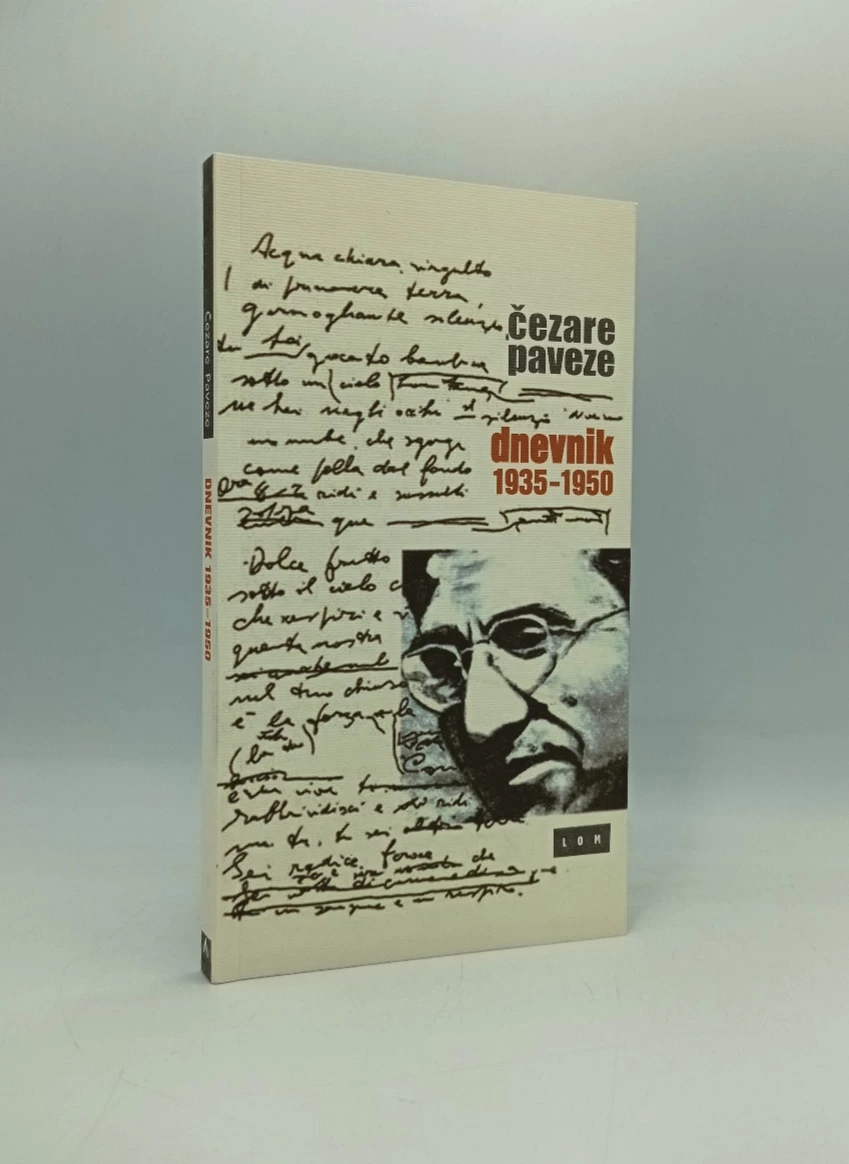
Dnevnik 1935 - 1950
Basic information
- Author: Pavese Cesare
- Publisher: LOM
- Availability: Available
- Condition: New book
- Code: 67918
Shipping options
Payment methods
Explore more
Dnevnik 1935 - 1950
Pavese Cesare
Summary
Cesare Pavese: Diary 1935 - 1950
In Dnevnik we find the foci of Pavese's feelings about the world, the code of his being. These are sadness for the irretrievably lost spontaneity, which is the embodiment of childhood; inability to see things "for the first time"; amazement before the turmoil of instincts, before the wild, raw, primitive, which overcome rational knowledge, and in connection with this, the increase of interest in mythical, pagan, superstitious; awareness of the passing time being a memory, resurrecting the past; knowledge of the existence of forces that govern human life in the form of destiny or destiny; alienation, "unrootedness", loneliness as a consequence of establishing a human relationship. From the foreword by Jugana Stojanović
"A strange moment (at the age of thirteen or twelve) when you separated from your homeland, when you caught a glimpse of the world, when you flew away on the wings of your imagination (adventures, cities, names, rhythms of delight, the unknown) and when you were not aware that a long journey was beginning which, through cities, adventures, names, enchantment, an unknown world, you would discover how much richer than all that future was precisely that moment of separation - the moment in which you were more a village than a world - when you look back. That's because you now carry the future, the world in you as a past, as an experience, as a technique, and the eternal and rich secret is again found in you as your childhood being that you didn't have time to possess."
Dnevnik, February 13, 1949
Additional information
- Author: Pavese Cesare
- Publisher: LOM
- Year of publication:2016
- Place of publication:Beograd
- Pages:130
- Dimensions:12.5x22 cm
- Script:Latin script
- Condition:New book
- Binding:Softcover
Reviews
0 reviewsWrite a review
Share your experience and help other readers choose.
This item has no reviews yet. Be the first to share your experience.
More books by Pavese Cesare
More books from LOM











You may also like