
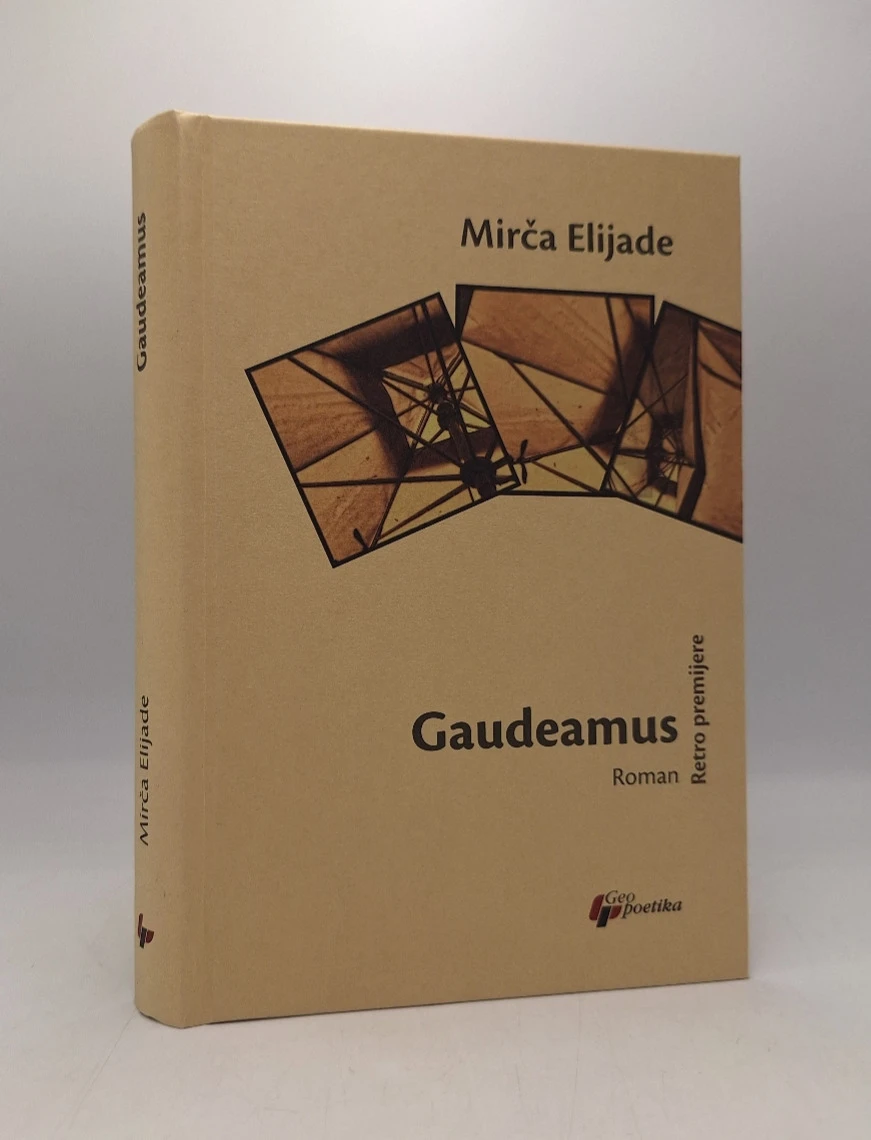
Gaudeamus
€ 16,00
Free delivery in Croatia for orders over EUR 70
Basic information
- Author: Eliade Mircea
- Publisher: Geopoetika
- Availability: Available
- Condition: New book
- Code: 80483
Shipping options
BOXNOW shipping
Delivery time: 2-3 days
Dostava se vrši u odabrani BoxNow paketomat.
Free
GLS Croatia
Delivery time: 1-2 working days (RH)
Delivery is made via the GLS delivery service.
5,00 €
Delivery
Delivery time: 3-21 working days
We send the delivery price via email within 24 hours.
Price on request
Personal collection at the antique store
Palmotićeva 28, 10000 Zagreb
Free
GLS parcel machine
Delivery time: 1-2 working days
Delivery is made to the selected GLS package machine.
3,00 €
Payment methods
Pay on pickup
CorvusPay
By general payment / Virman / Internet banking
Apple Pay / Google Pay
Pay with Apple Pay or Google Pay on the secure CorvusPay page.
Cash on delivery
Explore more
Gaudeamus
Eliade Mircea
Summary
Mircea Eliade: Gaudeamus
on the characters, he staged the discussion as a conflict between different people, as a "theatre of ideas", using however real individuals, his friends at the time, isolated to a certain extent from the background, half-imaginary or half-real characters, who still belong to one original reality, known only to him, but not to the readers...In a certain way, the unplanned publication of the novel after the author's death led to the text becoming non-transparent, but it is precisely this apparent lack of information that gives the text density meanings. Losing the quality of a (one hundred percent) autobiography, or a "novel with a key", Gaudeamus acquires a more important aspect of quality, becoming a novel of an era, or a novel of a certain age from an era, historical in the first version, and ahistorical in the second...
In Diary/Novel of a Myopic Adolescent Eliade introduces imaginary characters on the scene who were often ridiculed for their attitudes, quite ridiculous, but understandable considering for years. Here, in Gaudeamus, the author's reality appears, which is intended to be something completely different, i.e. a portrait of a real, true generation, admittedly, a portrait constructed by the author himself. In both novels, the imaginary overlaps with the real, but the two never coincide. What the characters imagined in the first novel, each starting from their own obsessions, and concealing them, is now exposed by the narrator, to get rid of them and thus create a starting point for a portrait of a generation, which is real from a historical point of view. 2018
Additional information
- Author: Eliade Mircea
- Publisher: Geopoetika
- Year of publication:2022
- Place of publication:Beograd
- Pages:247
- Dimensions:14x21 cm
- Script:Latin script
- Condition:New book
- Binding:Hardcover
Reviews
0 reviewsWrite a review
Share your experience and help other readers choose.
This item has no reviews yet. Be the first to share your experience.
More books by Eliade Mircea


More books from Geopoetika

You may also like




Recently viewed