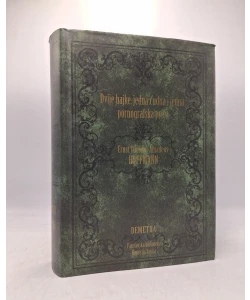


Kabinet voštanih figura
Basic information
- Author: Iljf i Petrov
- Publisher: Šareni dućan
- Availability: Available
- Condition: New book
- Code: 56667
Shipping options
Payment methods
Explore more
Kabinet voštanih figura
Iljf i Petrov
Summary
Ilya Iljf and Evgeny Petrov: The Cabinet of Wax Figures
"In the new revolutionary Soviet Russia, humor no longer has nor will it ever have the meaning it had... before the revolution, not even in our fight against the bureaucracy." - Although this "programmatic" sentence today may sound like it was extracted from some humor by Iljf and Petrov, the matter was much more serious, it is a quote from the party newspaper "Crvena štima" from 1923. And when Stalin took power a few years later, the matter became even more serious, so the same newspaper now dictates: "It is necessary to change the methods - it is necessary to abandon playfulness and approach a serious way of fighting."
By some miracle, Iljf and Petrov had no problems with the government, probably because the "struggle for a bright future" took place in an arena that was outside the focus of their writing, and they themselves never expressed a single thought that would even indirectly criticize Stalin. In their works, they ridiculed the bureaucratization of the young Soviet society and the age-old human weaknesses (let's mention just a few, let's say the letter L): levity, frivolity, laziness, lying, hypocrisy...
Iljf and Petrov wrote most of their works together, and they gained world fame with the humorous novels Twelve Chairs and The Golden Calf and the humor stories from this book. The protagonist of the novel, the witty swindler Ostap Bender, is certainly the most famous hero of "two writers who became one", but they also created a whole gallery of unusual characters, a real "cabinet of wax figures", and precisely such anti-heroes are the main heroes of this humorous collection.
Additional information
- Author: Iljf i Petrov
- Publisher: Šareni dućan
- Year of publication:2017
- Place of publication:Koprivnica
- Pages:188
- Dimensions:13x20 cm
- Script:Latin script
- Condition:New book
- Binding:Hardcover
Reviews
0 reviewsWrite a review
Share your experience and help other readers choose.
This item has no reviews yet. Be the first to share your experience.
More books by Iljf i Petrov
More books from Šareni dućan







You may also like