
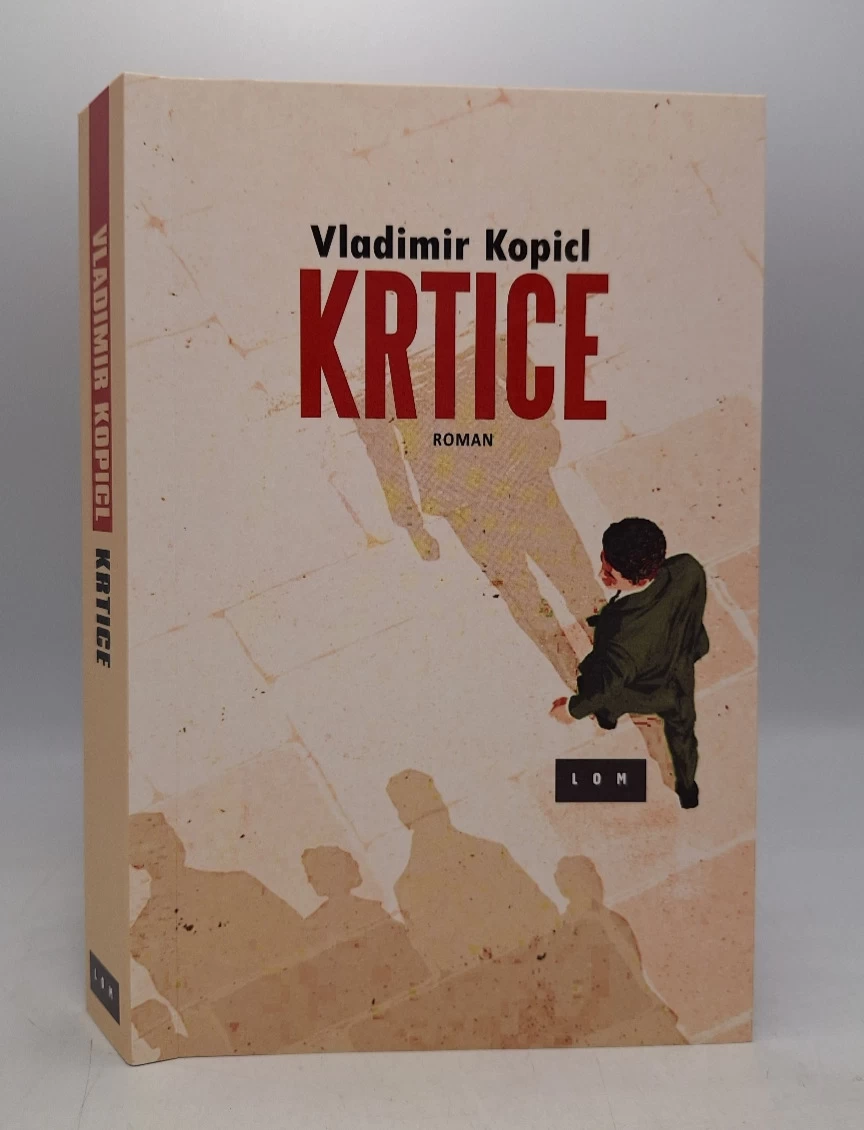
Krtice
Basic information
- Author: Kopicl Vladimir
- Publisher: LOM
- Availability: Available
- Condition: New book
- Code: 80308
Shipping options
Payment methods
Explore more
Krtice
Kopicl Vladimir
Summary
Vladimir Kopicl: Moles
While most of them safely narrate, Kopicl fatally playfully writes, prescribes, crosses, squeezes out of the usual and strains the language, thematic dominants, time planes, elusive temperaments and outlines of the heroes of his novel, not disdaining the change of genre code and other craft equipment in the middle of the game. Thus, the linguistically relaxed and thematically playful structure of Krtica cheerfully levitates between the urban sins of today and the hyperbolized image of the nearest future, revealing the image of the city as an organism that disappears before the indifference of the construction lobby and the inert self-sufficiency of local politics.
Of course, this is not a political-activist study, but a futurological questionnaire intertwined with living human experience and swirling in a novelistic way, with a flavor of recognizable city events in which our leaders and little leaders, tough guys and gentle ladies, investors of above-ground freaks and underground pop excel or oppose, as well as numerous miracles with which we are more and more reconciled to exist day by day. But even without the admixture of a dystopian feeling, Krtice, in addition to everything already pointed out, is also an enviable language training ground for all kinds of travesties, humor, incredible, almost dreamlike twists and solutions, the likes of which we have not even dreamed of. Let alone in a book. But we got them here, and on a very readable, finely composed literary platter.
Additional information
- Author: Kopicl Vladimir
- Publisher: LOM
- Year of publication:2025
- Place of publication:Beograd
- Pages:350
- Dimensions:13x20 cm
- Script:Latin script
- Condition:New book
- Binding:Softcover
Reviews
0 reviewsWrite a review
Share your experience and help other readers choose.
This item has no reviews yet. Be the first to share your experience.
More books by Kopicl Vladimir
More books from LOM





You may also like