
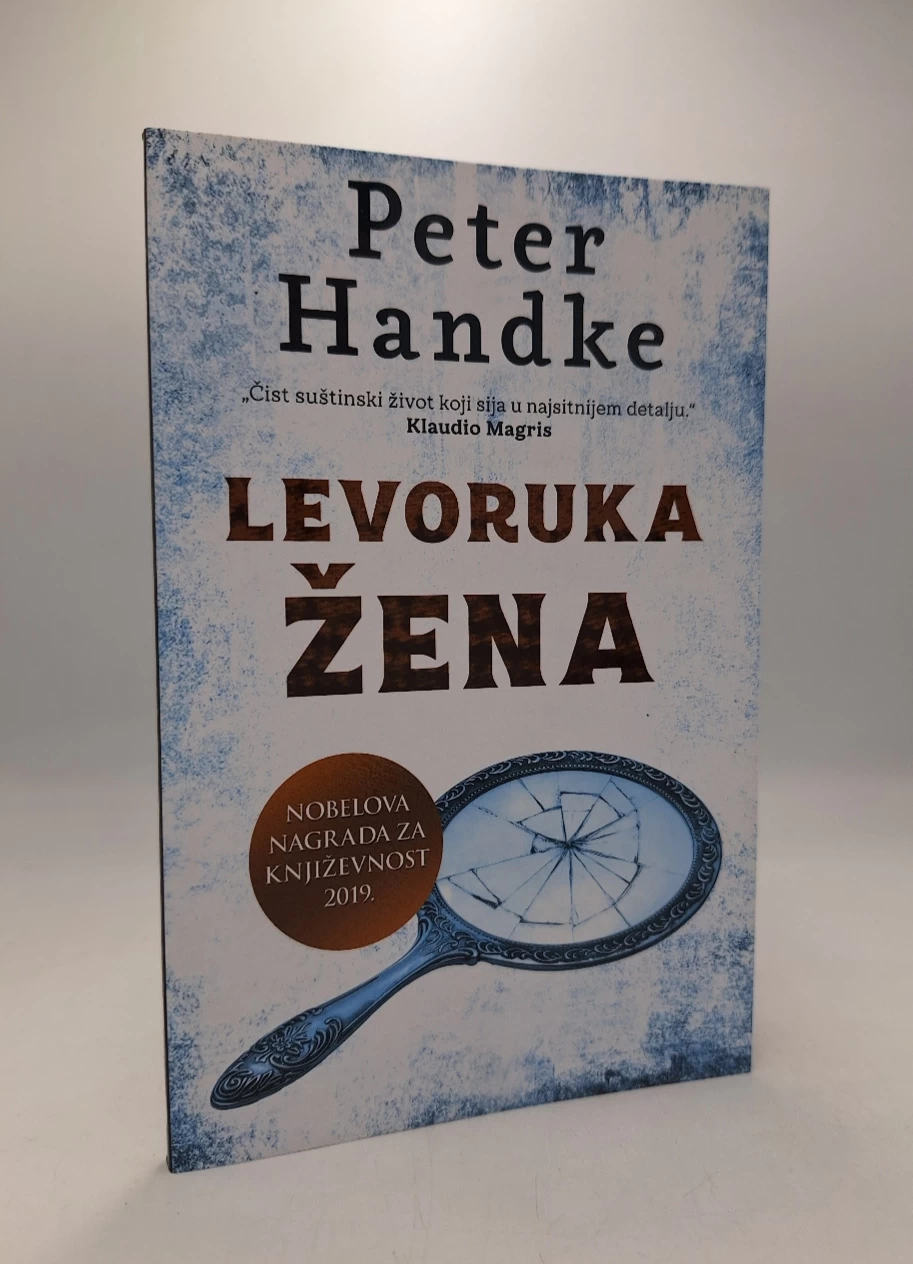
Levoruka žena
Basic information
- Author: Handke Peter
- Publisher: Laguna
- Availability: Available
- Condition: New book
- Code: 80257
Shipping options
Payment methods
Explore more
Levoruka žena
Handke Peter
Summary
Peter Handke: Left-handed Woman
For no apparent reason, and under the influence of an "enlightenment" that she does not want to explain, Mariana begs her husband to leave her, to leave and leave her alone with her eight-year-old child. And here she is, finally "free", as she experiences moments of panic for the first time, restlessly wandering around the rooms that are beginning to suffocate her. She also returns to her old job as a translator from French, but when she sits at home at the typewriter, she cannot type. The silence in the apartment exhausts her, so she goes for walks, visits her friend Franciska. And so day after day, hour after hour, what began as an escape from the terrifying emptiness of life gradually becomes true liberation.
Rejecting the delinquent forms of the sixties, Handke's ruthless but delicate storytelling machine adopted the objective and indifferent gaze of the film camera. The story of Marijana and Bruno is entirely composed of scenes of subtleties imperceptible to the naked eye, which many would write off as unimportant and which, instead, more than anything determine the happiness or unhappiness of an individual: small movements, glances, tones of voice from page to page are integrated into an unforgettable portrait of a woman on the threshold of a "long period of solitude".
Additional information
- Author: Handke Peter
- Publisher: Laguna
- Year of publication:2022
- Place of publication:Beograd
- Pages:104
- Dimensions:13x20 cm
- Script:Latin script
- Condition:New book
- Binding:Softcover
Reviews
0 reviewsWrite a review
Share your experience and help other readers choose.
This item has no reviews yet. Be the first to share your experience.
More books by Handke Peter
More books from Laguna
You may also like




Recently viewed