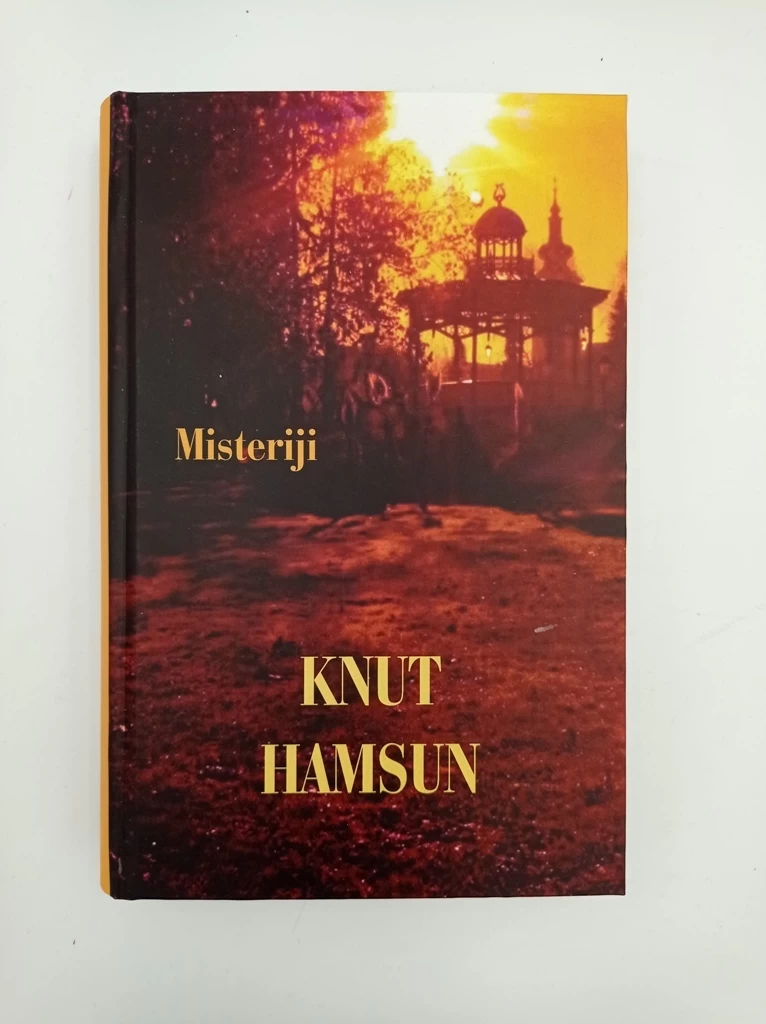
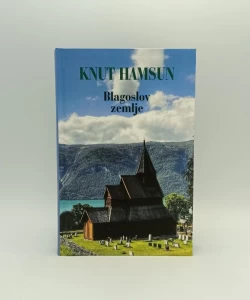
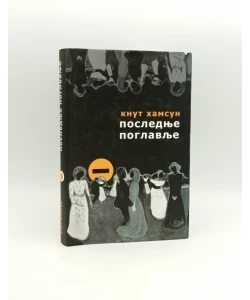
Knut Hamsun: The Mysteries
Hamsun's eye always shone and thundered, both during his life and after his death. In terms of his literary works, everyone is unanimous that he is a genius writer, a linguistic wizard, a skilled seducer with words... but the condemnations are also unanimous in terms of his political works and his open leaning towards Nazism. There was probably no Hamsun reader who did not wonder how it was possible that a man who was capable of creating such high-art works was not aware of his, to put it mildly, low-moral political views...
"As a modern psychologist, I will illuminate and listen to the soul. I will illuminate it lengthwise and crosswise, from all points of view, peer into every secret cave; I will stick the most obscure movements on my needle and put them under a magnifying glass", the words are self-confident Hamsuna, which perhaps came to the fore in the novel Mysteries - one of his most complex and, according to many, his best works. This tragic love story is actually a book of great monologues, a great study of the human soul, with which Hamsun best confirms the words of Thomas Mann when he described him as a "descendant of Dostoevsky and Nietzsche". The main character Johan Nagel is an exceptional literary character, a tortured and torn soul, a loner, a contradictory polemicist and lyricist, who lives between dream and reality, split by his thoughts and feelings. "I am a foreigner, a stranger in life, God's fixed idea", says the mysterious hero about himself.
After its publication (1892), the novel was often misunderstood due to its innovation and peculiarity, but that's why the time worked for Hamsun's Mysteries, which later fascinated generations of readers and largely contributed to Hamsun becoming Hamsun, one of the greatest writers the world has known. had.