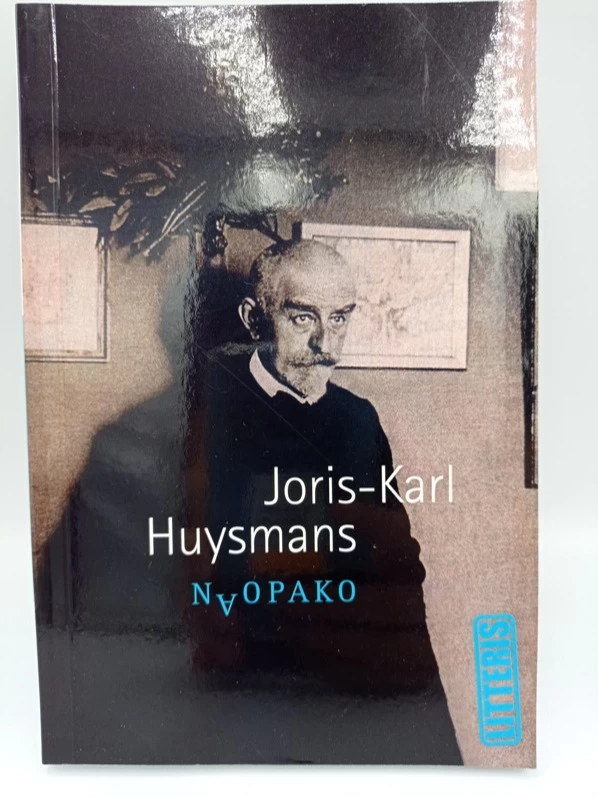
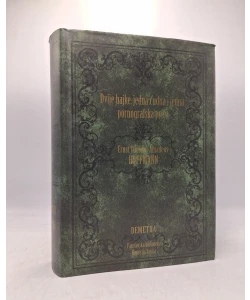
Joris-Karl Huysmans: Upside Down
This novel is considered the bible of decadence and the most terrible blow to naturalism in literature, as this work was evaluated by Zola. Mixing a story, a poem in prose, pages of history and criticism, Huysmans dissects the already rotten French society of that time with a literary scalpel. "Upside Down" is an example of a great anti-novel that introduces a type of esthete into literature, Jean Floressas des Esseintes, the last offshoot of an aristocratic tree and a representative of a dilapidated civilization, who decided to withdraw from the world and indulge in subtle-morbid passions. In delicate health, but full of money, this monk of decadence tries to deceive boredom with revived debauchery, to stimulate the senses with all kinds of exaggerations. His loneliness in Fontenay is a fin-de-siècle neurosis, a closed world inhabited only by precious objects and subtle sensations: perfumes, jewels, rare flowers, reading Latin literature from the age of decay, the search for Baudelaire correspondences between music, image and taste. The enjoyment of the artificial, then and now, has deep roots in the awakening of the imagination. This work thus fulfills Flaubert's old dream: to write a book that will stand up thanks to the strength of its style. Joris-Karl Huysmans (1848 – 1907) is a French novelist of Dutch origin. He began his career as a novelist within the framework of the naturalist school (the novel "Sestre Vatard" is dedicated to Zola) only to be drawn by his intimate twist and refined aesthetic intuition into the garb of mystical symbolism (the novels "Cathedral", "There"). Huysmans also published a series of successful criticisms dedicated to the once disputed artists Baudelaire, Mallarme, Rops, Cezanne...