
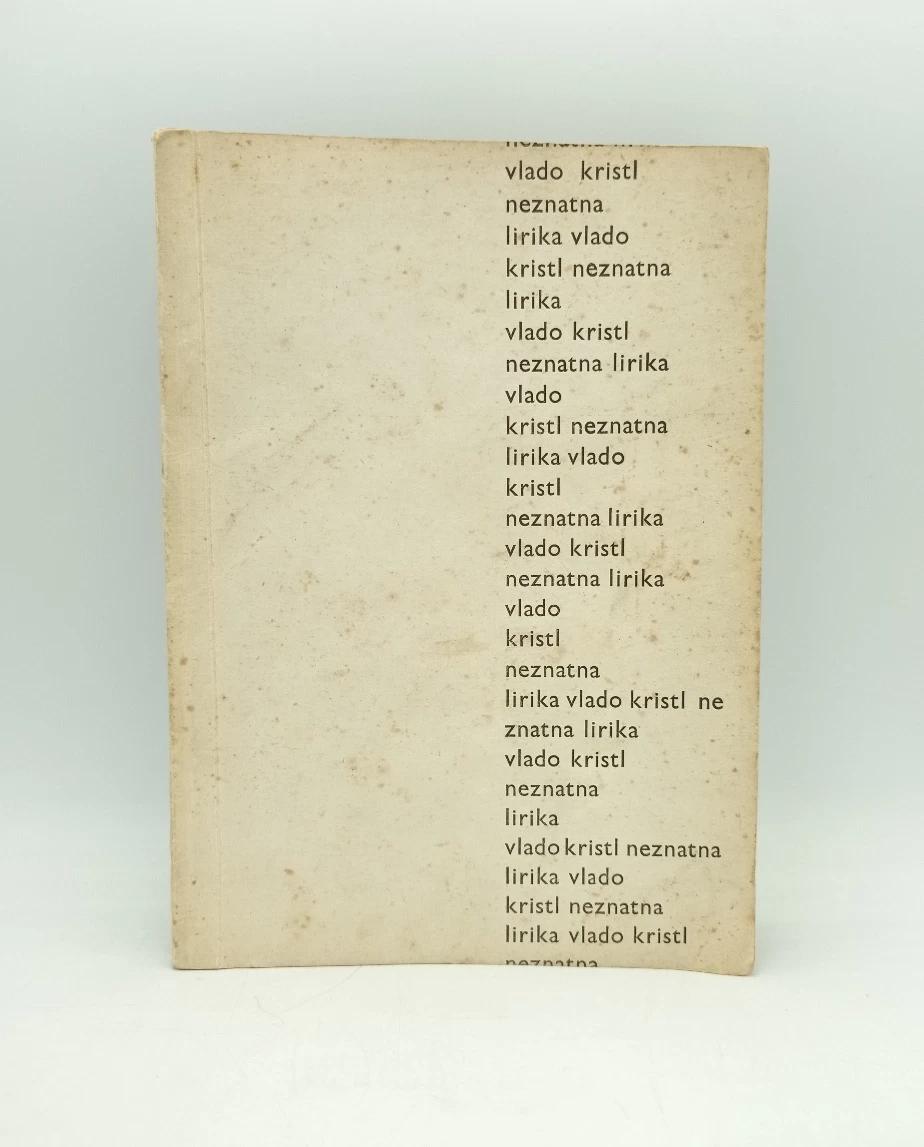
Neznatna lirika
Basic information
- Author: Kristl Vlado
- Publisher: Vlastita naklada
- Availability: Available
- Condition: Very good
- Code: 64805
Shipping options
Payment methods
Explore more
Neznatna lirika
Kristl Vlado
Summary
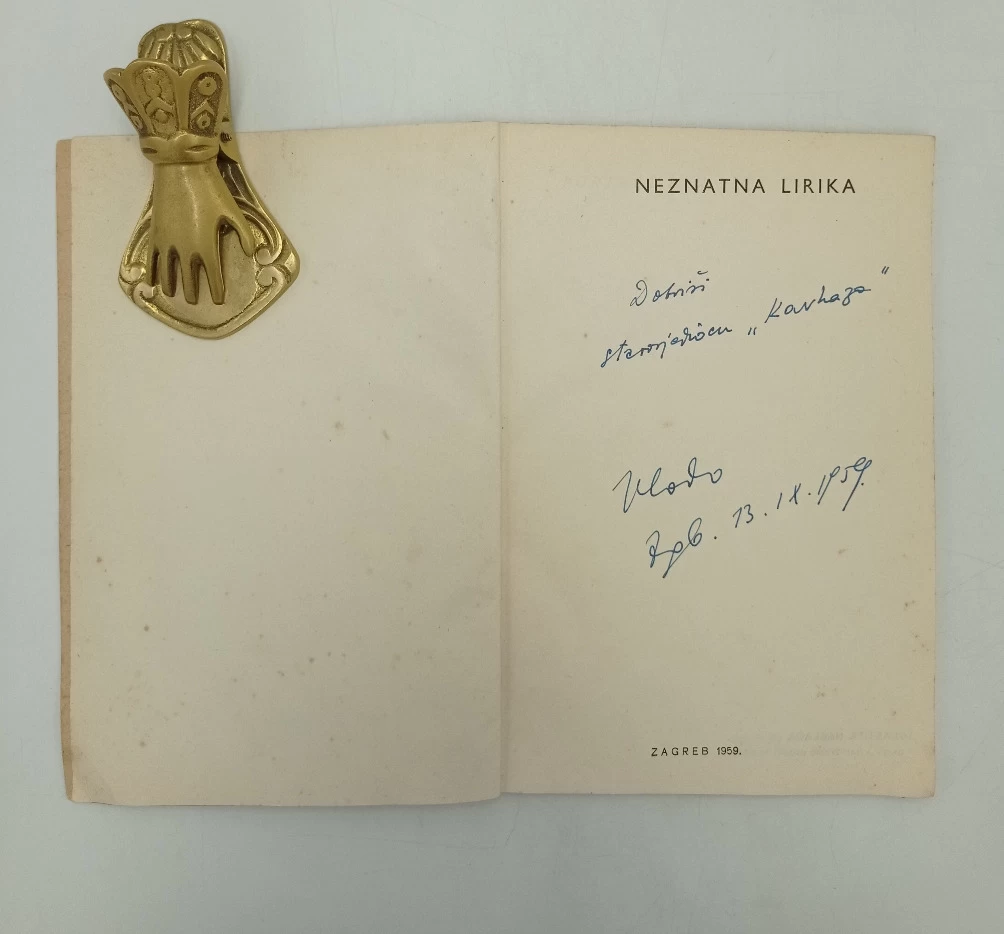
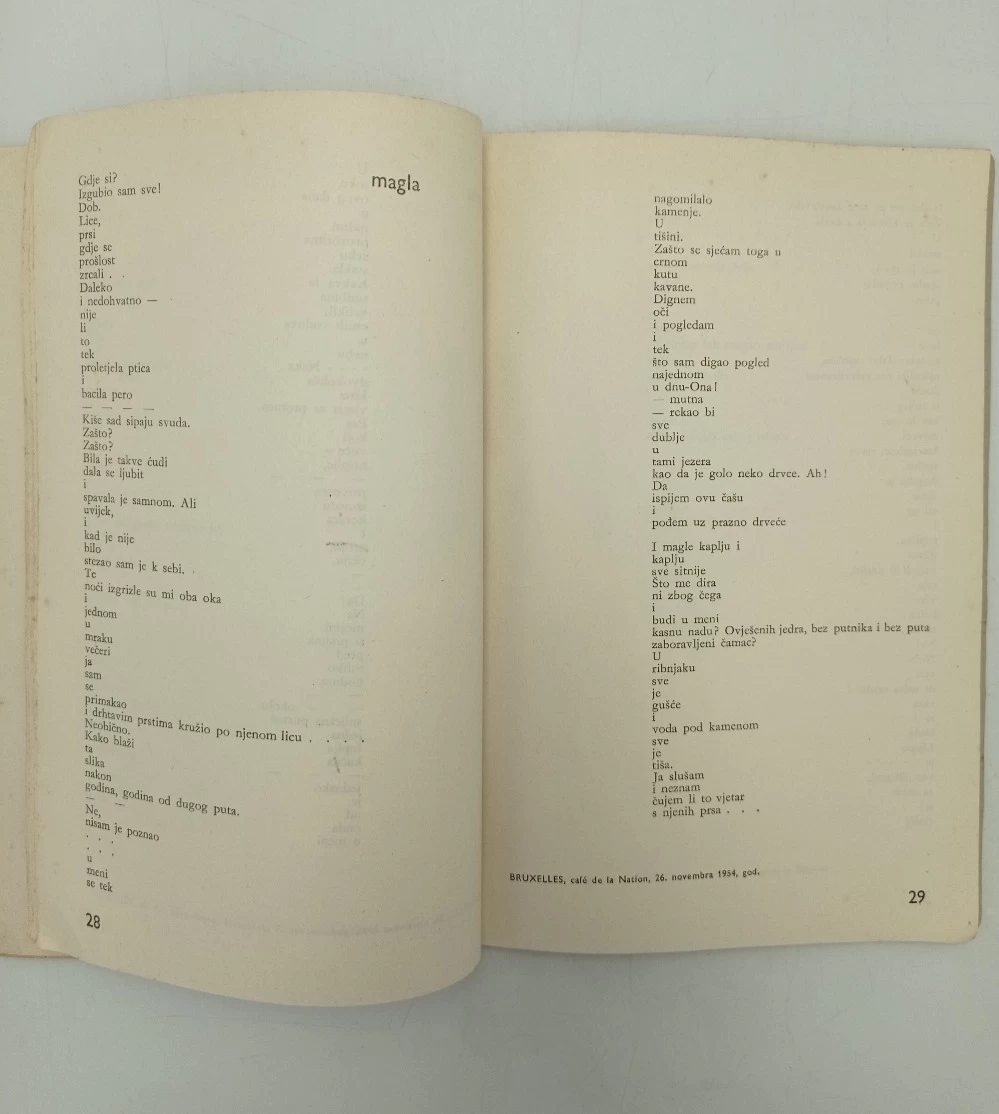
Vlado Kristl: Neznatna lirika
Posveta Vlade Kristla Dobriši Cesariću.
Prva zbirka poezije Vlade Kristla. Prvo izdanje, vlastita naklada Zagreb, 1959. Jako rijetko u ponudi.
Zanimljivo je da su na kraju knjige stranice s nekoliko reklama, između ostalih, reklama za još jednog velikog umjetnika i njegov arhitektonski biro - Božidara Rašice.
Stvaralaštvo Vlade Kristla obilježila je neprekidna borba protiv nametnutih konvencija, o čemu svjedoči bogat opus djela koji obuhvaća crteže, slike, animirane i eksperimentalne filmove, karikature i plakate. He was a member of the group EXAT 51 and one of the pioneers of the Zagreb School of Animated Film. Za vrijeme Drugoga svjetskog rata Kristl je radio za Agitprop u Otočcu, gdje je izrađivao plakate, letke, ilustracije i karikature. Nakon završetka rata, 1949. godine diplomira na Akademiji likovnih umjetnosti, nakon čega postaje članom grupe EXSAT 51 , te 1953. godine, zajedno s Piceljom, Srnecom i Rašicom, izlaže u Društvu arhitekata Hrvatske na prvoj izložbi apstraktne umjetnosti. U vrijeme EXAT-a njegove slike, uglavnom nazvane Kompozicijama, karakterizira geometrijska apstrakcija, dok krajem pedesetih godina, nakon povratka iz Južne Amerike, radi seriju monokroma – bijele kvadrate na bijeloj podlozi i crne kvadrate na crnoj podlozi, nazvane Pozitivi i Negativi (1959. godine) u kojima odustaje od exatovske geometriziranosti i afirmira materijalnost i autonomiju pictures. Iste godine Kristl objavljuje pjesničku zbirku Neznatna lirika i radi kao crtač animiranog filma Krađa dragulja u produkciji Zagreb filma. Slijedi animirani film Šagrenska koža, nastao 1960. godine, prema Balzacovoj pripovijesti, i koji je nagrađivan u Vancouveru i Beogradu. Godinu dana kasnije objavljuje i zbirku Pet bijelih stepenica, te stvara antologijski animirani film Don Kihot u kojemu upotrebljava kakofoničnu glazbu te, piktogramskim prikazom likova i zanemarujući perspektivu, ruši konvencionalnu animaciju. With that film, Kristl won the main prize at the International Short Film Festival in Oberhausen in 1962. The same year. nastaje i ciklus Varijanti, odnosno ulja na platnu ili kartonu u kojima se javlja motiv ortogonalne mreže. Kristl uses the same motif in the works from the Variables cycle, but this time he uses wire, wood and paper. One work from the aforementioned cycle was exhibited at New Tendencies in 1963 in Zagreb. According to Ješa Denegri, the "intentional uncertainty of the performance" is visible in these Kristlo cycles. With the short feature film The General and the Real Man (1962), he satirized the government of that time, which is why the film was censored for years. For this reason, Vlado Kristl moved to Germany, and since 1979 he has been teaching at the Hamburg Academy of Fine Arts. He makes a number of experimental films, which significantly contributed to the creation of the German film new wave. He influenced directors such as Fassbinder, Herzog and Wenders. Vlado Kristl was born in 1923 in Zagreb. He died in 2004 in Munich. J.Bubaš
Art of Vlado Kristl was marked by constant struggle against the imposed conventions, as is evident in his rich oeuvre of drawings, paintings, animated and experimental films, cartoons and posters. He was a member of EXAT 51 and one of the pioneers of the Zagreb School of Animated Film. During World War II he worked for Kristl Agitprop in Otocac, where he made posters, flayers, illustrations and cartoons. After the war, in 1949 he graduated from the Academy of Fine Arts, and became a member of the EXAT 51 in 1951. In 1953 Vlado Kristl together with Ivan Picelj, Aleksandar Srnec and Bozidar Rasica, exhibited at the first exhibition of abstract art in Yugoslavia and entire communist world at the Croatian Association of Architects in Zagreb. During EXAT51 phase his paintings, mostly named Compositions, were characterized by geometric abstraction. During the late fifties, after returning from South America, Kristl ma de monochromes - white squares on white background and black squares on black background, named Positive and Negative (1959) in which he withdraw from the geometry of EXAT to affirm materiality of painting and autonomy of image. That same year, Kristl published poetry collection Trifling Lyrics and worked as a draftsman for the animated movie Theft of Gems produced by Zagreb Film. His famous animated film La Peau De Chagrin / The Magic Skin was filmed in 1960 after the story by Honoré de Balzac, gaining him prestigious awards in Vancouver and Belgrade. A year later Kristl published a collection of poems Five White Steps, and filmed Don Quixote, an animated anthology film. Kristl managed to break conventional animation with cacophonous music, pictographic depiction of characters and by ignoring the perspective. Don Quixote won him the first prize at the International Short Film Festival Oberhausen in 1962. In the same year he made painting cycle Variations, oil on canvas or cardboard with motif of orthogonal network. Kristl used the same motifs in the series Variables, but this time made of wire, wood and paper. One work from the cycle was exhibited at the 1963 New Tendencies exhibition in Zagreb. These Kristl's cycles, according to Ješa Denegri present "deliberate uncertainty of performance.". Short film General and the Actual Man from 1962 criticized communist government which is why the film was censored for years. For the same reason, Vlado Kristl moved to Germany. From 1979 he lectured at the Hamburg Academy of Fine Arts. During that time he made a series of experimental films which significantly contributed to the creation of a new wave of German film and influenced directors such as Fassbinder, Herzog and Wenders. Vlado Kristl was born in 1923 in Zagreb. He died in 2004 in Munich.
Additional information
- Author: Kristl Vlado
- Publisher: Vlastita naklada
- Year of publication:1959
- Place of publication:Zagreb
- Pages:62
- Dimensions:14x20 cm
- Script:Latin script
- Condition:Very good
- Binding:Softcover
Reviews
0 reviewsWrite a review
Share your experience and help other readers choose.
This item has no reviews yet. Be the first to share your experience.
More books from Vlastita naklada
You may also like