
Nitko i ništa u Parizu i Londonu
Basic information
- Author: Orwell George
- Publisher: Šareni dućan
- Availability: Available
- Condition: New book
- Code: 56238
Shipping options
Payment methods
Explore more
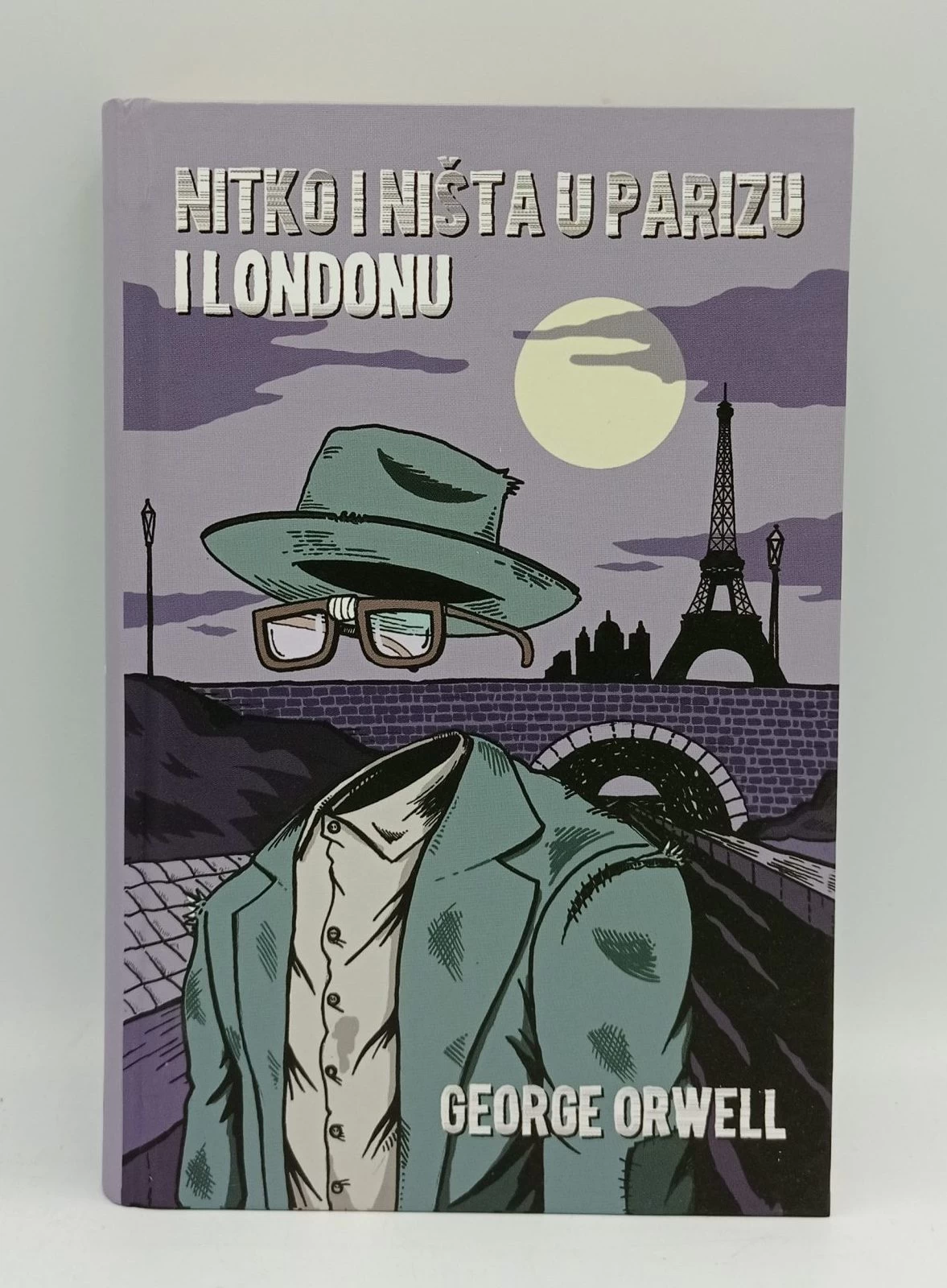
Nitko i ništa u Parizu i Londonu
Orwell George
Summary
George Orwell: Nobody and Nothing in Paris and London
When Eric Blair definitely decided to become a writer, which he knew since childhood that he wanted to be, he quit his job in the colonial police in Burma, where he worked for five years, and moved first to London, and then in 1928 to Paris, in order to make a living from writing. And even then, at the age of less than 25, he knew what he was going to write about to begin with, and he wanted to experience it personally: the life of the disenfranchised and humiliated, vagrants, homeless and beggars, those at the bottom and those who are only separated from touching the bottom by a arduous and poorly paid job. He described his experiences in the book Nobody and Nothing in Paris and London. With crystal clear prose, without sentimentality and without false sympathy, Orwell records what he saw and experienced, in an attempt to show the reader the truth in which he deeply believed: that all people are equal, regardless of class affiliation or property status. He signed the book with a pseudonym and that's how Eric Blair became George Orwell, who in turn became one of the greatest and perhaps most influential writers of the 20th century. With his essays and novels, he brought us expressions such as the cold war, novzbor and Big Brother and the phrase "some are more equal than others", which have become so naturally established in the language that many no longer even know that they were coined by Orwell; and even his name in the "Orwellian" version is today a universal abbreviation for repressive regimes that destroy freedoms and trade lies for the truth. In conclusion: this author is definitely more equal than others! (From the translator's afterword)
Additional information
- Author: Orwell George
- Publisher: Šareni dućan
- Year of publication:2020
- Place of publication:Koprivnica
- Pages:230
- Dimensions:14x21 cm
- Script:Latin script
- Condition:New book
- Binding:Hardcover
Reviews
0 reviewsWrite a review
Share your experience and help other readers choose.
This item has no reviews yet. Be the first to share your experience.
More books by Orwell George




More books from Šareni dućan



You may also like