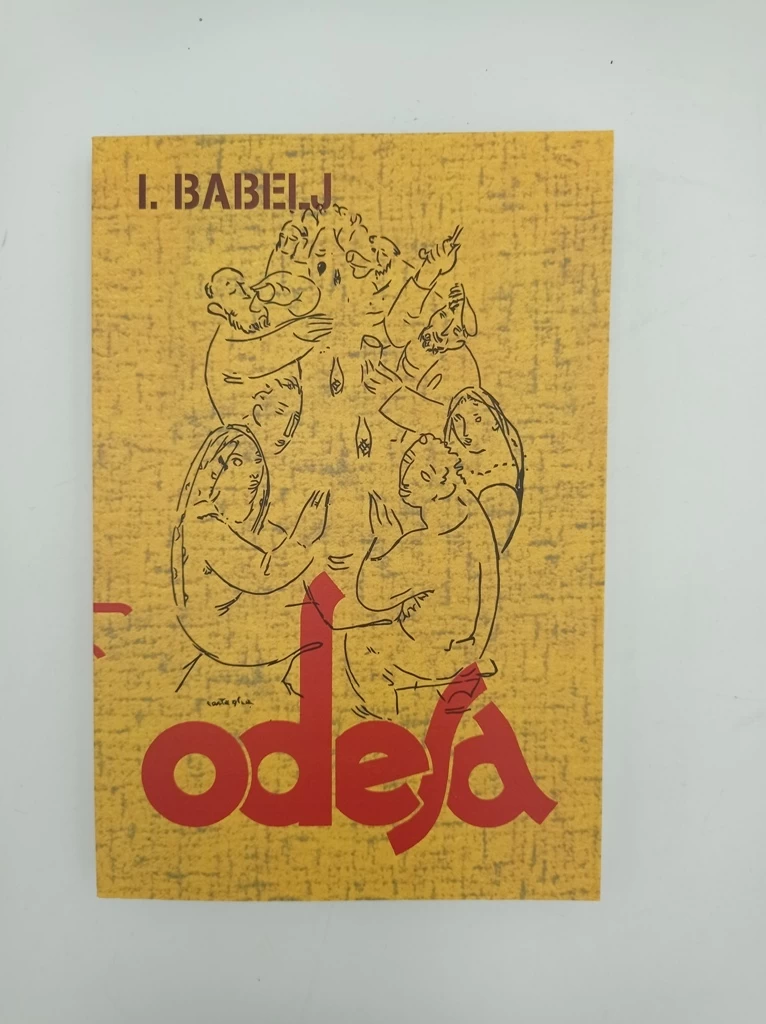

Babelj Isak: Odesa
€ 15,79
Free delivery in Croatia for orders over EUR 70
Basic information
- Author: Babelj Isak
- Publisher: Šareni dućan
- Availability: Available
- Condition: Nova knjiga
- Code: 44320
Shipping options
GLS Croatia
5€
Delivery
0€
Personal collection at the antique store
0€
GLS parcel machine
3€
Payment methods
Pay on pickup
CorvusPay
By general payment / Virman / Internet banking
Cash on delivery
Odesa
Babelj Isak
Summary
Isak Babelj: Odesa
Odesa, in addition to its loudest spokesman Isak Babelj, was also an inspiration to other great writers: Pushkin, Gogol, Mickiewicz, Iljf i Petrov, Oleši... to name only the most famous who created a new literary expression there, and even a distinctive language, a kind of mixture of Russian, Ukrainian, Moldavian and Yiddish enriched by street speech and the city's criminal milieu. Babelj writes favorably and movingly about Odessa criminals, not because he sympathized with them, but simply because he was looking for the truth about the man and his deeds, including his evil. This "master of the short story" wrote richly and refined in expression and stingy in scope, lyrically tender and relentless and sharp, as if he were not writing with a pen, but with a scalpel. He said about his way of writing: "There must be only one, at most two adjectives next to a noun, everything else is superfluous... The clarity and strength of the style is not that there is nothing more to add to the sentence, but that nothing can be removed from it." Babelj transferred the "clarity and strength" from his ingenious stories to life, not accepting the usual rules of the game, not wanting to write according to the directives of the Party. Because of this attitude, "Babel's end was predictable", Vladimir Gerić writes in the extensive afterword, and as a special feature of this edition, we highlight the translation by Gustav Krklec and "twelve original drawings by M. Tartaglia" from the Odessa edition from 1930.
Additional information
- Author: Babelj Isak
- Publisher: Šareni dućan
- Year of publication:2014
- Place of publication:Koprivnica
- Pages:142
- Dimensions:12x18 cm
- Script:Latinica
- Condition:Nova knjiga
- Binding:Tvrdi
You may also like





Recently viewed
Biblos Newsletter
For book lovers who enjoy finding the rare
New titles, special copies and quiet recommendations from the antiquarian bookshop.