

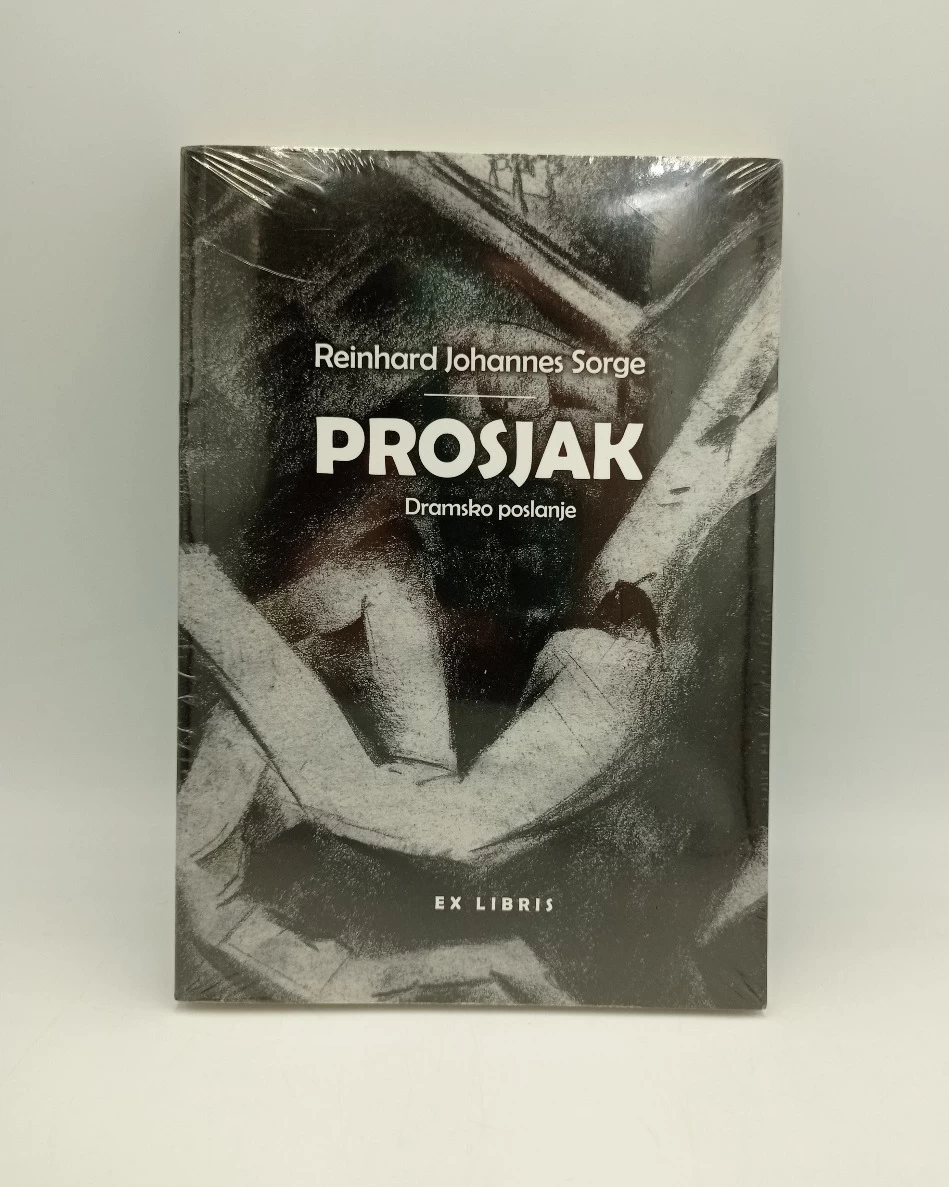
Prosjak: dramsko poslanje
Basic information
- Author: Sorge Reinhard Johannes
- Publisher: Ex Libris
- Availability: Available
- Condition: New book
- Code: 67033
Shipping options
Payment methods
Explore more
Prosjak: dramsko poslanje
Sorge Reinhard Johannes
Summary
Reinhard Johannes Sorge: The Beggar: Dramatic mission
The play The Beggar, for which the eighteen-year-old author earned the prestigious Kleist Prize, is considered one of the earliest German expressionist dramas (many consider it the first in the series), mainly due to the development of those formal, motivic and meaningful elements that will be confirmed as poetic strongholds of German dramaturgy in the coming years of artistic creation. This refers to the conflict between father and son as part of the generational conflict, to the building of morals and sensibilities, the so-called "new man", to the development of the action in the form of independent episodes (Stationendrama as a name for a characteristic composition), to the symbolic role of lighting effects, to the marked syntactic and rhetorical dimension used by the protagonist in propagating his ideas (the so-called telegraphic style, a handful of elliptical expressions, the syntax of cries), to the lack or complete reduction of the characterization of the protagonist, which becomes a bare sign of the writer's conception, and to the sudden change of prose and ecstatic, versed registers of speech. Sorge's drama stands at the very beginning of the affirmation of expressionist new drama, if not its exemplary artistic affirmation, but at least as an exemplary catalog of tendencies and procedures that the new phase in the development of German drama in the next period, until approximately 1920, will significantly confirm and artistically round off (the works of G. Kaiser, E. Toller, W. Hasenclever).
Additional information
- Author: Sorge Reinhard Johannes
- Publisher: Ex Libris
- Year of publication:2017
- Place of publication:Zagreb
- Pages:175
- Dimensions:14.5x20.5 cm
- Script:Latin script
- Condition:New book
- Binding:Softcover
Reviews
0 reviewsWrite a review
Share your experience and help other readers choose.
This item has no reviews yet. Be the first to share your experience.
More books from Ex Libris









You may also like










Recently viewed