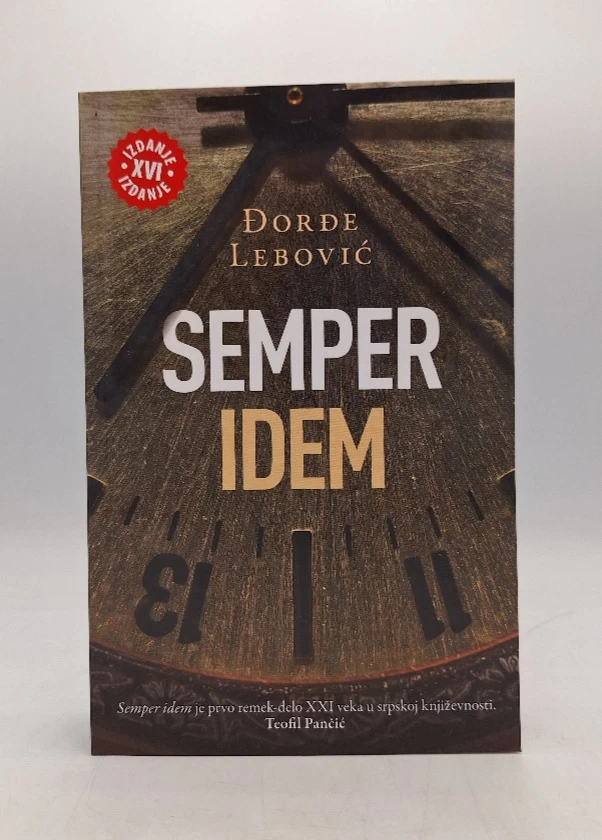
Semper idem
Basic information
- Author: Lebović Đorđe
- Publisher: Laguna
- Availability: Sold out
- Condition: New book
- Code: 77391
Shipping options
Payment methods
Explore more
Semper idem
Lebović Đorđe
Summary
Đorđe Lebović: Semper idem
Although he was known primarily as a playwright and screenwriter during his lifetime (Nebeski odev, Alleluia, Viktorija, Traženje pepela, Ravangrad 1900., Valter brani Sarajevo, etc.), Lebović also wrote short stories and published them in magazines in the 60s and 70s. 20th century. Nevertheless, Đorđe Lebović's magnum opus, according to the unique assessment of critics, is precisely this testament work, a novel-chronicle about his childhood in the Kingdom of Yugoslavia on the eve of the Second World War, which is due to the writer's distinctive style and original procedure, as well as the theme and its literary transposition, recognized as a canonical work of contemporary Serbian literature. Told from the perspective of a boy who observes the approach of the "great revolution" - the spread of Nazism in his surroundings but also in Europe - the author had in mind a parallel between the madness of that time and the war that broke out in Yugoslavia in the 90s of the last century. He lost about forty family members in the war, and he himself went through the hell of Auschwitz as a fourteen-year-old. "There wouldn't have been a book if I hadn't once again found myself in the vortex of the great Evil that I got to know well fifty years ago," the writer will admit in a conversation near the end of his life.
Additional information
- Author: Lebović Đorđe
- Publisher: Laguna
- Year of publication:2025
- Place of publication:Beograd
- Pages:551
- Dimensions:13x20 cm
- Script:Latin script
- Condition:New book
- Binding:Softcover
Reviews
0 reviewsWrite a review
Share your experience and help other readers choose.
This item has no reviews yet. Be the first to share your experience.
More books from Laguna




You may also like