
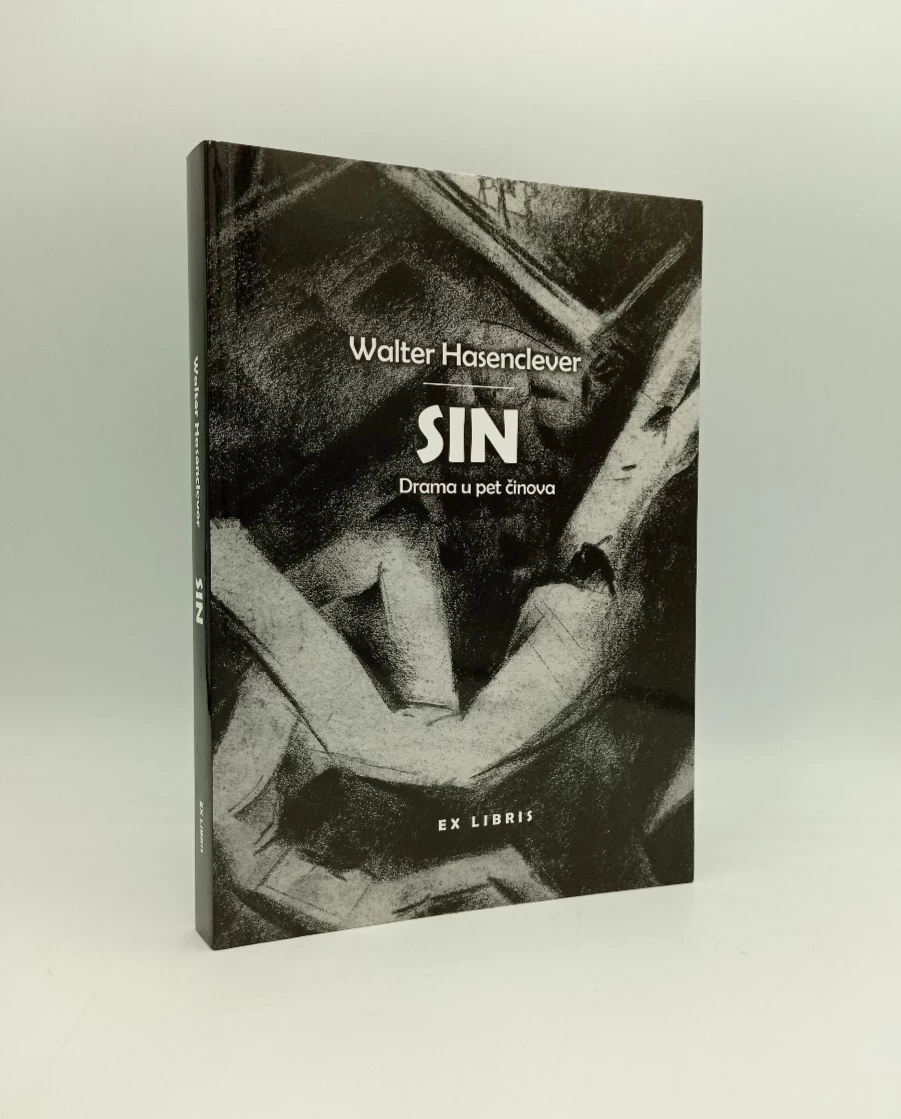
Sin: drama u pet činova
Basic information
- Author: Hasenclever Walter
- Publisher: Ex Libris
- Availability: Available
- Condition: New book
- Code: 67038
Shipping options
Payment methods
Explore more
Sin: drama u pet činova
Hasenclever Walter
Summary
Walter Hasenclever: Son: a drama in five acts
After the Nazis came to power in 1933, when his books were banned and burned, Hasenclever left Germany and lived in several European countries: France, Yugoslavia, Italy and England. In 1940, he was arrested in the south of France and imprisoned in the Les Milles camp (Aix-en-Provence). When German forces entered the camp on June 22, 1940, he committed suicide. Although Sorge's play The Beggar already indicated the generational conflict between father and son, Walter Hasenclever first successfully portrayed the dramatic intensity of that conflict in his debut The Son (Der Sohn, a play in five acts was published in 1914 in Leipzig, and was staged two years later in Dresden, which, as expert criticism points out, was the first complete staging of an Expressionist play). Like Sorge's work, Hasenclever's drama is structured as a juxtaposition of relatively independent stations (Stationendrama) in the development of the theme of generational conflict and especially in recording the internal changes in the Son who turned from a frightened, naive and submissive child and student, through the accumulation of experiences and knowledge through acts and scenes, into a harbinger and initiator of a new order of freedom and independence of the young generation.
Additional information
- Author: Hasenclever Walter
- Publisher: Ex Libris
- Year of publication:2017
- Place of publication:Zagreb
- Pages:201
- Dimensions:14.5x20.5 cm
- Script:Latin script
- Condition:New book
- Binding:Softcover
Reviews
0 reviewsWrite a review
Share your experience and help other readers choose.
This item has no reviews yet. Be the first to share your experience.
More books from Ex Libris






You may also like




Recently viewed