
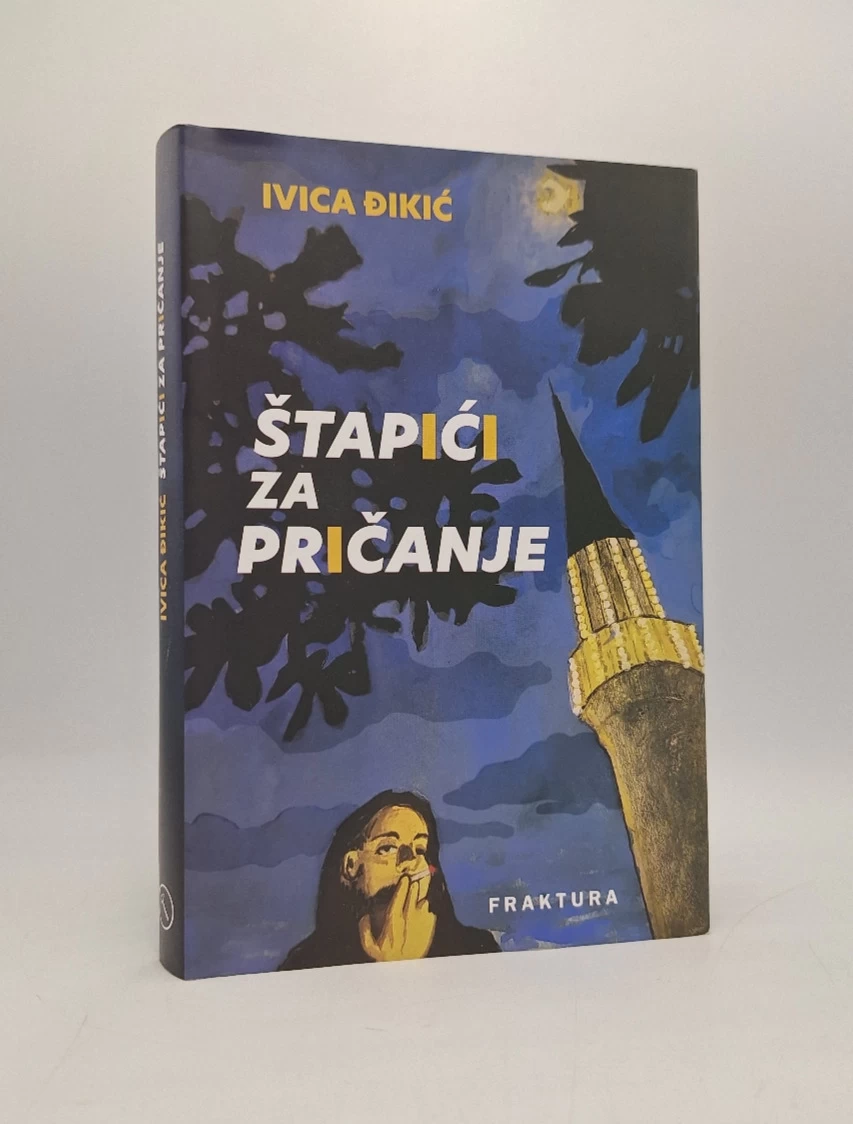
Štapići za pričanje
Basic information
- Author: Đikić Ivica
- Publisher: Fraktura d.o.o.
- Availability: Available
- Condition: Excellent
- Code: 73520
Shipping options
Payment methods
Explore more
Štapići za pričanje
Đikić Ivica
Summary
Ivica Đikić: Talking sticks
Udba, political emigration, our years that we are obsessed with, 1941, 1991, 1945, 1995..., generals, colonels and the deceased, politics, the desire for as much power as possible, these are all topics that Ivica Đikić talks about in a unique, unrepeatable, literary masterful way. The seven stories in Story Sticks are steeped in questions about evil and its source, about the dark depths of the human soul, about life's misfortunes and biblical human rage. And it doesn't matter whether Đikić writes about imaginary and distant characters from his childhood, about Slobodan Praljko, or another story about Blaga Antić, the unforgettable spy from his series Novine, because all these characters are very multidimensional and their fate concerns us as readers. Talking sticks are not just a title here, but a magical device that this true storyteller has deep inside. Each story in Stapici za banje comes from a different poetics, but together they enter a unique Đikić world, a world in which the protagonists and their inner restlessness are the initiators not only of the action but also of everything that will uncontrollably and uncontrollably descend upon them and their surroundings. think in a trough, even if it's a crooked one.
(...)
The fountain pens were replaced first, and then the ballpoint pens. No one in the class had such pens. They were, of course, not only for writing, but also for talking to myself, for someone else's conversation with imaginary interlocutors.
Additional information
- Author: Đikić Ivica
- Publisher: Fraktura d.o.o.
- Year of publication:2020
- Place of publication:Zagreb
- Pages:192
- Dimensions:14.5x21 cm
- Script:Latin script
- Condition:Excellent
- Binding:Hardcover with dust jacket
Reviews
0 reviewsWrite a review
Share your experience and help other readers choose.
This item has no reviews yet. Be the first to share your experience.
More books by Đikić Ivica
More books from Fraktura d.o.o.




You may also like







Recently viewed