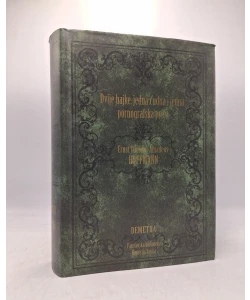
Svećenikova kći
Basic information
- Author: Orwell George
- Publisher: Šareni dućan
- Availability: Available
- Condition: New book
- Code: 64897
Shipping options
Payment methods
Explore more
Svećenikova kći
Orwell George
Summary
George Orwell: The Priest's Daughter
Although some critics have declared the novel The Priest's Daughter to be Orwell's formally "most experimental" work, it is a classic social novel, in the best manner of English bourgeois realism. This is a work of secular humanism, about a simple English province and a modest, hardworking and honest pastor's daughter. She is the "Katica za sve" of the small provincial parish and lives according to the set schedule, from the morning alarm clock, which begins the daily exhausting duties, to the late night bedtime, eternally worried, caring and self-deprecating, in fear of violations and possible loss of faith. The Priest's Daughter, along with Nobody and Nothing in Paris and London and Don't Give Up, Aspidistro, is part of a sort of Orwellian social trilogy. All three books (all published by Šareni dučan) are "lived"; they are the result of the author's various experiences as a vagabond, a needy worker, a submissive teacher, a poor bookseller... Thus, when he lived in Paris, more than the cult artistic bohemian, he was attracted to people from the bottom, workers who survive from one day to the next, porters, loaders, dishwashers... He lived with them, did the hardest jobs, slept in almshouses and pocketed every penny... Similarly, all three main characters of the mentioned trilogy - better in the words of anti-heroes - they are small, "invisible" people, who put up with existing injustices, accept all adversity and persistently hold on to their own misery, so the socially conscious and rebellious author, who was infected with trade unionism and socialism early on, points to their difficult position and the need for change and a way out of hopelessness.
This is the first translation of this Orwell novel into Croatian.
Additional information
- Author: Orwell George
- Publisher: Šareni dućan
- Year of publication:2022
- Place of publication:Koprivnica
- Pages:278
- Dimensions:14x20.5 cm
- Script:Latin script
- Condition:New book
- Binding:Hardcover
Reviews
0 reviewsWrite a review
Share your experience and help other readers choose.
This item has no reviews yet. Be the first to share your experience.
More books by Orwell George









More books from Šareni dućan







You may also like