
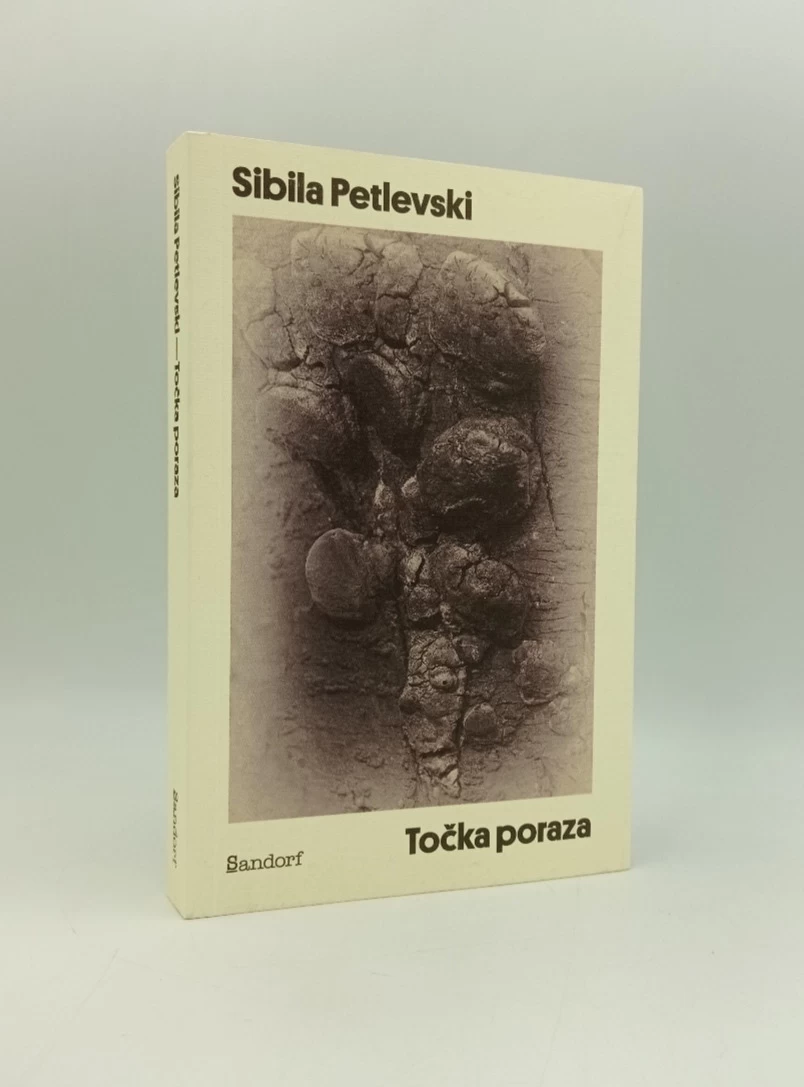
Točka poraza
Basic information
- Author: Petlevski Sibila
- Publisher: Sandorf
- Availability: Available
- Condition: New book
- Code: 68659
Shipping options
Payment methods
Explore more
Točka poraza
Petlevski Sibila
Summary
Sibila Petlevski: Point of defeat
"Why do people die more often in our family than in other families?" asked Anđelka, and the answer was that only God knows, but that she wouldn't be surprised that it was all the fault of the Wendigo, a cannibal with an icy heart, a human-like giant, and maybe some evil spirit, who loves to eat human flesh, and when he approaches, no one sees him, only feels the chills and the terrible stench of decomposition.
When she came to the homeland of her ancestors, in a period that for her was a season in hell, she was met with chills and the smell of rot and death. Wendigo became Anđelka's personal concept of the spirit of war, her personal password for entering the world of cannibalistic politics, which should not be lightly reduced to some "fratricidal war" on the exotic terrain of the Western Balkans, but should be understood from the power relations on a slightly wider map of the world. Because that's how it goes: first you can't see anything, and then, seemingly out of nowhere, the stinking breath of the world's political giants enters your nostrils - the centuries-old stench of their bloodthirsty appetite for cannon fodder.
Few people know: once a beauty, the mythical Medusa was actually raped. Few people know that she was pregnant when her killer, Perseus, beheaded her. And yet, he has been perceived and celebrated as a hero for millennia, while she has been despised as a monster. Myths are constitutive elements in the foundations of culture and shape mentality, both individually and collectively unconsciously - perhaps especially those parts of them that are mostly hushed up or suppressed. But what is repressed, we know (do we?), comes back again and again, raped women turn into "jellyfish", and rapists and murderers often remain "gods" in public perception. Or respected high-ranking military officials.
Additional information
- Author: Petlevski Sibila
- Publisher: Sandorf
- Year of publication:2023
- Place of publication:Zagreb
- Pages:231
- Dimensions:13.5x20.5 cm
- Script:Latin script
- Condition:New book
- Binding:Softcover
Reviews
0 reviewsWrite a review
Share your experience and help other readers choose.
This item has no reviews yet. Be the first to share your experience.
More books by Petlevski Sibila

More books from Sandorf







You may also like