
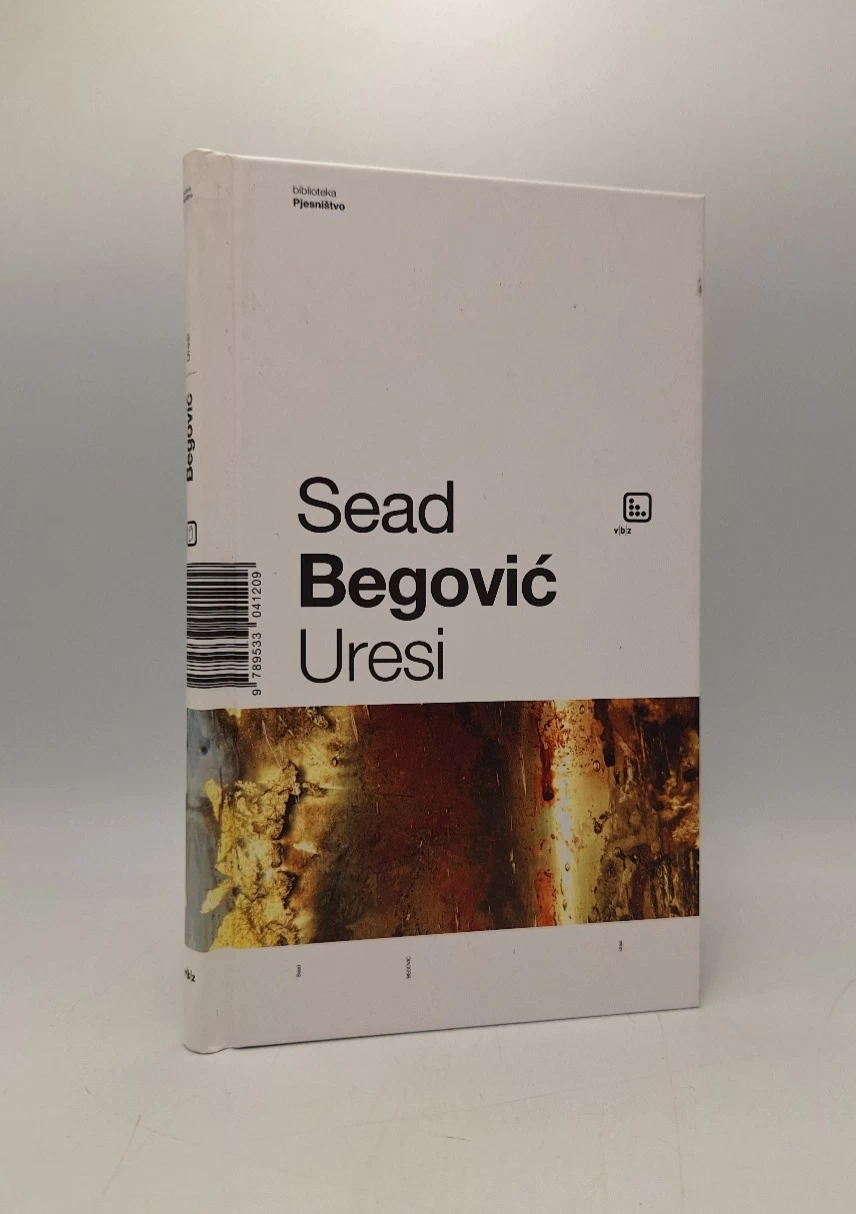
Uresi
Basic information
- Author: Begović Sead
- Publisher: V.B.Z.
- Availability: Available
- Condition: Excellent
- Code: 72708
Shipping options
Payment methods
Explore more
Uresi
Begović Sead
Summary
Sead Begović: Uresi
First of all, the poetic ideology of this book-concept insists on the equal coexistence of two or more linguistic, stylistic, cultural, emotional, and even anthropological worldviews - the one promoted by the practice of the Croatian literary standard and the one that results from the Kajkavian or Chakavian corpus and the Bosnian, Serbian and Slovenian linguistic reflexes - and less on mixing, hybridization or any more mandatory, structural the interdependence of their parts in the poem.
Both the unmarked, standardized language applications, and the marked, dialectal applications, in Begović's new poems behave, it seems, as completely independent entities, although often these latter (Kaikavian and Chakavian, namely) are effectively used as functional points, sometimes wanting to highlight a folklore element, folk wisdom, and more often suggesting an extremely archaic emotional release song themes. And that topics as trauma in the narrowest and broadest sense. Because the author's, lyrically authentic, voice in recent Croatian poetry, at times moving to the point of emotion, reveals some of his life accounts and underlines some very sharp, almost brutal lines after having traveled the author's and probably also empirical path.
In his new poems, Begović is a poet of special silence, a lyrical melodramatist of devastated, neglected or newly isolated intimacies. In them, he seems to be repairing a defect - in himself, in the people he loves, in the world as a model, a version, a part of the universe.
Additional information
- Author: Begović Sead
- Publisher: V.B.Z.
- Year of publication:2009
- Place of publication:Zagreb
- Pages:77
- Dimensions:13x20.5 cm
- Script:Latin script
- Condition:Excellent
- Binding:Hardcover
Reviews
0 reviewsWrite a review
Share your experience and help other readers choose.
This item has no reviews yet. Be the first to share your experience.
More books from V.B.Z.









You may also like