
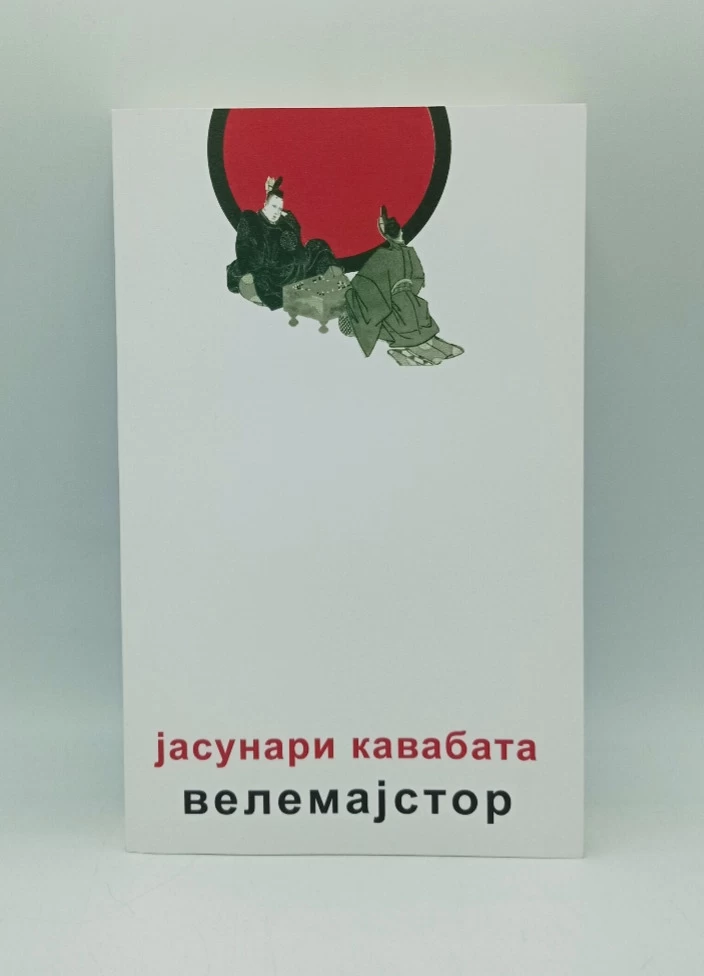
Velemajstor / Snežna zemlja
Basic information
- Author: Kawabata Yasunari
- Publisher: Logos Beograd
- Availability: Available
- Condition: New book
- Code: 43650
Shipping options
Payment methods
Explore more
Velemajstor / Snežna zemlja
Kawabata Yasunari
Summary
Yasunari Kawabata: Grandmaster / Snowy Land
"In the novel Grandmaster, which has the character of an artistically transposed diary or chronicle of a very specific champion of an ancient Far Eastern game, which was held in 1938 under the auspices of two eminent Japanese dailies, Kawabata follows, move by move, the game of one of the unsurpassed grandmasters of all time and a young opponent. With this novel, Kawabata essentially shows the depth of the painful gap caused by Europeanization in the middle of the 20th century as the only possible way out, as the lesser of two evils, in a situation where the American fleet, under the threat of force, forced its way into Tokyo Bay. A young, aggressive and arrogant challenger (such as the West) clashes with a grandmaster, gentle, fragile, and lonely (such as Japan). restrained, refined style and the fierce, fast and brutal attacks of his young challenger. Although the match between the two lasted for months, we call it a duel, since from the very beginning of this novel the author clearly suggested that this final match of the champion for the title of grandmaster, or its defense, will end with the ultimate physical elimination of the old grandmaster." spatially determined by Japan in the early 1930s. This novel was specially mentioned when the Nobel Prize was awarded to Kawabata, and it is distinguished by a record number of translations (so far, 61 translations in countries around the world). In this novel, Kawabata depicts the life of a Tokyo rich man, on the one hand, by his love for two women, Joko and Komako, on the other hand. For Shimamura, Joko is the embodiment of elusive purity, to whom, from the moment he first sees her on the train, he tends to somehow get closer, feeling that purity is exactly what he is looking for in order to fill his life with the right values."
Additional information
- Author: Kawabata Yasunari
- Publisher: Logos Beograd
- Year of publication:2007
- Place of publication:Beograd
- Pages:304
- Dimensions:14x21 cm
- Script:Cyrillic script
- Condition:New book
- Binding:Softcover
Reviews
0 reviewsWrite a review
Share your experience and help other readers choose.
This item has no reviews yet. Be the first to share your experience.
More books by Kawabata Yasunari
More books from Logos Beograd



You may also like






Recently viewed