
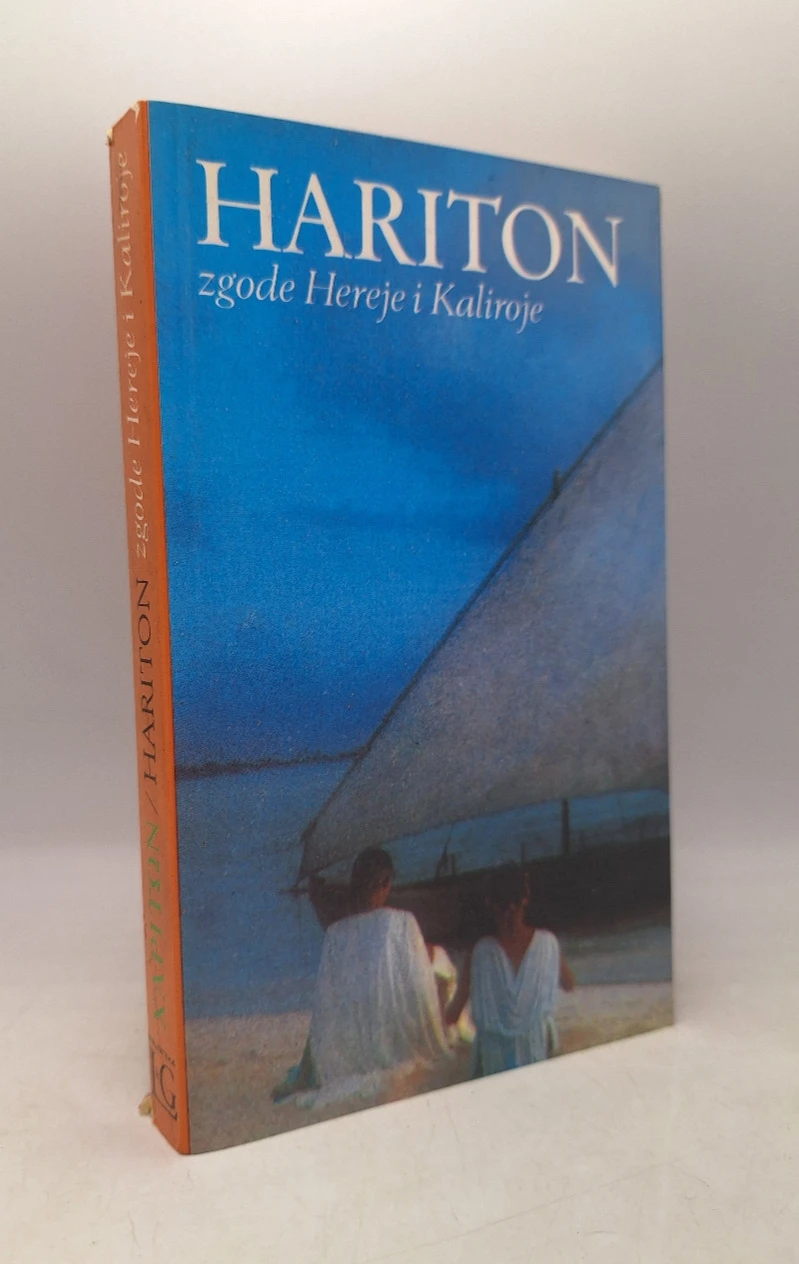
Zgode Hereje i Kaliroje
Basic information
- Author: Hariton
- Publisher: Latina et graeca
- Availability: Available
- Condition: Very good
- Code: 37691
Shipping options
Payment methods
Explore more
Zgode Hereje i Kaliroje
Hariton
Summary
Hariton: The Tales of Hereja and Kaliroje
The Tales of Hereja and Kaliroja Hariton from Aphrodisiad survived the Byzantine Middle Ages in a single manuscript, remained intact for three full centuries after the invention of printing, and finally appeared on the literary market exactly in the middle of the eighteenth century, in 1750 in Amsterdam. Although Hariton's text lacked the charm of complete novelty, because similar ancient texts appeared in Europe as early as the Renaissance, the story too rich in sensitivity was liked by the non-professional audience, which precisely at that time — between Richardson's Pamela (1740) and Rousseau's New Heloise (1761) — was most passionately experiencing a fierce sentimentalist rebellion against the tyranny of the cold Enlightenment mind. Professionals, however, both then and afterwards showed far greater restraint. For the overwhelming majority of classical philologists of the past two centuries, Chariton from Aphrodisiad was and remains the uninteresting author of an uninteresting composition about the adventurous sufferings of a married couple from Syracuse, who, on top of everything, chose an extremely unsightly generic framework for his story. The natural environment for his story was provided only by a small number of highly schematic texts, for which there was no place in the ancient generic nomenclature, and which the advanced modern age, out of necessity and far from general agreement, gradually stopped calling novels...
Additional information
- Author: Hariton
- Publisher: Latina et graeca
- Year of publication:1989
- Place of publication:Zagreb
- Pages:309
- Dimensions:12x19.5 cm
- Script:Latin script
- Condition:Very good
- Binding:Softcover with dust jacket
Reviews
0 reviewsWrite a review
Share your experience and help other readers choose.
This item has no reviews yet. Be the first to share your experience.
More books from Latina et graeca


You may also like