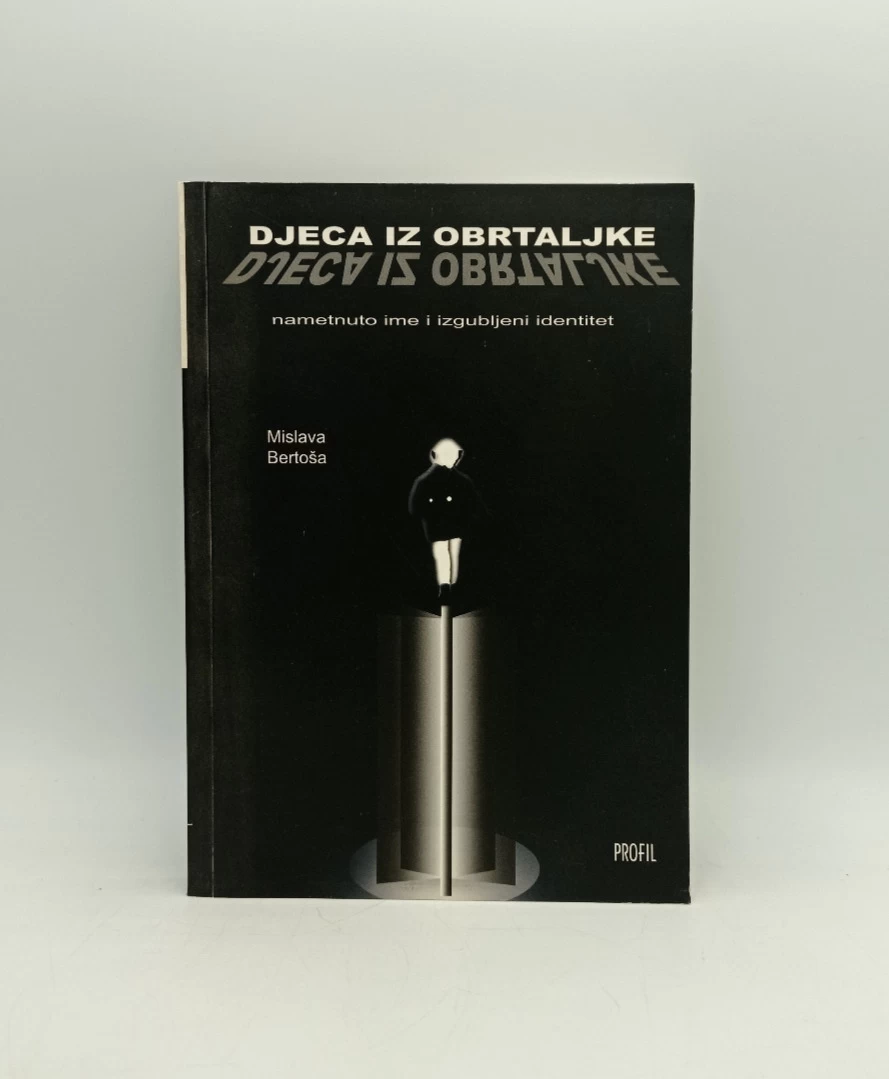

Bertoša Mislava: Djeca iz obrtaljke. Nametnuto ime i izgubljeni identitet
€ 8,63
Free delivery in Croatia for orders over EUR 70
Basic information
- Author: Bertoša Mislava
- Publisher: Profil
- Availability: Available
- Condition: Vrlo dobro
- Code: 59836
Shipping options
GLS Croatia
5€
Delivery
0€
Personal collection at the antique store
0€
GLS parcel machine
3€
Payment methods
Pay on pickup
CorvusPay
By general payment / Virman / Internet banking
Cash on delivery
Djeca iz obrtaljke. Nametnuto ime i izgubljeni identitet
Bertoša Mislava
Summary
Mislav Bertoš: Children from the spinning wheel. Imposed name and lost identity
The paper is devoted to the analysis of linguistic strategies of inventing surnames (and names) for children whose parents were in the 19th century. century anonymously left to the institutionalized care of the sites and the analysis of their socio-anthroponomistic aspect. The introductory chapters are dedicated to the history of the phenomenon of child abandonment in Europe, the appearance of brefotrophies and orphanages as lay institutions, their organization and purpose in the 19th century. century, the laws that at that time regulated abandonment and the mentality and behavior of the lower layers of society, among whom there were mostly potential and actual leavers of their own descendants. Then the specific Trieste context in which such events took place was observed: historical, social, economic, and demographic conditions in nineteenth-century Trieste, ethnic, confessional and linguistic diversity of the population, migration to the city, epidemics, poverty, illegitimate births, etc.
Other chapters are devoted to the linguistic and onomastic dimension of the phenomenon of abandonment. 586 surnames were analyzed, first from a general linguistic perspective: according to more or less standard language levels - phonological, semantic, morphological, and added, stylistic level, and special attention was paid to the phonological-syllabic, morphological and semantic features of complete name formulas, more precisely, the phonetic, form and meaning value that the invented or known personal name provided to the invented surname. After these general linguistic analyses, the invented Nahod surnames were observed from a socio-anthroponomistic aspect: with regard to the local, Trieste « ; ; micro level»; ; and wider, more general « ; ; macro level» ; ; South-Western European XIX. century.
Additional information
- Author: Bertoša Mislava
- Publisher: Profil
- Year of publication:2005
- Place of publication:Zagreb
- Pages:312
- Dimensions:15x20.5 cm
- Script:Latinica
- Condition:Vrlo dobro
- Binding:Meki
You may also like




Recently viewed




Biblos Newsletter
For book lovers who enjoy finding the rare
New titles, special copies and quiet recommendations from the antiquarian bookshop.