
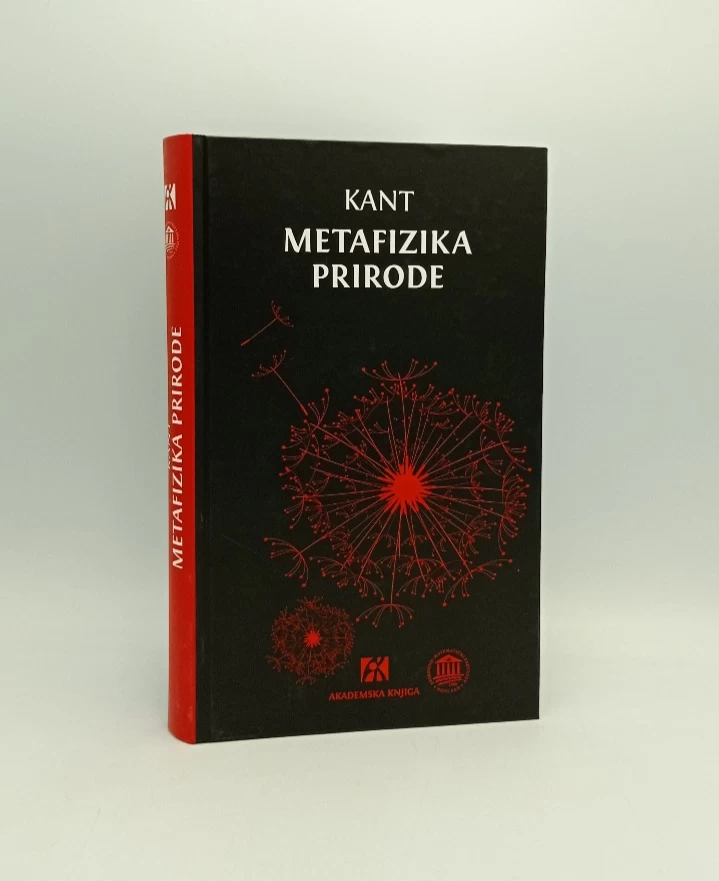
Metafizika prirode
Basic information
- Author: Kant Immanuel
- Publisher: Akademska knjiga
- Availability: Available
- Condition: Excellent
- Code: 41306
Shipping options
Payment methods
Explore more
Metafizika prirode
Kant Immanuel
Summary
Immanuel Kant: Metaphysics of Nature
Selected writings
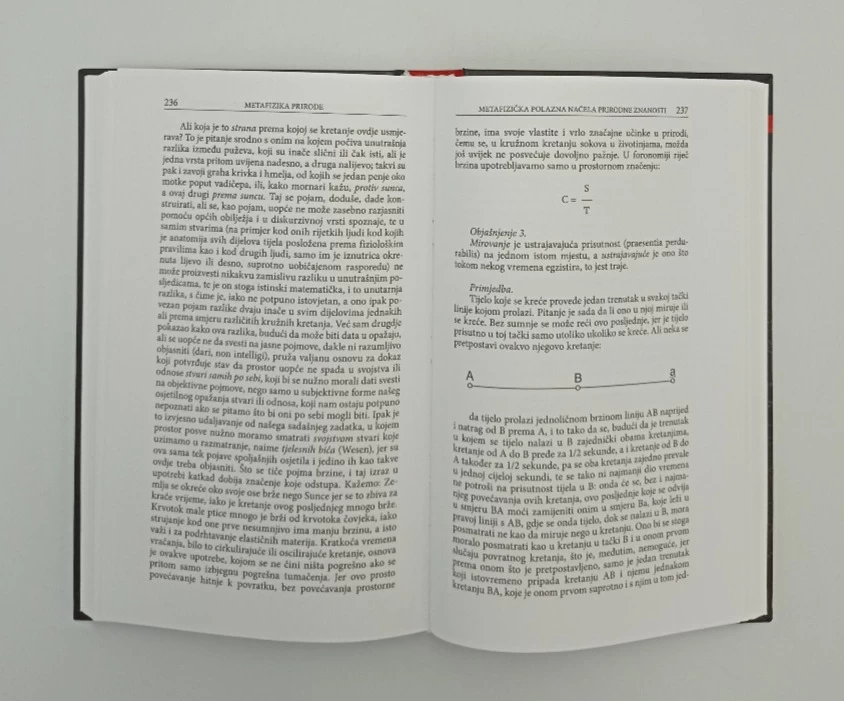
The works of the German philosopher Immanuel Kant, which are collected in a book called Metaphysics of Nature, were selected not only according to a common theme, but also because they are representative experiments about nature that were conducted using strict scientific methodology. From the wide bibliography of Kant's naturalistic writings, those that delve most deeply into the issue of the systemic organization of the world building and present their subject by thematizing its many essential aspects are highlighted. Among others, it includes the general history of nature, physical monadology, teleological principles and considerations about human races. Each text is characterized by Kant's well-known conceptual discipline, which comes to the fore precisely in his fundamental investigations in the field of pure theory, where basic scientific categories such as divisibility, the action of force, size, etc. are precisely established. From the experimental point of view of science, the foundations of contemporary cosmological and biological hypotheses can be found in these texts. From a historical point of view, this selection covers the entire range of Kant's philosophical work, and since many of these texts have been translated into our language for the first time, this book represents an important source for all who deal with the history of natural science, philosophy, and Kant's thought itself. From the first philosophical reflections to the contemporary epoch, the idea of the unity of nature is decisive for every attempt to understand reality through thought. The metaphysics of nature best portrays this idea, vividly expressed through the representation of the world building, as it was shaped in Kant's thought.
Additional information
- Author: Kant Immanuel
- Publisher: Akademska knjiga
- Year of publication:2016
- Place of publication:Novi Sad
- Pages:348
- Dimensions:14.5x23 cm
- Script:Latin script
- Condition:Excellent
- Binding:Hardcover
Reviews
0 reviewsWrite a review
Share your experience and help other readers choose.
This item has no reviews yet. Be the first to share your experience.
More books by Kant Immanuel


More books from Akademska knjiga