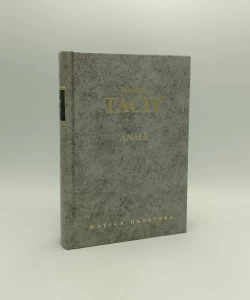


Judejski rat
Basic information
- Author: Flavije Josip
- Publisher: Biblos Books
- Availability: Available
- Condition: New book
- Code: 81056
Shipping options
Payment methods
Explore more
Judejski rat
Flavije Josip
Summary
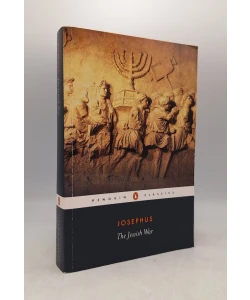
Flavius Joseph: The Judean War
Joseph Flavius (Latin Flavius Iosephus [fla:'wi·us joze'fus], real name Josef ben Matatias), Jewish historian (Jerusalem, 37/38 – Rome, c. 100). A Pharisee, in the service of the Jerusalem temple, sent to Rome to rescue the priests imprisoned by the procurator of Galilee. Nero's wife Poppaius Sabina helped him in that mission. Admired by Roman culture and military power, he became a Romanophile and in the uprising, which broke out against the Romans immediately after his return to Palestine in 66, he took a rather vague position in an effort to quell the uprising. When entrusted with the defense of Galilee, he did his duty and eventually surrendered to the Roman general Vespasian, to whom he prophesied that he would become emperor. When the prophecy was fulfilled in 2 years, Vespasian declared him free and made him court historian, and Joseph took the gentile name of his patron, Flavius. He accompanied Vespasian's son Titus, when the latter besieged, captured and destroyed Jerusalem in 70, persuading the Jews to surrender to the Romans. He returned to Rome, became a Roman citizen and devoted himself to writing; he wrote in Greek about Jewish history and Roman-Jewish warfare On the Jewish War (Περì τοῦ Ἰουδαϊϰοῦ πολουμου; originally written probably in Aramaic), Jewish Antiquities (’Iουδαϊϰὴ ἀρχαιλογία), the famous passage 18,3,3 contains, if original, the only direct non-Christian testimony about Jesus) and Against Apion or On the age of the Jewish people.
Additional information
- Author: Flavije Josip
- Publisher: Biblos Books
- Year of publication:2025
- Place of publication:Beograd
- Pages:519
- Dimensions:14x21 cm
- Script:Cyrillic script
- Condition:New book
- Binding:Hardcover
Reviews
0 reviewsWrite a review
Share your experience and help other readers choose.
This item has no reviews yet. Be the first to share your experience.
More books by Flavije Josip
More books from Biblos Books