
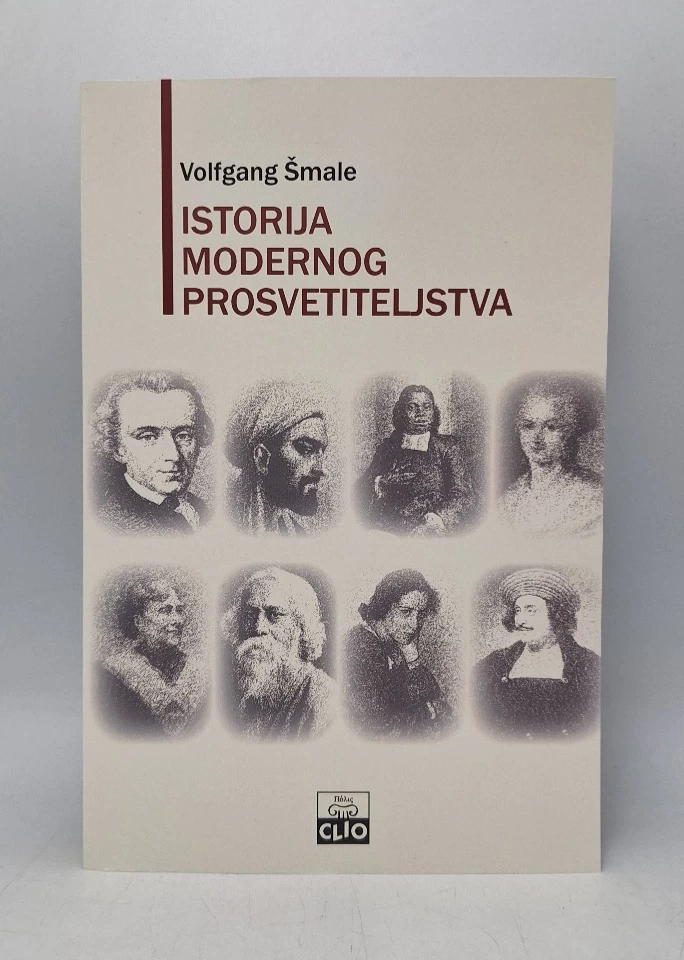
Istorija modernog prosvjetiteljstva
Basic information
- Author: Schmale Wolfgang
- Publisher: Clio
- Availability: Available
- Condition: New book
- Code: 76619
Shipping options
Payment methods
Explore more
Istorija modernog prosvjetiteljstva
Schmale Wolfgang
Summary
Wolfgang Schmale: A History of the Modern Enlightenment
The Enlightenment of the eighteenth century is still relevant in the twenty-first century. It functions as a humane social landmark in a derailed world. Providing such a social orientation was always the main goal of the Enlightenment - and it was always exposed to fundamental criticism. The potential of the Enlightenment to provide guidance to society in times of crises, wars and terrorism developed precisely in the context of this kind of criticism.
The author follows this historical process from the early nineteenth century, with special reference to intellectuals from Hegel to Foucault. Using the methodology of digital humanities, it analyzes the Enlightenment from a global historical perspective. According to today's prevailing understanding, the Enlightenment turns out to be a science of life that survives even in the face of fundamental criticism.
Additional information
- Author: Schmale Wolfgang
- Publisher: Clio
- Year of publication:2024
- Place of publication:Beograd
- Pages:433
- Dimensions:16x23 cm
- Script:Latin script
- Condition:New book
- Binding:Softcover
Reviews
0 reviewsWrite a review
Share your experience and help other readers choose.
This item has no reviews yet. Be the first to share your experience.
More books from Clio











You may also like


Recently viewed