
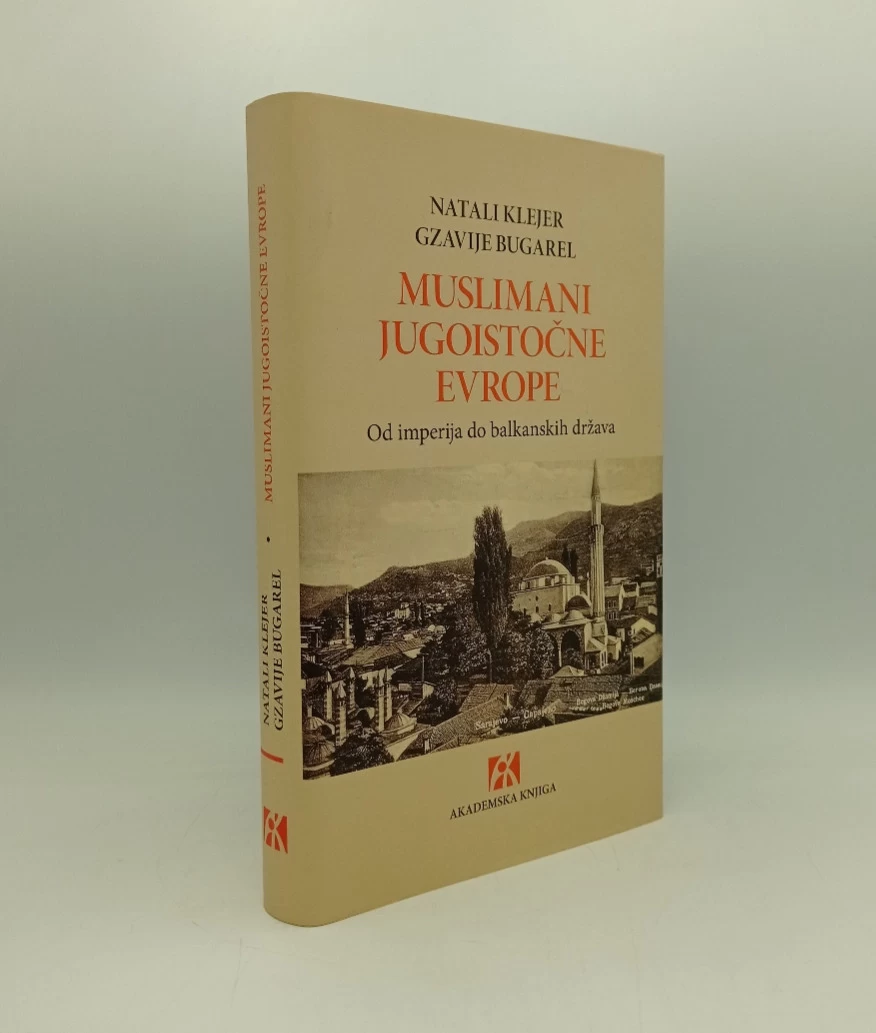
Muslimani jugoistočne Evrope
Basic information
- Author: Clayer Nathalie
- Publisher: Akademska knjiga
- Availability: Available
- Condition: New book
- Code: 56791
Shipping options
Payment methods
Explore more
Muslimani jugoistočne Evrope
Clayer Nathalie
Summary
Nathalie Clayer: Muslims of Southeast Europe
Southeastern Europe, which stretches from Croatia to Greece and from Albania to Bulgaria, has some eight million inhabitants who belong to Islamic culture. Albanians, Bosniaks, Turks, Roma are either descendants of the population that converted to Islam, or settled during the Ottoman rule. This book presents the social, political and religious transformations it went through in the 19th and 20th centuries, as a time marked by the disappearance of the Ottoman, Austro-Hungarian and Russian empires and the emergence of numerous Balkan states.
On the political level, the Muslims of Southeast Europe went through a slow but complex process of crystallization of their national identities. This process accelerated after 1945 under the influence of communist modernization, and at the end of the 20th century it led to nationalist mobilizations that symbolized the independence of Bosnia and Herzegovina and Kosovo in the wider context of the breakup of Yugoslavia.
Religiously, Balkan Muslims remained tied to the religious institutions of the Ottoman Empire for a long time, as well as to Ottoman school, dervish or intellectual networks. After the communist digression, new networks appeared among them, mostly of the neo-Salafist and neo-Omist type. However, the Balkan Muslims did not escape the processes of secularization that marked the whole of Europe. This book illuminates the earthquakes that shook the European continent during the last two centuries and sheds new light on current considerations of the place of Islam in Europe.
Additional information
- Author: Clayer Nathalie
- Publisher: Akademska knjiga
- Year of publication:2020
- Place of publication:Novi Sad
- Pages:346
- Dimensions:14x23 cm
- Script:Latin script
- Condition:New book
- Binding:Hardcover with dust jacket
Reviews
0 reviewsWrite a review
Share your experience and help other readers choose.
This item has no reviews yet. Be the first to share your experience.
More books by Clayer Nathalie

More books from Akademska knjiga















You may also like