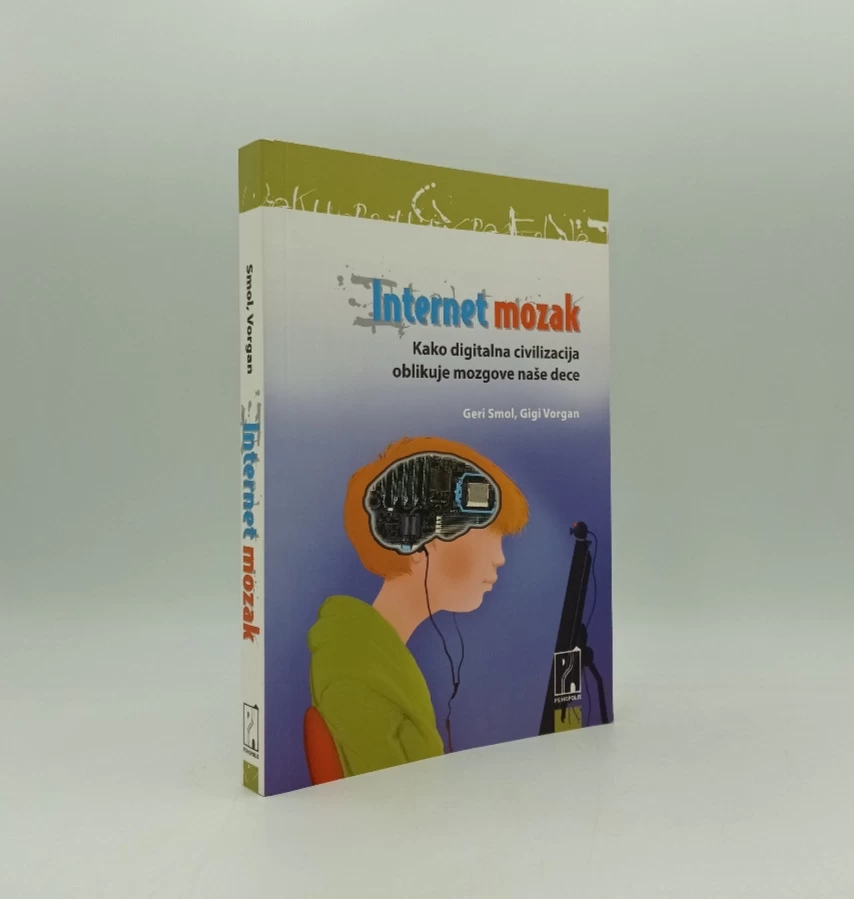

Small Gary | Vorgan Gigi: Internet mozak
€ 15,00
Free delivery in Croatia for orders over EUR 70
Basic information
- Author: Small Gary | Vorgan Gigi
- Publisher: Psihopolis institut
- Availability: Available
- Condition: Nova knjiga
- Code: 58755
Shipping options
GLS Croatia
5€
Delivery
0€
Personal collection at the antique store
0€
GLS parcel machine
3€
Payment methods
Pay on pickup
CorvusPay
By general payment / Virman / Internet banking
Cash on delivery
Internet mozak
Small Gary | Vorgan Gigi
Summary
Gary Small, Gigi Vorgan: The Internet Brain
How digital civilization shapes our children's brains
How to set "digital boundaries" for children? What is happening to the young minds, to the brains of our children? Today's young people in their teens and twenties, who are called digital natives, have not even seen a world without computers, 24-hour news, the Internet, mobile phones - with music, cameras, text messages... They are the ones who tend to be the most sensitive to digital technology, because they are also the most exposed to its influence. They rarely go to libraries, they don't leaf through classic encyclopedias - everything they are interested in is on Internet browsers. The neural structure of these digital natives is drastically different from the structure of digital immigrants, i.e. those who entered the digital age as adults, which leads to a deeply divided brain gap between older and younger minds - in one generation.
The book takes us in an interesting, professional, but also comprehensible way through chapters on processes and changes in the brain, technology that separates generations, addiction to technology, brain evolution, technological accessories, all the way to text messages and emoticons.
What do adults whose brains were formed in a time when there was no digital environment need to know about the powerful influence of the digital world on our children's brains?
In order for children's brains to develop, they must be stimulated. How does the digital environment - computer games, the Internet, movies and music - affect the formation of neurological structures in the brains of our children?
Why is it easy to become addicted to games, social networking, gambling, online pornography, shopping...
This book is a guide to overcoming the digital gap between children and parents.
Doc. Dr. Vojislava Bugarski, clinical neuropsychologist
Additional information
- Author: Small Gary | Vorgan Gigi
- Publisher: Psihopolis institut
- Year of publication:2011
- Place of publication:Novi Sad
- Pages:285
- Dimensions:14x20 cm
- Script:Latinica
- Condition:Nova knjiga
- Binding:Meki
You may also like










Recently viewed






Biblos Newsletter
For book lovers who enjoy finding the rare
New titles, special copies and quiet recommendations from the antiquarian bookshop.