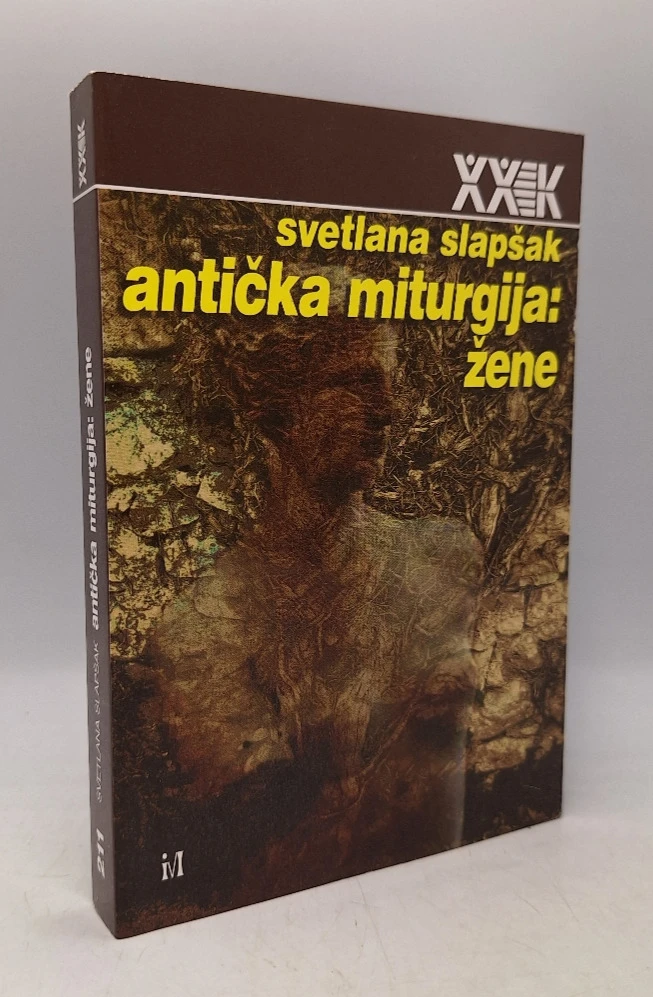

Slapšak Svetlana: Antička miturgija: žene
€ 13,00
Free delivery in Croatia for orders over EUR 70
Basic information
- Author: Slapšak Svetlana
- Publisher: Biblioteka XX vek
- Availability: Available
- Condition: Odlično
- Code: 81494
Shipping options
GLS Croatia
5€
Delivery
0€
Personal collection at the antique store
0€
GLS parcel machine
3€
Payment methods
Pay on pickup
CorvusPay
By general payment / Virman / Internet banking
Cash on delivery
Antička miturgija: žene
Slapšak Svetlana
Summary
Svetlana Slapšak: Ancient mythurgy: women
"Babbo, sei un mito" Laura. I saw an obituary with this text on the obituary board of a small church outside the town of San Severino, in the Italian province of Marche, in September 2009. Daughter Laura informs anyone who reads the obituary, as well as her late father, that he has become a myth. By death he qualified for myth. But that is not the only interpretation: it is possible that Laura's father was a myth even before his death, and that after his death he needs to be reminded of it, or that he did not know it, and that now, for the last time, he needs to be informed. In any case, death is the most important, perhaps the only, condition for entry into myth - but entry requires the help of one who announces and legitimizes entry into myth. The informer, the legitimator, is therefore the main person in the creation of the myth. Laura's intervention is crucial if we understand myth as everyday actions with memory, in which the individual has full freedom and there are no imposed criteria. In any case, the anthropological data correspond to the origins of important schools of learning about myths and mythology, above all two authors whom I consider my main teachers of mythology, Roland Barthes and Jean-Pierre Vernon.
Additional information
- Author: Slapšak Svetlana
- Publisher: Biblioteka XX vek
- Year of publication:2013
- Place of publication:Beograd
- Pages:303
- Dimensions:11.5x16.5 cm
- Script:Latinica
- Condition:Odlično
- Binding:Meki
You may also like







Recently viewed



Biblos Newsletter
For book lovers who enjoy finding the rare
New titles, special copies and quiet recommendations from the antiquarian bookshop.