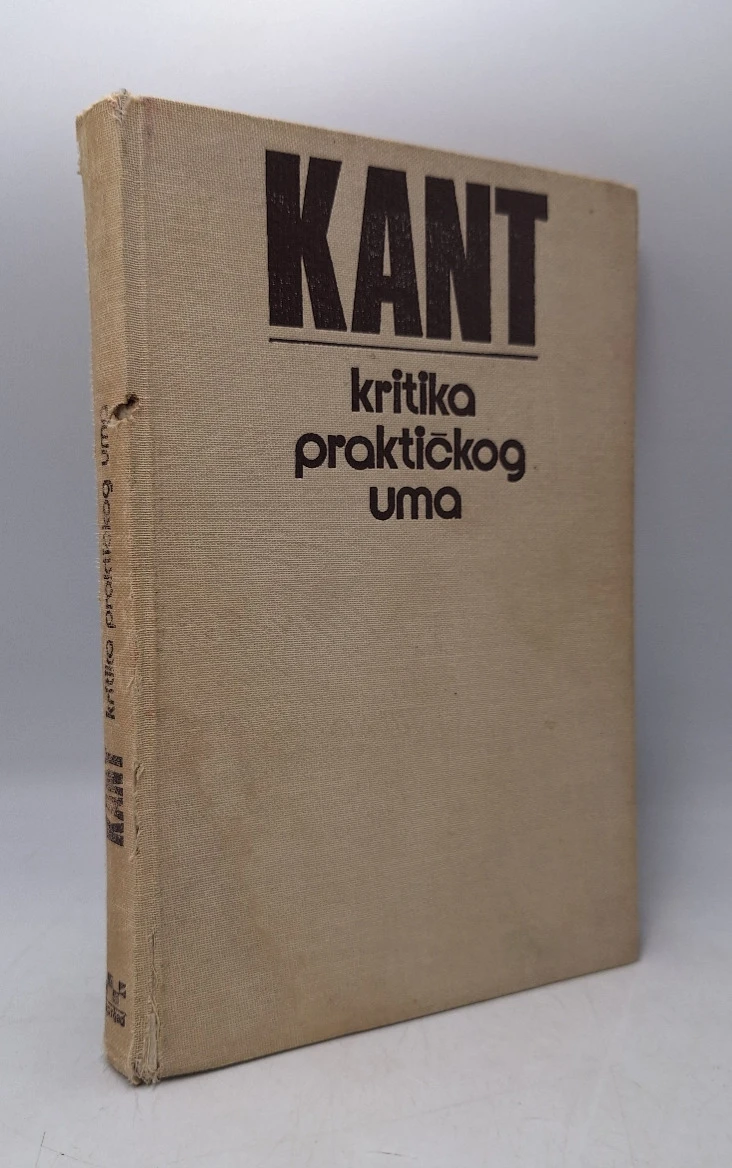

Kant Immanuel: Kritika praktičkog uma
€ 15,00
Free delivery in Croatia for orders over EUR 70
Basic information
- Author: Kant Immanuel
- Publisher: Naprijed
- Availability: Available
- Condition: Vrlo dobro
- Code: 83375
Shipping options
GLS Croatia
5€
Delivery
0€
Personal collection at the antique store
0€
GLS parcel machine
3€
Payment methods
Pay on pickup
CorvusPay
By general payment / Virman / Internet banking
Cash on delivery
Kritika praktičkog uma
Kant Immanuel
Summary
Immanuel Kant: Critique of practical reason
*Library copy
The theoretical use of the mind dealt with the objects of the power of knowledge itself, and the criticism of that mind in regard to this use actually only concerned the pure power of knowledge, because it aroused suspicion. Later, this suspicion was confirmed that the power of cognition is easily lost beyond its limits, among unattainable objects or even mutually contradictory concepts. The situation is different with the practical use of the mind. In it, the mind deals with the deterministic reasons of the will. (...) If from now on we can find reasons to prove that this property truly belongs to the human will (and thus to the will of all intelligent beings), then this proves not only that the pure mind can be practical, but that only it, and not the empirically limited mind, is practical in an unconditional way
Additional information
- Author: Kant Immanuel
- Publisher: Naprijed
- Year of publication:1974
- Place of publication:Rijeka
- Pages:215
- Dimensions:13x20 cm
- Script:Latinica
- Condition:Vrlo dobro
- Binding:Tvrdi
You may also like








Recently viewed





Biblos Newsletter
For book lovers who enjoy finding the rare
New titles, special copies and quiet recommendations from the antiquarian bookshop.