
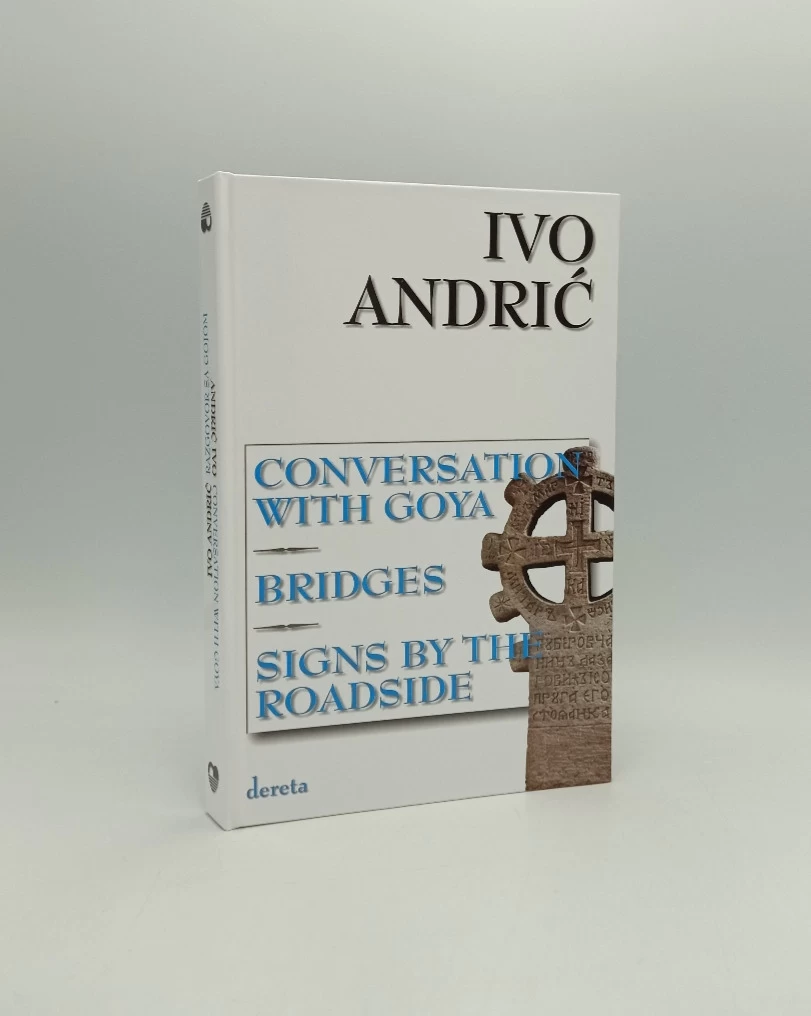
Conversation with Goya / Bridges / Signs by the roadside
Basic information
- Author: Andrić Ivo
- Publisher: Dereta
- Availability: Available
- Condition: New book
- Code: 41919
Shipping options
Payment methods
Explore more
Conversation with Goya / Bridges / Signs by the roadside
Andrić Ivo
Summary
Ivo Andrić: Conversation with Goya / Bridges / Signs by the roadside
Razgovor sa Goya / Mostovi / Signs by the roadside
Bilingual edition
The work which most obviously spans the categories of fact and fiction, history and legend is the Conversation with Goya (1935). Here, the author's identification with his subject is complete. The ideas attributed to Goya are in fact Andrić's own reflections on the nature of art, provoked by an affinity with the painter's work. Had Andrić been interrogated as Ćamil was, he would have had to reply: "I am he".
The form of this piece, which has been used by other modern writers, brings it closer to a work of art than an essay. Goya's physical appearance is described briefly with particular attention to his hands, the bridge between the painter's physical existence and the world of his imagination. The "conversation", like so many of Andrić's works, is set in a frame with two dimensions: the timelessness of a small French café, and the reference to a circus being set up outside it. The fact that the café is near Bordeaux rather than in Spain suggests the insignificance of man-made geographical divisions.
The main idea presented in the essay is that the situation of the artist is described as ambiguous and often painful. He is resented as a suspect, concealed behind a number of masks. The artist's destiny "insincerity and contradiction, uncertainty and a constant vain endeavor to bring together things which cannot be joined".
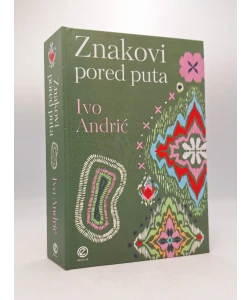
Signs Along the Road: The collection of these notes entitled "Znakovi pored puta"/ "Signs by the roadside" as well as "Sveske"/"Notebooks", published after Andrić's death, can be best described as the writer's intellectual diaries. As may be imagined of a man who recoiled so consistently from any exposure of his private life and thoughts, Andrić was equally consistent in his dislike of the diary as a genre, seeing it as a misguided search for permanence.
Conversation with Goya (1936) represents an imagined dialogue with the great artist, one of the most significant representatives of Spanish and European romanticism in painting. Here, Andrić reveals to us his complex understanding of art, talking about its dual nature, divine and demonic, as well as about the enlightening arc that illuminates the chosen ones from within, and they transmit that light to ordinary people. It is a calling that brings many pleasures and many sufferings, a burden that is both a curse and a blessing at the same time.
In Mostovi Andrić writes about the most significant symbol of his entire work. Bridges are the embodiment of time and duration, force and strength, sacrifice and its steadfastness. They connect not only coasts, but also eras, people, living and dead, peoples, countries. They represent one of the most rooted aspirations of man, to cross over to the other shore, aspirations that become a goal and meaning with the bridge and thus bring order to our existence. With this aspiration, man overcomes death, even if only symbolically, and ignites the flame of hope without which human existence turns into mere vegetation, because, as Andrić himself says, "... all our hope is on the other side". It is the spiritual diary of a great writer who wrote for years, without the particular intention of creating a great book out of it, but in the end he certainly did. It is the unpretentiousness with which Andrić treats deep metaphysical and existential questions that the reader is attracted and drawn into the magical world of roadside signs where he searches for his inner directions.
Additional information
- Author: Andrić Ivo
- Publisher: Dereta
- Year of publication:2016
- Place of publication:Beograd
- Pages:104 96
- Dimensions:14x21 cm
- Script:Latin script
- Condition:New book
- Binding:Hardcover
Reviews
0 reviewsWrite a review
Share your experience and help other readers choose.
This item has no reviews yet. Be the first to share your experience.
More books by Andrić Ivo



More books from Dereta



You may also like




Recently viewed