
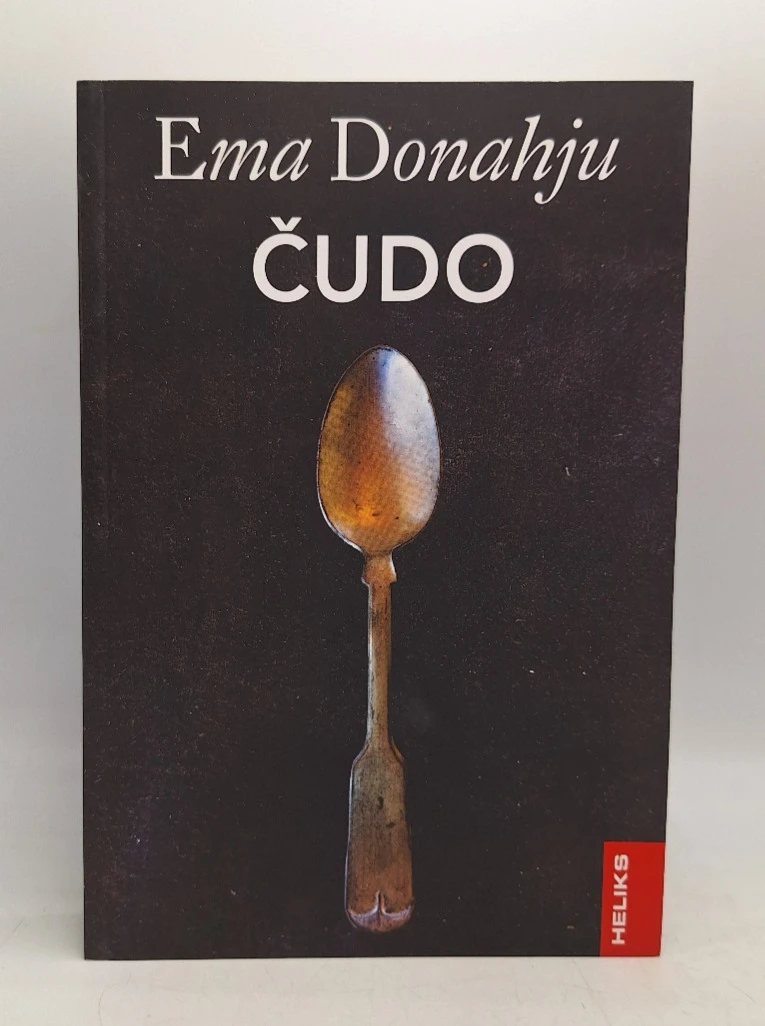
Čudo
Basic information
- Author: Donoghue Emma
- Publisher: Heliks
- Availability: Available
- Condition: Excellent
- Code: 81645
Shipping options
Payment methods
Explore more
Čudo
Donoghue Emma
Summary
Emma Donoghue: Miracle
Irish author Emma Donoghue's novel "Miracle" opens in the bleak landscape of 19th-century Ireland, a country marked by trauma after the Great Famine. Into this environment arrives Lib Wright, an English nurse trained under Florence Nightingale, to look after eleven-year-old Anna O'Donnell - a girl who, according to her family and community, has not taken food for months, but is still alive. Between the rational observer and the child who becomes the embodiment of divine providence, Donahue builds a story that eludes simple interpretations and asks the question: where does faith end and deception begins? The novel walks a fine line between historical thriller and psychological drama, but its essence lies in questioning the relationship between science and religion. Hunger, which appears in the novel both as a collective memory and as an intimate renunciation, becomes a central metaphor. A girl's body is both a sign of hope and a dangerous illusion, a place where different views of the world collide - empirical and dogmatic, individual and communal, personal and political. Emma Donahue reminds us that the need for a miracle often stems from the inability to bear reality, but also that any faith, if taken to the extreme, carries with it danger. The atmosphere of the novel is designed with special care: gray horizons, the smell of peat and the rhythms of rural life create a scene where every word and every gesture turns into a charge. The author does not build tension with spectacle, but with subtle details, whispers and silence. In that silence, the relationship between Lib and Anna takes place - a muted but emotionally strong relationship that carries the novel and remains in the memory long after reading.
Additional information
- Author: Donoghue Emma
- Publisher: Heliks
- Year of publication:2025
- Place of publication:Beograd
- Pages:360
- Dimensions:13.5x20 cm
- Script:Latin script
- Condition:Excellent
- Binding:Softcover
Reviews
0 reviewsWrite a review
Share your experience and help other readers choose.
This item has no reviews yet. Be the first to share your experience.
More books from Heliks
You may also like




Recently viewed