
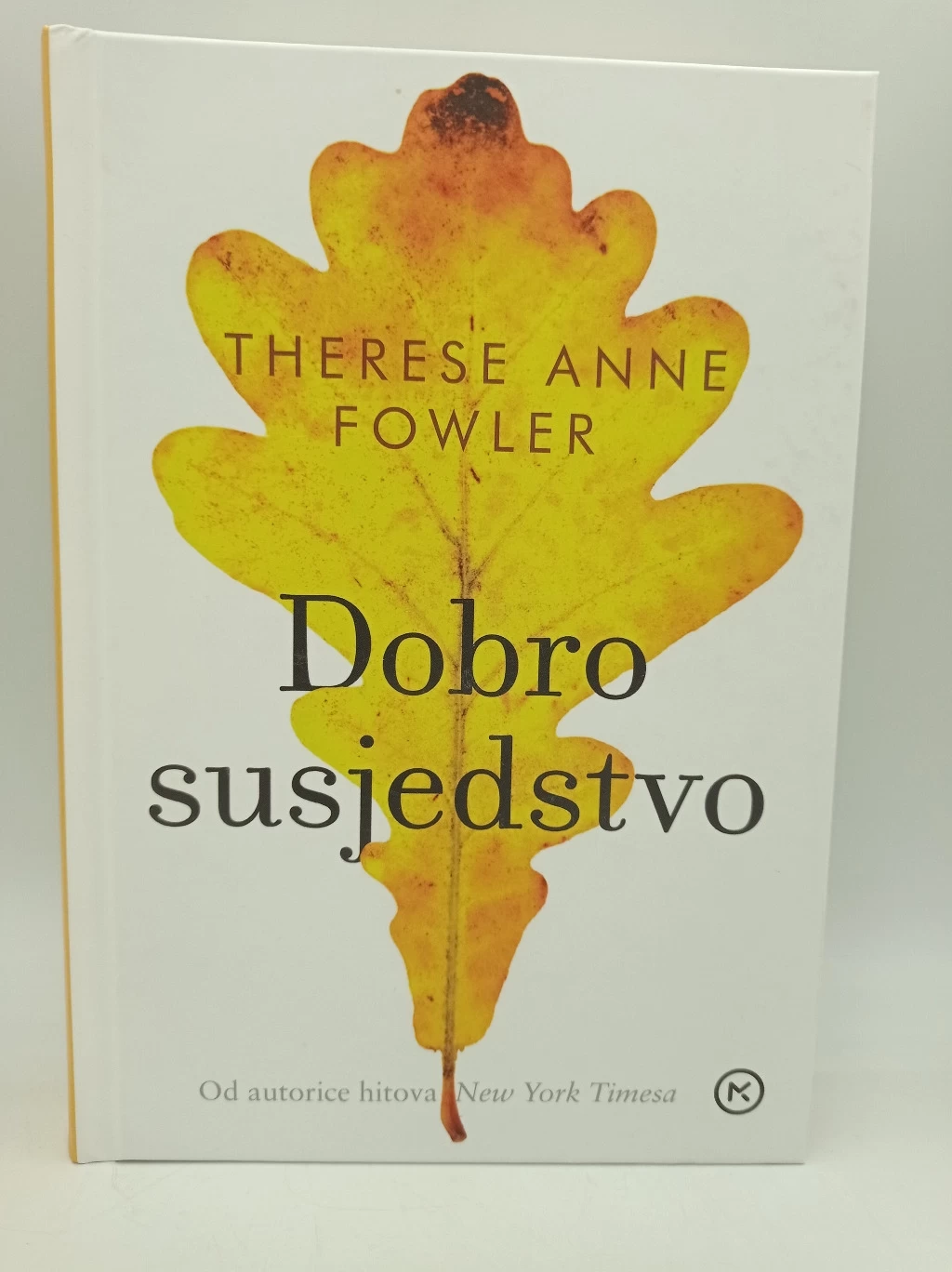
Dobro susjedstvo
Basic information
- Author: Fowler Therese Anne
- Publisher: Mozaik knjiga d.o.o.
- Availability: Available
- Condition: Excellent
- Code: 68752
Shipping options
Payment methods
Explore more
Dobro susjedstvo
Fowler Therese Anne
Summary
Therese Anne Fowler: The Good Neighbor
Told from multiple perspectives, The Good Neighbor is an extremely important story that raises many contemporary and topical issues of social class, race, ecology, interpersonal relationships and respect, and offers a harsh and realistic depiction of our everyday lives.
In Oak Knoll, a close-knit neighborhood in North Carolina, professor of forestry and ecology, passionate and politically engaged African-American Valerie Alston-Holt, he is raising his bright and musically talented son of mixed race. Xavier should enter the prestigious conservatory in the fall, and Valerie, after a number of years of being a single mother, faces the thought that her nest will soon be empty. But despite ordinary life's adversities, everything somehow moves in a steady flow, until the Whitman family moves into the neighborhood - an extremely traditional white family, full of money, ambitions and a turbulent past.
Thanks to a successful local business, Brad Whitman becomes a kind of star in city circles. The house he moves into is a dream come true for him and his wife, but they are completely unaware of the fact that their prosperity is built on the "backs" of the surrounding flora, which is beginning to decay under the weight of modernization and construction, including the beautiful oak that Valerie planted on the occasion of the birth of her only son. The controversy that arises entails a series of environmental, racial and gender issues and will have fatal consequences.
About the author of the novel Good Neighbor:
Therese Anne Fowler is the author of the novels Z: A Novel of Zelda Fitzgerald and A Well-Bred Woman. She grew up in the American Midwest and moved to North Carolina in 1995. She holds a bachelor's degree in sociology and cultural anthropology and a master's degree in creative writing from the University of North Carolina.
Additional information
- Author: Fowler Therese Anne
- Publisher: Mozaik knjiga d.o.o.
- Year of publication:2021
- Place of publication:Zagreb
- Pages:330
- Dimensions:14x20 cm
- Script:Latin script
- Condition:Excellent
- Binding:Hardcover
Reviews
0 reviewsWrite a review
Share your experience and help other readers choose.
This item has no reviews yet. Be the first to share your experience.
More books from Mozaik knjiga d.o.o.






You may also like