
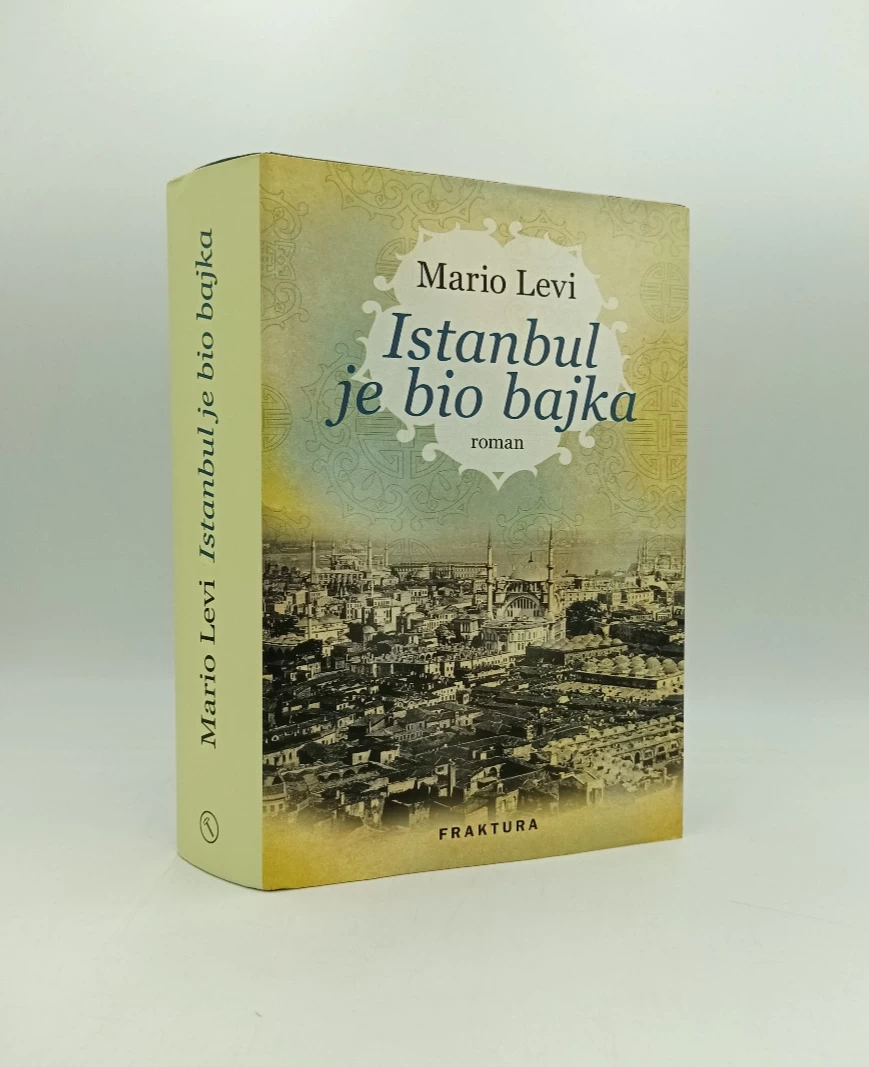
Istanbul je bio bajka
Basic information
- Author: Levi Mario
- Publisher: Fraktura d.o.o.
- Availability: Available
- Condition: Excellent
- Code: 68242
Shipping options
Payment methods
Explore more
Istanbul je bio bajka
Levi Mario
Summary
Mario Levi: Istanbul was a fairy tale
Istanbul was a fairy tale is a family saga that begins in 1920 in Turkey's largest city and extends through the period of World War II until the second half of the 20th century. This sumptuous novel tells about the migrations that took place in a large Jewish family, whose members tried to find the meaning of their lives in various European climates, in search of a country where they would finally find peace. Taking Istanbul as the origin and focal point of his most famous novel, Mario Levi tells about the nostalgic world of its streets, houses, islands, as well as about the microworlds of his heroes that fate causes in different, often tragic ways. Undoubtedly, the real hero of this meticulously written novel is actually Istanbul, a city that shapes the lives of its inhabitants even when they accidentally end up on who knows which meridians. The acclaimed and award-winning novel Istanbul was a fairy tale is one of the important works of contemporary Turkish literature, translated into more than twenty languages, and its author Mario Levi broke out of the regional literary framework with it and became an indispensable name on the literary map of the world.
"Finally a real novel!" — Attila Ilhan
"Istanbul was a fairy tale is a work in which the past is shown as if viewed through a telescope, and the richness of expression and prismatic stories are associated with the contemporary heritage of modernism." — Tadzio Koelb, Times Literary Supplement
"In his sometimes lyrical search for lost time, Mario Levi has written a novel that captivates you and is worth reading." — David Cooper, New York Journal of Books
Additional information
- Author: Levi Mario
- Publisher: Fraktura d.o.o.
- Year of publication:2016
- Place of publication:Zagreb
- Pages:672
- Dimensions:16x23.5 cm
- Script:Latin script
- Condition:Excellent
- Binding:Hardcover with dust jacket
Reviews
0 reviewsWrite a review
Share your experience and help other readers choose.
This item has no reviews yet. Be the first to share your experience.
More books from Fraktura d.o.o.
You may also like




Recently viewed