
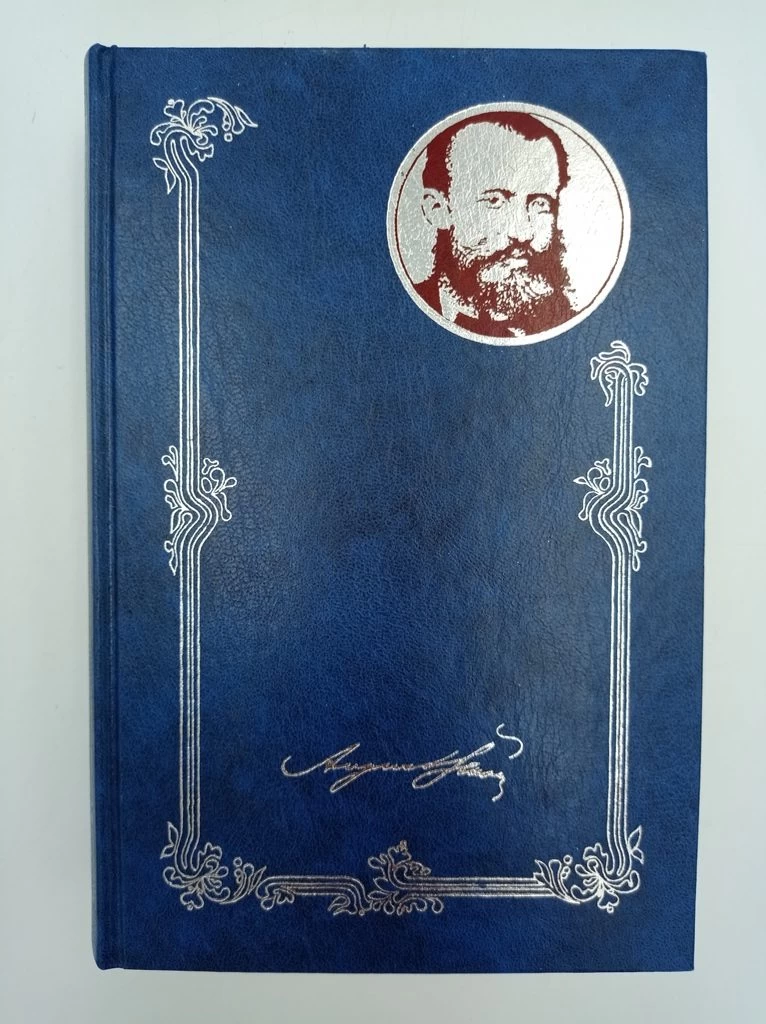
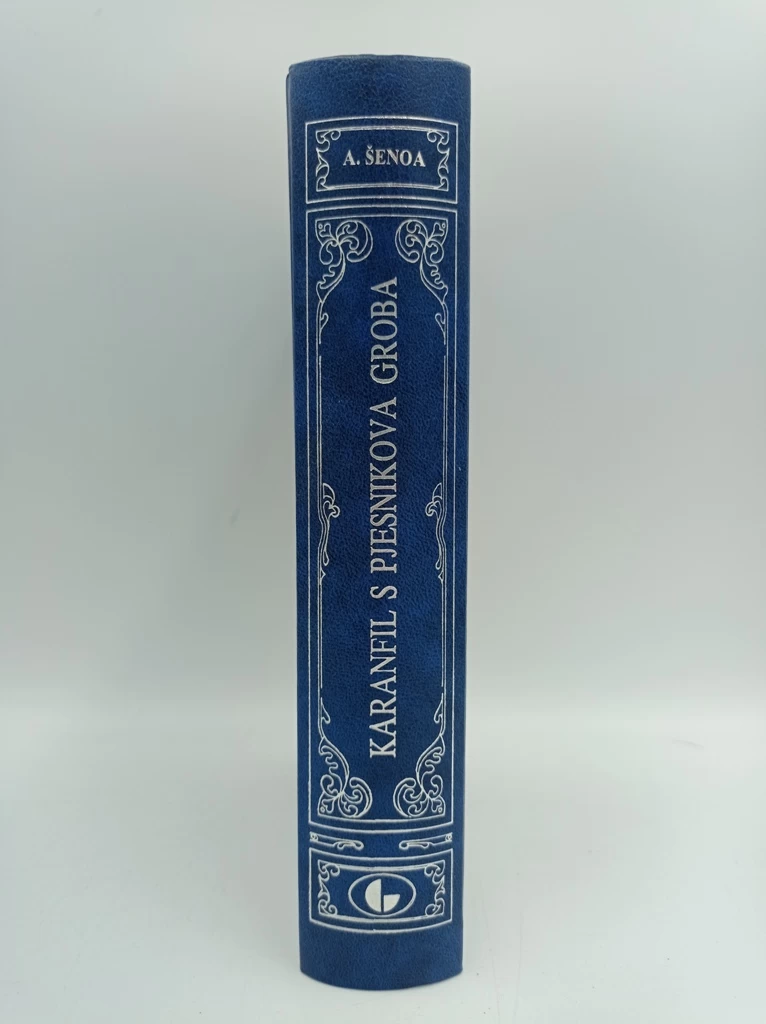
Karanfil s pjesnikova groba
Basic information
- Author: Šenoa August
- Publisher: Globus
- Availability: Available
- Condition: Excellent
- Code: 37497
Shipping options
Payment methods
Explore more
Karanfil s pjesnikova groba
Šenoa August
Summary
August Šenoa: Carnation from the Poet's Grave "Carnation from the Poet's Grave" is a short story by August Šenoa, written as his personal testimony about how, as a writer and fighter for his nationality, he turned to the fight against Germanization and Slavism. In this story, two actions are intertwined. The first idea is to show the ideology of Slavism; it talks about some political and social features of Shenoa's era, and recounts his personal experience that prompted him to commit to a lifelong struggle for his language. The second plot is a love story, i.e. the story of the narrator's feelings for a special girl, which made him dare to embrace the first. That girl was first an inspiration for him, and only then the object of his love. This short story is a typical work of Šeno's literature. It contains both romantic and realist features. Romanticism manifests itself first in the descriptions. They are poetic, full of stylistic figures, emphatic and often dramatic. Also, the love story within the work, as well as the story about the poet Prešeren, are typical of romantic prose. On the other hand, the ideas presented in the work are typical of realist prose. The writer talks about patriotism, about the fight for language, and thus also about the personal fight for the rights of Croats and Slovenes (i.e. Slavic peoples in general) for independence, autonomy and freedom to use their mother tongue. This topic was controversial in Šeno's time, when in Croatia and Slovenia efforts were made to implement forced Germanization, so all civil servants had to speak German. With that, all the gentlemen refused to speak in their mother tongue. Šenoa writes that, although he was a learned man, a student, a respectable gentleman, he decided to speak Croatian and thereby caused astonishment, but also pride, among his fellow citizens. Such a thing would be expected only from the ignorant, but he showed that even gentlemen can be proud of their race and resist pomadorism, even the laws. So Šenoa decided to start writing in his mother tongue. He was inspired by the poetry of one of the greatest Slovenian poets, Franc Prešern. Although he wrote in his native language, Prešeren's poetry was superb. It could be compared to the poems of Goethe or Schiller, German poets who were then considered the untouchable top of poetry. Šenoa realized then that the artistic value does not depend on the language, but on the poet.
Additional information
- Author: Šenoa August
- Publisher: Globus
- Year of publication:1979
- Place of publication:Zagreb
- Pages:404
- Dimensions:14x20.5 cm
- Script:Latin script
- Condition:Excellent
- Binding:Hardcover
Reviews
0 reviewsWrite a review
Share your experience and help other readers choose.
This item has no reviews yet. Be the first to share your experience.
More books by Šenoa August

More books from Globus


You may also like




Recently viewed