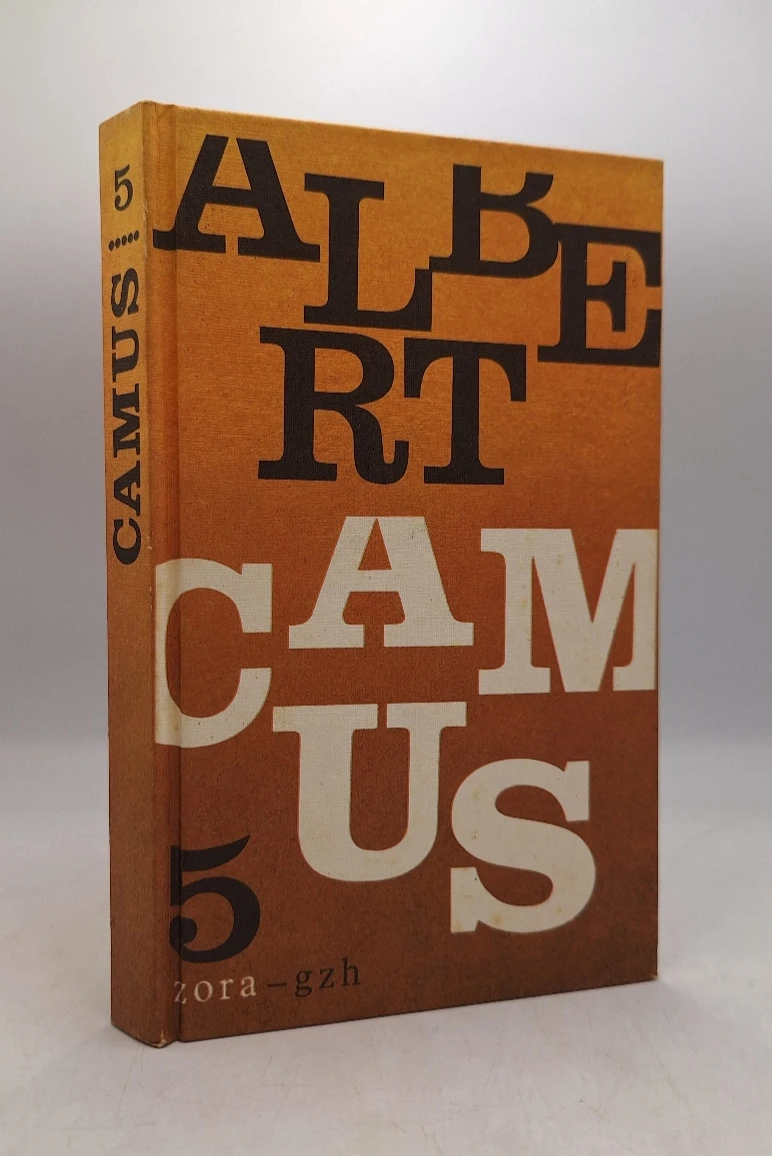

Camus Albert: Mit o Sizifu - Pisma jednom njemačkom prijatelju - Govori u Švedskoj
€ 14,00
Free delivery in Croatia for orders over EUR 70
Basic information
- Author: Camus Albert
- Publisher: Zora
- Availability: Available
- Condition: Very good
- Code: 39926
Shipping options
GLS Croatia
5€
Delivery
0€
Personal collection at the antique store
0€
GLS parcel machine
3€
Payment methods
Pay on pickup
CorvusPay
By general payment / Virman / Internet banking
Cash on delivery
Mit o Sizifu - Pisma jednom njemačkom prijatelju - Govori u Švedskoj
Camus Albert
Summary
Albert Camus: The Myth of Sisyphus - Letters to a German Friend - Speeches in Sweden
There is no end in sight for Sisyphus's torments, nor has the gods foreseen an end for them. Also, in that painful constant pushing of the stone, neither sense nor meaning is found. This is exactly the metaphor that Camus uses for humanity. If we remove for a moment the concepts of gods, heaven and hell, then we are left alone with a lifelong struggle that we will surely lose in the end. Death does not come as a release from our struggles, but as a negation of everything we have achieved through our own efforts. Regardless of all this, aware of death and the fact that every man is defeated even before he begins the fight, Camus still asks: can we be happy?
We can, because as he himself says in several places in the text - life is not absurd. Absurdity is life. This painful struggle in which we are all forced to participate is the only thing we know, and therefore we have no other choice. It is the only 'tangible' possibility offered to us, because everything else is hope or faith. In this world, the individual must face the limitations of his own knowledge: "I don't know if this world has a meaning that surpasses it. However, I know that I do not know that meaning and that, for now, it is impossible for me to know it. What does meaning outside of my life mean to me? I can only understand in human terms. What I touch, what resists me, that's what I understand. (...) What other truth can I confess without lying, without mixing in a hope that I do not have and that means nothing within the limits of my posture?"
Additional information
- Author: Camus Albert
- Publisher: Zora
- Year of publication:1976
- Place of publication:Zagreb
- Pages:192
- Dimensions:12x20 cm
- Script:Latin script
- Condition:Very good
- Binding:Hardcover
You may also like





Biblos Newsletter
For book lovers who enjoy finding the rare
New titles, special copies and quiet recommendations from the antiquarian bookshop.