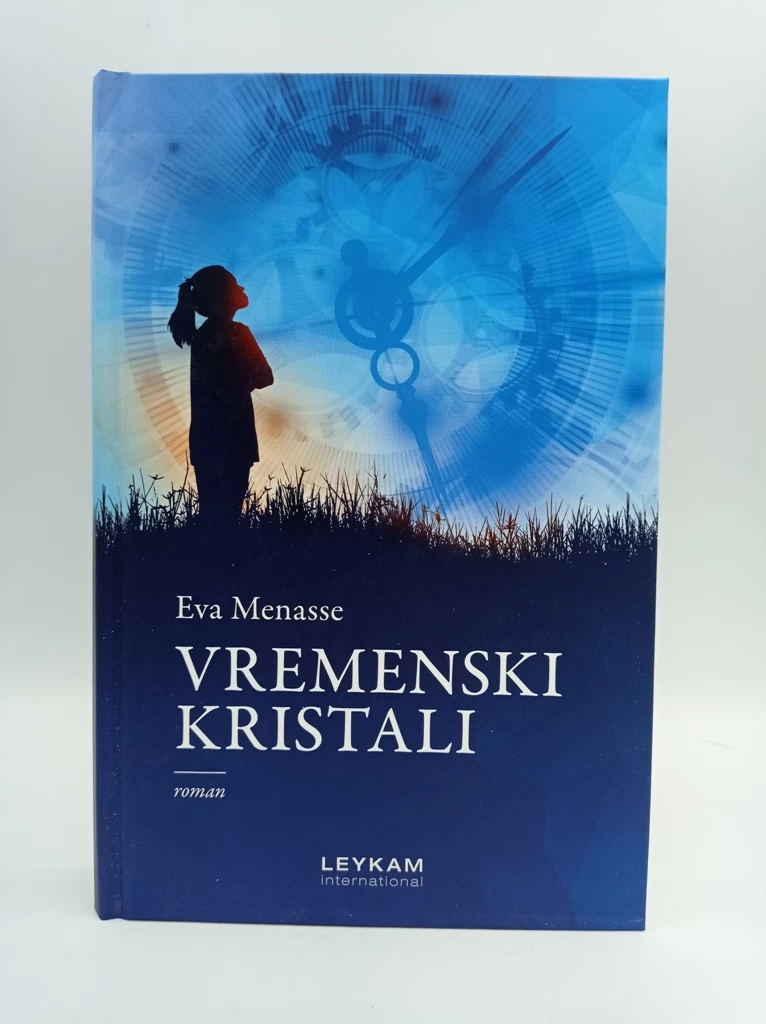
Vremenski kristali
Basic information
- Author: Menasse Eva
- Publisher: Alois Leykum
- Availability: Available
- Condition: Excellent
- Code: 61768
Shipping options
Payment methods
Explore more
Vremenski kristali
Menasse Eva
Summary
Eva Menasse: Crystals of Time As experience shows, in order to change the reception structure of a national literature, it is not necessary to move it to China or Indonesia through translation. It is enough, in the Austrian case, just to cross the border into one of the countries of the former Monarchy and the reception hierarchy Musil-Doderer-Bernhard-Jelinek, and only then all the others, is no longer valid, but each market and language chooses its favorites. In the Croatian case, during the last year it was and still is Peter Henisch and Eva Menasse. Eve Menasse also experienced a sudden international affirmation, she went from being a successful and serious journalist who wrote only a little narrative prose, for example the family novel "Vienna", in a short period of time she reached the status of a true literary star, not only in the German-speaking world. The novel "Time Crystals" is skillfully and cultivatedly written and undoubtedly belongs to the so-called high literature, and its content is similar to the mega-popular Elena Ferrante. It follows the growth and life of Roxana (Xana) Molin through chapters written from the point of view of various characters who find themselves along her life path: friend, son, potential lover, business associates, landlord, casual observer... Although it could be said that due to its theme this is a novel for a female audience, Eva Menasse does not discount the female gender, but asks very painful questions: when does conscientiousness in business turn into fascism? What do we owe our childhood friends? Is there still room for another man in the life of a faithful woman, and if so, how did it come about? Is it possible to equate the husband's children from the first marriage with his own? What does a plan mean in life, and what does spontaneity mean? This novel can also give certain guidelines to local writers and show that it is possible to write about complex life issues without pathos and painful scenes, in cultivated language and with perspective. And that it still works great if it's done well. The seemingly sci-fi title "Time Crystals" corresponds to the German "Quasikristalle" and refers to crystalline structures that do not form spatially, but only show changes over time. Life as a crystalline structure, more or less clearly visible, brighter or duller. Journalist and writer Eva Menasse was born on May 11, 1970 in Vienna as the daughter of the former Austrian football player Hans Menasse and the half-sister of the writer Robert Menasse. She studied German studies and history in Vienna. After her studies, she first worked as a journalist for an Austrian newspaper, and at the same time she was a correspondent for the German newspaper Frankfurter Allgemeine Zeitung. In 2000, she reported on the court case against Holocaust denier David Irving as a direct correspondent from London. The discussion about that process served as a template for her first book, which she published the same year under the title "Holocaust vor Gericht". Five years later, she published her first novel, "Vienna", for which she was awarded the same year. The collection of short stories "Lässliche Todsünden" was published in 2009, and the titles of some stories were based on the seven deadly sins. He then publishes the work "Wien. Küss die Hand, Moderne" (2011), the novel "Quasikristalle" (2013), the collection of essays "Lieber aufgeregt als abgeklärt" (2015) and the novel "Tiere für Fortgeschrittene" in 2017. In her writing and research, Menasse focuses on topics such as dealing with the past, Jewish identity, traumatic experiences and consequences, as well as individual and collective mechanisms of past repression. Her works have been translated into several world languages, and she has been awarded several times for her literary creativity, which makes her one of the most prominent writers in today's Austria. Today she lives as a freelance writer and publicist.
Additional information
- Author: Menasse Eva
- Publisher: Alois Leykum
- Year of publication:2018
- Place of publication:Zagreb
- Pages:380
- Dimensions:15x21 cm
- Script:Latin script
- Condition:Excellent
- Binding:Hardcover
Reviews
0 reviewsWrite a review
Share your experience and help other readers choose.
This item has no reviews yet. Be the first to share your experience.
More books from Alois Leykum


You may also like