
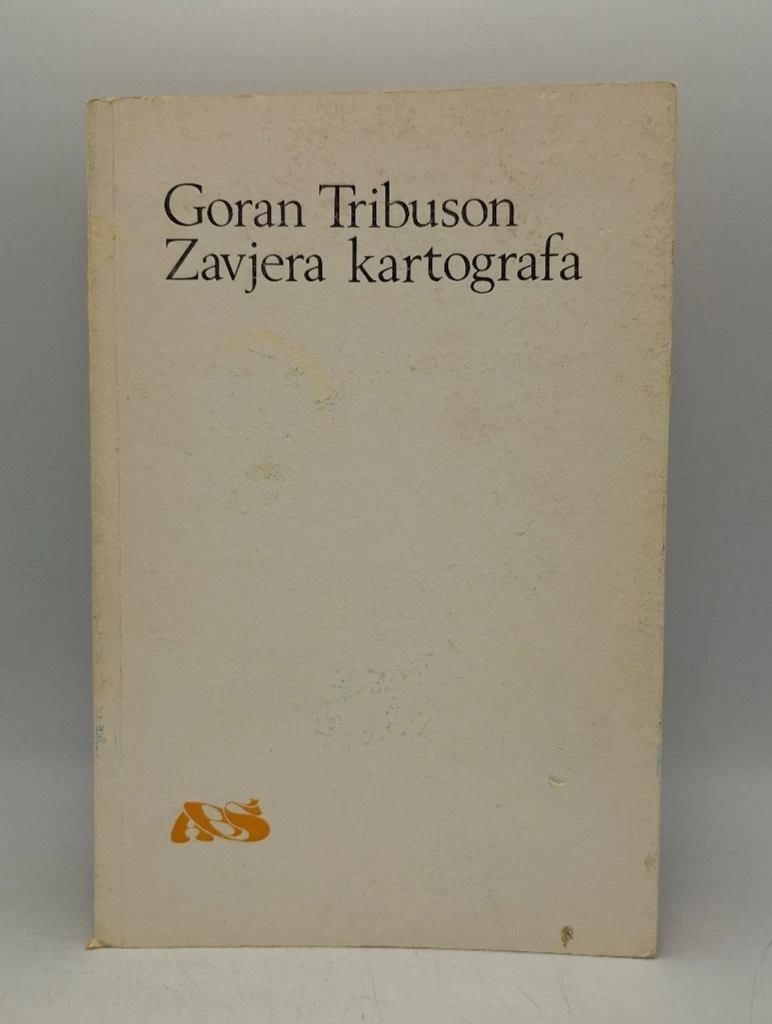
Zavjera kartografa
Basic information
- Author: Tribuson Goran
- Publisher: Znanje
- Availability: Available
- Condition: Very good
- Code: 77055
Shipping options
Payment methods
Explore more
Zavjera kartografa
Tribuson Goran
Summary
Goran Tribuson: Conspiracy of cartographers
The author's first published books, first edition.
He graduated and received his master's degree (filmology) at the Faculty of Philosophy in Zagreb. He started publishing short stories in the early 1970s in the first wave of the so-called fantasy writers (Conspiracy of Cartographers and Death in Prague), to gradually opt for genre prose. Criticism immediately recognized Tribuson as the most typical representative of Croatian Borges artists, who was the first among many in that movement to achieve full authorial maturity. He gradually abandons fantasy, but retains an interest in Central European iconography and a desire for the occult, which is evident in his novels Snow in Heidelberg, Can you hear us, Frido Štern (in the author's entire oeuvre, one of his best works), and Russian Roulette. Tribuson's further and numerous novels are divided into autobiographical and generational ones, mostly with a theme from his native Bjelovar and an analysis of pop culture mythology of everyday life in the seventies (Polagana predaja, History of pornography). This group also includes two books of autobiographical essays, Early Days (1977) and Grass and Weeds (1999). The second cycle consists of Tribuson's numerous crime novels Peeking, Gray Zone, Night Shift and others, the main character of which is ex-policeman Nikola Banić. With these novels, along with those of Pavel Pavličić, he created an oeuvre that was accepted by professional critics and the widest readership.
Additional information
- Author: Tribuson Goran
- Publisher: Znanje
- Year of publication:1972
- Place of publication:Zagreb
- Pages:81
- Dimensions:13x20 cm
- Script:Latin script
- Condition:Very good
- Binding:Softcover
Reviews
0 reviewsWrite a review
Share your experience and help other readers choose.
This item has no reviews yet. Be the first to share your experience.
More books by Tribuson Goran



More books from Znanje












You may also like









Recently viewed