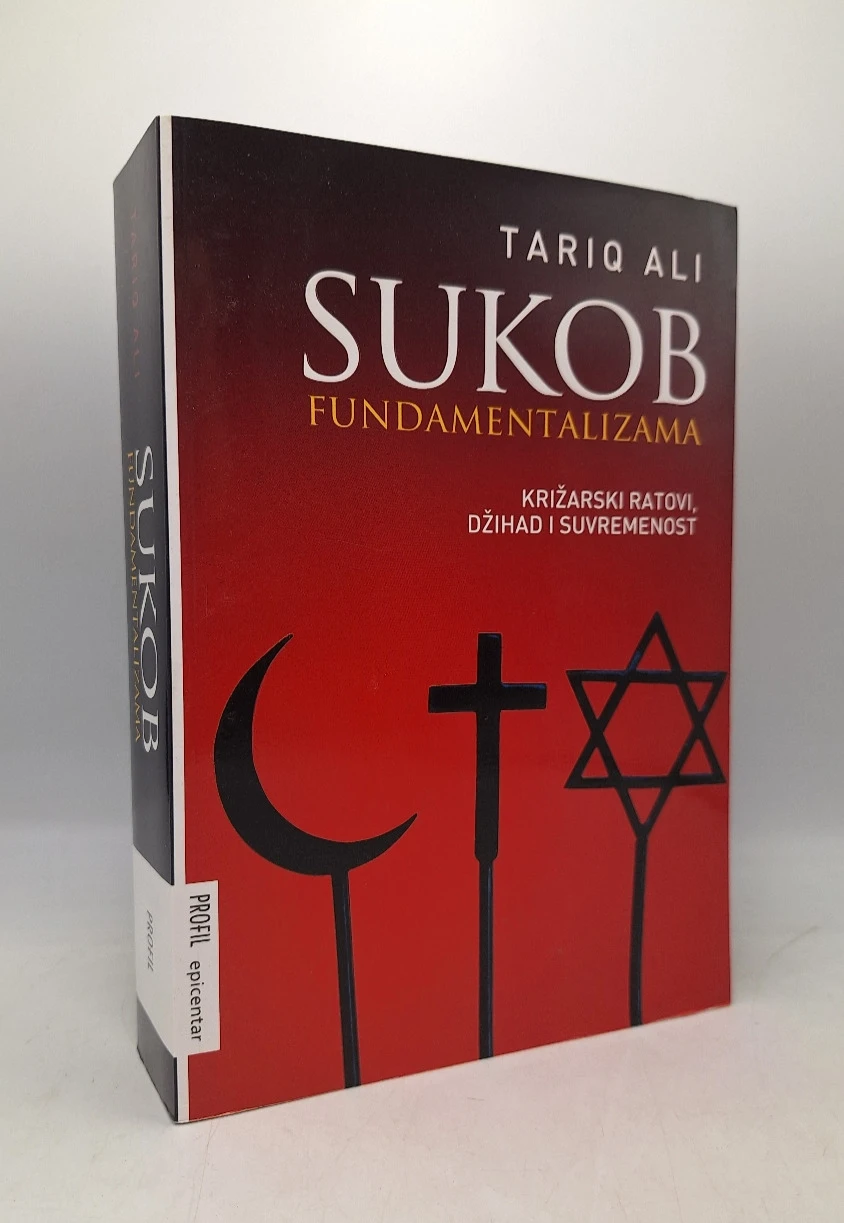

Ali Tariq: Sukob fundamentalizama. Križarski ratovi, džihad i suvremenost
€ 20,00
Free delivery in Croatia for orders over EUR 70
Shipping options
GLS Croatia
5€
Delivery
0€
Personal collection at the antique store
0€
GLS parcel machine
3€
Payment methods
Pay on pickup
CorvusPay
By general payment / Virman / Internet banking
Cash on delivery
Sukob fundamentalizama. Križarski ratovi, džihad i suvremenost
Ali Tariq
Summary
Tariq Ali: Clash of fundamentalisms. Crusades, jihad and modernity
The term "clash of fundamentalisms" (often associated with Tariq Ali as a response to Huntington's "clash of civilizations") suggests that contemporary global tensions are not a struggle of progress and backwardness, but a collision of two extremes: religious fundamentalism and imperial fundamentalism.
Here is a brief overview of these dynamics throughout history and today:
1. The Crusades: The Foundation of the Narrative
Although they were fought from the 11th to the 13th century, the Crusades serve as a powerful symbol in modern discourse.
Western perspective: Historically seen as a defense of Christianity, today they are often (mis)used as a justification for cultural superiority.
Islamic perspective: The collective memory of the Crusaders shaped the term "fringe". (conquerors from the West). Modern radical movements use this memory to portray any Western intervention as a continuation of medieval campaigns.
2. Jihad: Multilayered Meaning
The concept of Jihad has undergone the greatest transformation:
Originally: "Effort" or "struggle" (internal against sin or external to defend the community).
Fundamentalist kidnapping: Modern Jihadism (from the 20th century onwards) has transformed this concept into an exclusively militant, offensive war against "infidels" and "traitors" within its own ranks, using as a tool for political mobilization.
3. Suvremenost: Ogledalo ekstremizma
Danas se "sukob" manifestira kroz uzajamno hranjenje dva radikalizma:
Vjerski fundamentalizam: Odbacuje sekularizam i modernost, tražeći povratak u (često izmišljenu) čistu prošlost.
Tržišni/politički fundamentalizam: Agresivno nametanje određenih geopolitičkih i ekonomskih modela, što često stvara vakuum moći u kojem vjerski ekstremizam buja.
Conclusion:
The contemporary conflict is not necessarily between Islam and Christianity as religions, but between exclusive ideologies that use religion and historical trauma (like the Crusades) to justify violence and political domination. Both sides often need the other as the "perfect enemy" to maintain their own importance.
You may also like






Recently viewed








Biblos Newsletter
For book lovers who enjoy finding the rare
New titles, special copies and quiet recommendations from the antiquarian bookshop.