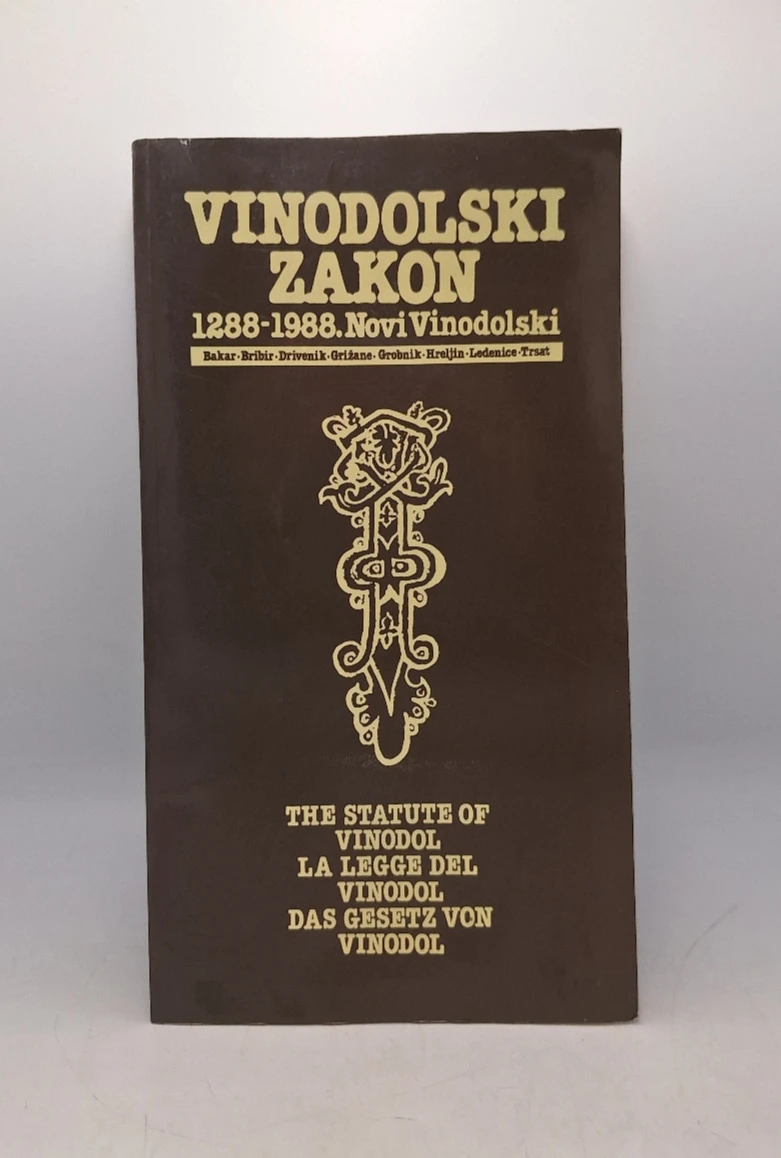

Margetić Lujo: Vinodolski zakon: 1288-1988. Novi Vinodolski
€ 7,00
Free delivery in Croatia for orders over EUR 70
Basic information
- Author: Margetić Lujo
- Publisher: Mjesni odbor za obilježavanje 700. obljetnice Vinodolskog zakona
- Availability: Available
- Condition: Odlično
- Code: 82481
Shipping options
GLS Croatia
5€
Delivery
0€
Personal collection at the antique store
0€
GLS parcel machine
3€
Payment methods
Pay on pickup
CorvusPay
By general payment / Virman / Internet banking
Cash on delivery
Vinodolski zakon: 1288-1988. Novi Vinodolski
Margetić Lujo
Summary
Lujo Margetić: Vinodol Law: 1288-1988. New Vinodolski
The Vinodolski Code, preserved in a manuscript from the 16th century, is not just an artifact of the past. It is a vivid depiction of the conflict between the free Vinodol peasants and the princes of Krk, a conflict that shaped the identity of that region and left its mark on the history of Croatian law. However, the significance of the Vinodol Code goes far beyond the borders of Croatia. His translations into many languages opened the door to the universal value of this legal heritage. It recognizes the principles of the rule of law, protection of private property and fair trial, which makes it relevant even today. Although the original code has not been preserved, the Glagolitic manuscript from the 16th century, kept in the National and University Library in Zagreb, stands as a witness of time and proof of the strength and wisdom of the Croatian legal heritage. The Vinodol Code is not only a document, but also a story about the fight for freedom, the legal order and universal principles that unite people throughout the centuries.
The role of the Croatian language in law: The Vinodol Code was written in the Chakavian dialect of the Croatian language, which was a significant step in strengthening the role of the Croatian language in law. Until then, Latin and Hungarian were used in legal practice, and the Vinodol Code presented an example of the use of the vernacular in legal codification. This encouraged other Croatian countries to use the Croatian language in their legal acts.
This code is more than just a collection of laws, it is actually an imprint of a turbulent era. It echoes the conflicts between the free peasants of Vinodol and the princes of Krk, the struggle for autonomy and the preservation of tradition. Its historical importance has exceeded the borders of Croatia, becoming a precious reminder of universal aspirations for justice and freedom.
This document still intrigues researchers, lawyers and historians today. Its depth and complexity encourage a deeper understanding of the past and the influence it had on the formation of modern legal systems. Thanks to the tireless work of pioneers such as Antun Mažuranić, Josip Bodnjanski and Wacław Alexander Maciejewski, the Vinodol Code gained a voice and was translated into many languages. His message of justice, equality and autonomy still inspires today, uniting people of different cultures and eras. It is not only a document, but also a vivid mosaic of the past, a mirror in which the struggles, values and aspirations of people through the ages are reflected. Its preservation and study not only enriches our knowledge of history, but also encourages thinking about the future of law and society.
The book has a dedication from the previous owners.
Additional information
- Author: Margetić Lujo
- Publisher: Mjesni odbor za obilježavanje...
- Year of publication:1987
- Place of publication:Novi Vinodolski
- Pages:129
- Dimensions:14.5x26 cm
- Script:Latinica
- Condition:Odlično
- Binding:Meki
You may also like


Recently viewed




Biblos Newsletter
For book lovers who enjoy finding the rare
New titles, special copies and quiet recommendations from the antiquarian bookshop.